Julia Lerman – författare
465 kr
Läs direkt efter köp
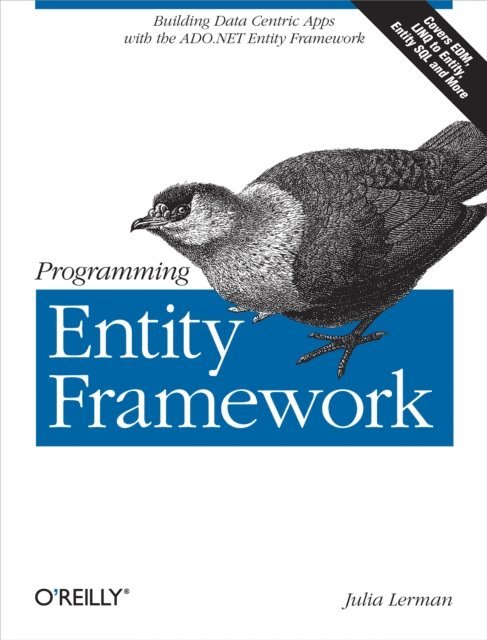
If you use Entity Framework in Visual Studio 2008 and .NET 3.5, this is the book you want. Programming Entity Framework, 1st Edition offers experienced developers a thorough introduction to Microsoft''s core framework for modeling and interacting with data in .NET applications. This hands-on tour provides a deep understanding of Entity Framework''s architecture and APIs, and explains how to use the framework in a variety of applications built with Visual Studio 2008 and .NET 3.5.
From the Entity Data Model (EDM) and Object Services to EntityClient and the Metadata Workspace, this highly acclaimed first edition covers it all.
Understand the core concepts you need to make the best use of the Entity Framework (EF) in your applicationsLearn to query your data, using either LINQ to Entities or Entity SQLCreate Windows Forms, WPF, and ASP.NET applicationsBuild ASMX web services and WCF servicesUse Object Services to work directly with your entity objectsDelve into model customization, relationship management, change tracking, data concurrency, and moreOne important note: while many of the lessons from this book will continue to be valuable as you move to .NET 4, the thoroughly revised second edition of Programming Entity Framework (August 2010) specifically targets Visual Studio 2010 and .NET 4 -- where there have been many advancements and additions to the framework.
516 kr
Läs direkt efter köp
If you use Entity Framework in Visual Studio 2008 and .NET 3.5, this is the book you want. Programming Entity Framework, 1st Edition offers experienced developers a thorough introduction to Microsoft''s core framework for modeling and interacting with data in .NET applications. This hands-on tour provides a deep understanding of Entity Framework''s architecture and APIs, and explains how to use the framework in a variety of applications built with Visual Studio 2008 and .NET 3.5.
From the Entity Data Model (EDM) and Object Services to EntityClient and the Metadata Workspace, this highly acclaimed first edition covers it all.
Understand the core concepts you need to make the best use of the Entity Framework (EF) in your applicationsLearn to query your data, using either LINQ to Entities or Entity SQLCreate Windows Forms, WPF, and ASP.NET applicationsBuild ASMX web services and WCF servicesUse Object Services to work directly with your entity objectsDelve into model customization, relationship management, change tracking, data concurrency, and moreOne important note: while many of the lessons from this book will continue to be valuable as you move to .NET 4, the thoroughly revised second edition of Programming Entity Framework (August 2010) specifically targets Visual Studio 2010 and .NET 4 -- where there have been many advancements and additions to the framework.
450 kr
Skickas inom 5-8 vardagar
192 kr
Skickas inom 5-8 vardagar
192 kr
Skickas inom 5-8 vardagar
148 kr
Läs direkt efter köp
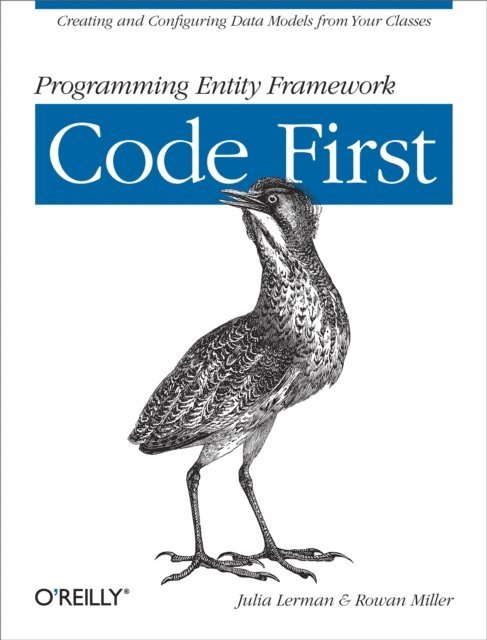
Take advantage of the Code First data modeling approach in ADO.NET Entity Framework, and learn how to build and configure a model based on existing classes in your business domain. With this concise book, you’ll work hands-on with examples to learn how Code First can create an in-memory model and database by default, and how you can exert more control over the model through further configuration.
Code First provides an alternative to the database first and model first approaches to the Entity Data Model. Learn the benefits of defining your model with code, whether you’re working with an existing database or building one from scratch. If you work with Visual Studio and understand database management basics, this book is for you.
Learn exactly what Code First does—and does not—enable you to doUnderstand how property attributes, relationships, and database mappings are inferred from your classes by Code FirstUse Data Annotations and the Fluent API to configure the Code First data modelPerform advanced techniques, such as controlling the database schema and overriding the default model cachingThis book is a continuation of author Julia Lerman’s Programming Entity Framework, widely recognized as the leading book on the topic.
177 kr
Läs direkt efter köp
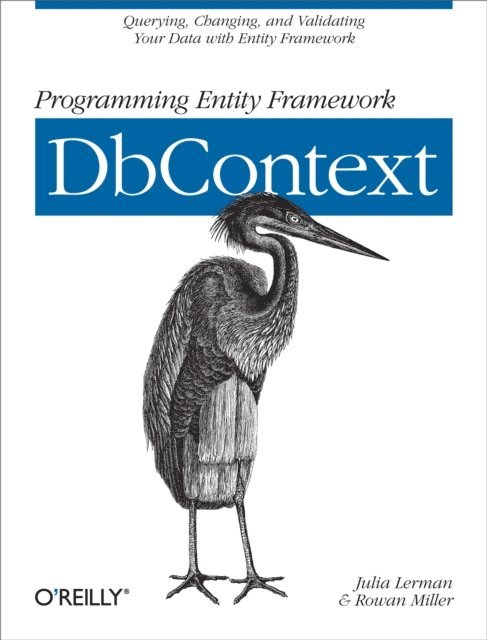
The DbContext API captures Entity Framework’s (EF) most commonly used features and tasks, simplifying development with EF. This concise book shows you how to use the API to perform set operations with the DbSet class, handle change tracking and resolve concurrency conflicts with the Change Tracker API, and validate changes to your data with the Validation API.
With DbContext, you’ll be able to query and update data, whether you’re working with individual objects or graphs of objects and their related data. You’ll find numerous C# code samples to help you get started. All you need is experience with Visual Studio and database management basics.
Use EF’s query capabilities to retrieve data, and use LINQ to sort and filter dataLearn how to add new data, and change and delete existing dataUse the Change Tracker API to access information EF keeps about the state of entity instancesControl change tracking information of entities in disconnected scenarios, including NTier applicationsValidate data changes before they’re sent to the database, and set up validation rulesBypass EF’s query pipeline and interact directly with the database465 kr
Läs direkt efter köp
Get a thorough introduction to ADO.NET Entity Framework 4 -- Microsoft''s core framework for modeling and interacting with data in .NET applications. The second edition of this acclaimed guide provides a hands-on tour of the framework latest version in Visual Studio 2010 and .NET Framework 4. Not only will you learn how to use EF4 in a variety of applications, you''ll also gain a deep understanding of its architecture and APIs.
Written by Julia Lerman, the leading independent authority on the framework, Programming Entity Framework covers it all -- from the Entity Data Model and Object Services to WCF Services, MVC Apps, and unit testing. This book highlights important changes for experienced developers familiar with the earlier version.
Understand the core concepts you need to make the best use of the EF4 in your applicationsLearn to query your data, using either LINQ to Entities or Entity SQLCreate Windows Forms, WPF, ASP.NET Web Forms, and ASP.NET MVC applicationsBuild and consume WCF Services, WCF Data Services, and WCF RIA ServicesUse Object Services to work directly with your entity objectsCreate persistent ignorant entities, repositories, and write unit testsDelve into model customization, relationship management, change tracking, data concurrency, and moreGet scores of reusable examples -- written in C# (with notes on Visual Basic syntax) -- that you can implement right away516 kr
Läs direkt efter köp
Get a thorough introduction to ADO.NET Entity Framework 4 -- Microsoft''s core framework for modeling and interacting with data in .NET applications. The second edition of this acclaimed guide provides a hands-on tour of the framework latest version in Visual Studio 2010 and .NET Framework 4. Not only will you learn how to use EF4 in a variety of applications, you''ll also gain a deep understanding of its architecture and APIs.
Written by Julia Lerman, the leading independent authority on the framework, Programming Entity Framework covers it all -- from the Entity Data Model and Object Services to WCF Services, MVC Apps, and unit testing. This book highlights important changes for experienced developers familiar with the earlier version.
Understand the core concepts you need to make the best use of the EF4 in your applicationsLearn to query your data, using either LINQ to Entities or Entity SQLCreate Windows Forms, WPF, ASP.NET Web Forms, and ASP.NET MVC applicationsBuild and consume WCF Services, WCF Data Services, and WCF RIA ServicesUse Object Services to work directly with your entity objectsCreate persistent ignorant entities, repositories, and write unit testsDelve into model customization, relationship management, change tracking, data concurrency, and moreGet scores of reusable examples -- written in C# (with notes on Visual Basic syntax) -- that you can implement right away