Julia Storberg-Walker - Böcker
Visar alla böcker från författaren Julia Storberg-Walker. Handla med fri frakt och snabb leverans.
3 produkter
3 produkter
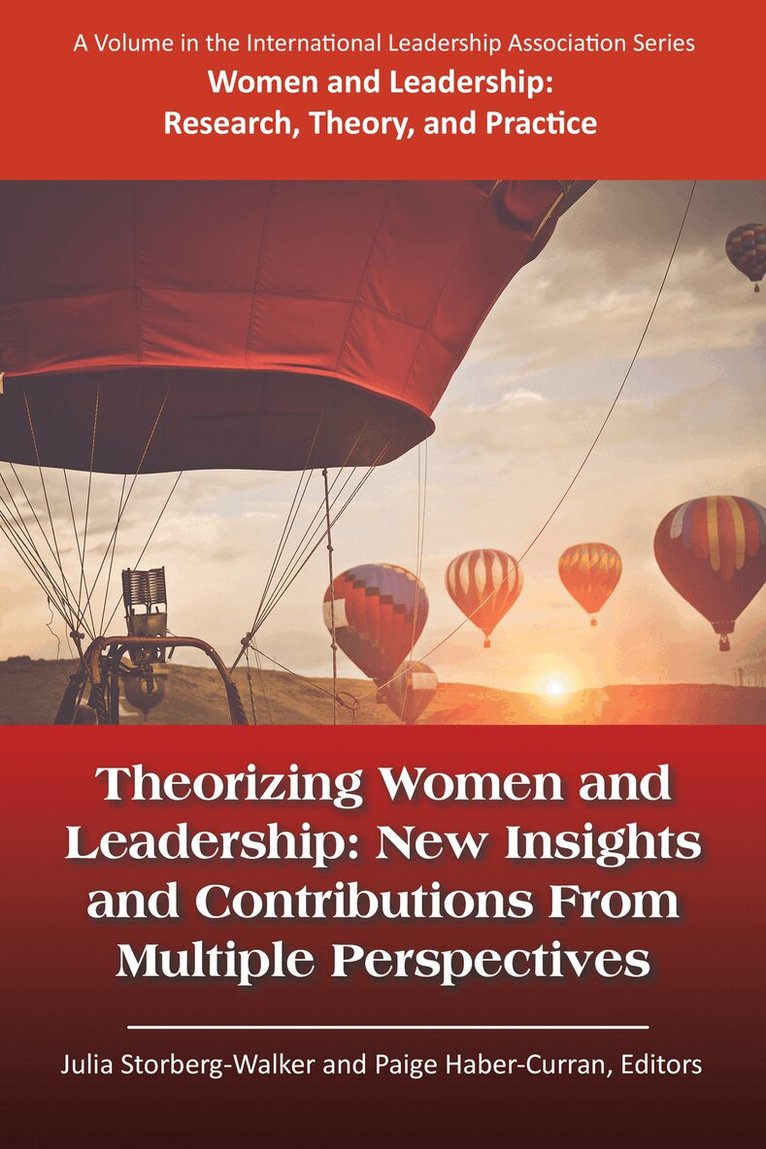
Theorizing Women and Leadership
New Insights and Contributions from Multiple Perspectives
Häftad, Engelska, 2017
600 kr
Skickas inom 7-10 vardagar
Theorizing Women and Leadership: New Insights and Contributions from Multiple Perspectives is the fifth volume in the Women and Leadership: Research, Theory, and Practice series. This cross-disciplinary series, from the International Leadership Association, enhances leadership knowledge and improves leadership development of women around the world. The purpose of this volume is to provide a forum for women to theorize about women’s leadership in multiple ways and in multiple contexts. Theorizing has been a viewed as a gendered activity (Swedberg, 2014), and this series of chapters seeks to upend that imbalance. The chapters are written by women who represent multiple disciplines, cultures, races, and subject positions. The diversity extends into research paradigm and method, and the chapters combine to illuminate the multiple ways of knowing about and being a woman leader.Twenty-first century leadership scholars acknowledge the importance of context, and many are considering post-heroic leadership models based on relationships rather than traits. This volume contributes to this discussion by offering a diverse array of perspectives and ways of knowing about leadership and leading. The purpose of the volume is to provide readers with not only interesting new ideas about women and leadership, but also to highlight the diverse epistemologies that can contribute to theorizing about women leaders. Some chapters represent typical social scientific practices and processes, while others represent newer knowledge forms and ways of knowing. The volume contributors adopt various epistemological positions, ranging from objective researcher to embedded co-participant. The chapters link their new findings to existing empirical or conceptual work and illustrate how the findings extend, amend, contradict, or confirm existing research. The diversity of the chapters is one of the volume’s strengths because it illuminates the multiple ways that leadership theory for women can be advanced.Typically, research based on a realist perspective is more valued in the academy. This perspective has indeed generated robust information about leadership in general and women’s leadership in particular. However, readers of this volume are offered an opportunity to explore multiple ways of knowing, different ways of researching, and are invited to de-center researcher objectivity. The authors of the chapters offer conceptual and empirical findings, illuminate multiple and alternative research practices, and in the end suggest future directions for quantitative, qualitative, and mixed-methods research.
Theorizing Women and Leadership
New Insights and Contributions from Multiple Perspectives
Inbunden, Engelska, 2017
1 062 kr
Skickas inom 7-10 vardagar
Theorizing Women and Leadership: New Insights and Contributions from Multiple Perspectives is the fifth volume in the Women and Leadership: Research, Theory, and Practice series. This cross-disciplinary series, from the International Leadership Association, enhances leadership knowledge and improves leadership development of women around the world. The purpose of this volume is to provide a forum for women to theorize about women’s leadership in multiple ways and in multiple contexts. Theorizing has been a viewed as a gendered activity (Swedberg, 2014), and this series of chapters seeks to upend that imbalance. The chapters are written by women who represent multiple disciplines, cultures, races, and subject positions. The diversity extends into research paradigm and method, and the chapters combine to illuminate the multiple ways of knowing about and being a woman leader.Twenty-first century leadership scholars acknowledge the importance of context, and many are considering post-heroic leadership models based on relationships rather than traits. This volume contributes to this discussion by offering a diverse array of perspectives and ways of knowing about leadership and leading. The purpose of the volume is to provide readers with not only interesting new ideas about women and leadership, but also to highlight the diverse epistemologies that can contribute to theorizing about women leaders. Some chapters represent typical social scientific practices and processes, while others represent newer knowledge forms and ways of knowing. The volume contributors adopt various epistemological positions, ranging from objective researcher to embedded co-participant. The chapters link their new findings to existing empirical or conceptual work and illustrate how the findings extend, amend, contradict, or confirm existing research. The diversity of the chapters is one of the volume’s strengths because it illuminates the multiple ways that leadership theory for women can be advanced.Typically, research based on a realist perspective is more valued in the academy. This perspective has indeed generated robust information about leadership in general and women’s leadership in particular. However, readers of this volume are offered an opportunity to explore multiple ways of knowing, different ways of researching, and are invited to de-center researcher objectivity. The authors of the chapters offer conceptual and empirical findings, illuminate multiple and alternative research practices, and in the end suggest future directions for quantitative, qualitative, and mixed-methods research.
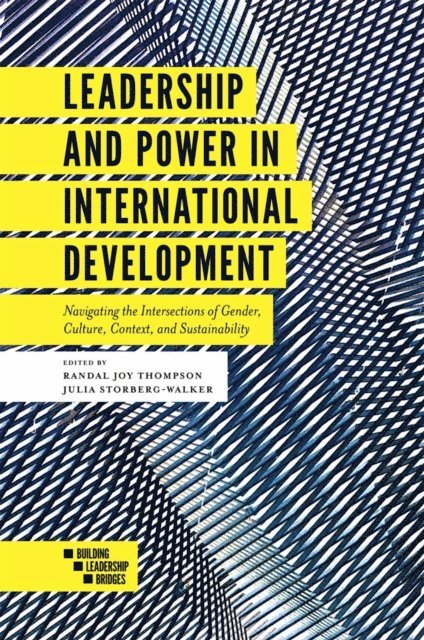
Leadership and Power in International Development
Navigating the Intersections of Gender, Culture, Context, and Sustainability
Häftad, Engelska, 2018
428 kr
Skickas inom 7-10 vardagar
We live in an era of drastic changes in relationships between countries and of unprecedented responses to both old and emerging global challenges. Working alongside leaders in developing countries, leaders in international foreign aid and development organizations, non-governmental organizations, and private foundations and companies have driven dramatic changes in our approach to these challenges and to international development more generally. Yet little has been written from the perspective of the leaders telling their stories about leading and navigating the tangle of forces acting upon the course of international development. And even less is known about how leading in international development contexts should be modelled in a way that fosters the development of the next generation of leaders. Leadership and Power in International Development: Navigating the Intersections of Gender, Culture, Context, and Sustainability brings scholarship up-todate with practice, collecting the stories and reflections of twenty leaders from Africa, Asia, Europe, Canada, and the United States, many of whom have extensive experience leading within major international organizations. In clear, straightforward narratives, the contributors gathered here highlight their diverse experiences with context, culture, power, gender and sustainability, and they offer strategies and lessons learned derived from their own challenges and successes. Building on these narratives, the book offers a new model or framework for leading in international development contexts. Through an innovative practice to theory process, the first chapter of the book, written by co-editor Julia Storberg-Walker, provides an original analysis of the chapter narratives, and presents a framework for successfully leading international development projects in the 21st century. The framework can be used for designing leadership development programs as well as for future research in leading in international development contexts.Leadership and Power in International Development is essential reading for development leaders, practitioners, and scholars as they continue to confront the complexity of contemporary power-politics.