Julian B. Barbour – författare
Visar alla böcker från författaren Julian B. Barbour. Handla med fri frakt och snabb leverans.
4 produkter
4 produkter
E-bok
Engelska, 20011 371 kr
Läs direkt efter köp
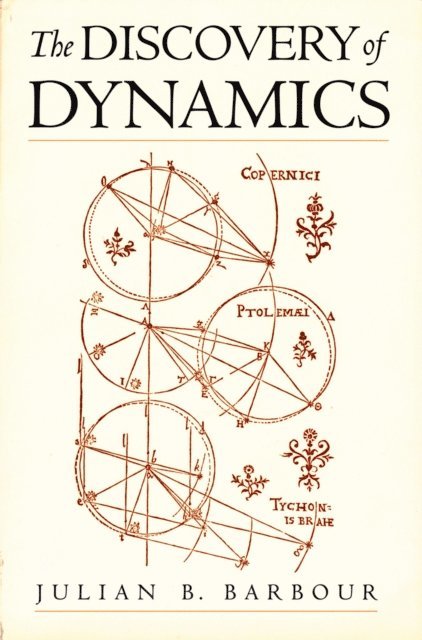
Ever since Newton created dynamics, there has been controversy about its foundations. Are space and time absolute? Do they form a rigid but invisible framework and container of the universe? Or are space, time, and motion relative? If so, does Newton''s ''framework'' arise through the influence of the universe at large, as Ernst Mach suggested? Einstein''s aim when creating his general theory of relativity was to demonstrate this and thereby implement ''Mach''s Principle''. However, it is widely believed that he achieved only partial success. This question of whether motion is absolute or relative has been a central issues in philosophy; the nature of time has perennial interest. Current attempts to create a quantum description of the whole universe keep these issues at the cutting edge of modern research. Written by the world''s leading expert on Mach''s Principle, The Discovery of Dynamics is a highly original account of the development of notions about space, time, and motion. Widely praised in its hardback version, it is one of the fullest and most readable accounts of the astronomical studies that culminated in Kepler''s laws of planetary motion and of the creation of dynamics by Galileo, Descartes, Huygens, and Newton. Originally published as Absolute or Relative Motion?, Vol. 1: The Discovery of Dynamics (Cambridge), The Discovery of Dynamics provides the technical background to Barbour''s recently published The End of Time, in which he argues that time disappears from the description of the quantum universe.
Häftad, Engelska, 2001
1 314 kr
Skickas inom 5-8 vardagar
This is the first in a two volume series discussing the theories of Einstein, Newton and other ideas of late 19th and early 20th century physics as in-depth research and basis for Barbour's theory that time is an illusion. This first volume explains the history and philosophy that led to the development of classical dynamics by Newton, and then places Newtonian dynamics in the perspective of as yet unresolved questions relating to the basic concepts of space, time and motion. Most of the book is concerned with the preparatory work in astronomy and the mathematical study of terrestrial motions that made Newton's work possible, with the final sections analyzing Newton's own discoveries, his synthesis of a viable scheme of dynamics, and his introduction of the concept of universal gravitation.
E-bok
PDF, Engelska, 20011 371 kr
Läs direkt efter köp
Ever since Newton created dynamics, there has been controversy about its foundations. Are space and time absolute? Do they form a rigid but invisible framework and container of the universe? Or are space, time, and motion relative? If so, does Newton''s ''framework'' arise through the influence of the universe at large, as Ernst Mach suggested? Einstein''s aim when creating his general theory of relativity was to demonstrate this and thereby implement ''Mach''s Principle''. However, it is widely believed that he achieved only partial success. This question of whether motion is absolute or relative has been a central issues in philosophy; the nature of time has perennial interest. Current attempts to create a quantum description of the whole universe keep these issues at the cutting edge of modern research. Written by the world''s leading expert on Mach''s Principle, The Discovery of Dynamics is a highly original account of the development of notions about space, time, and motion. Widely praised in its hardback version, it is one of the fullest and most readable accounts of the astronomical studies that culminated in Kepler''s laws of planetary motion and of the creation of dynamics by Galileo, Descartes, Huygens, and Newton. Originally published as Absolute or Relative Motion?, Vol. 1: The Discovery of Dynamics (Cambridge), The Discovery of Dynamics provides the technical background to Barbour''s recently published The End of Time, in which he argues that time disappears from the description of the quantum universe.
Inbunden, Engelska, 1995
2 700 kr
Skickas inom 10-15 vardagar
This volume is a collection of scholarly articles on the Mach Principle, the impact that this theory has had since the end of the 19th century, and its role in helping Einstein formulate the doctrine of general relativity. 20th-century physics is concerned with the concepts of time,space, motion, inertia and gravity. The documentation on all of these makes this book a reference for those who are interested in the history of science and the theory of general relativity.