Julian Castro-Rea – författare
Visar alla böcker från författaren Julian Castro-Rea. Handla med fri frakt och snabb leverans.
12 produkter
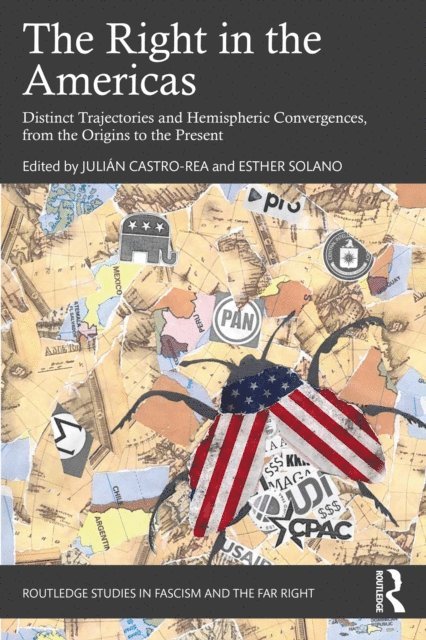
Right in the Americas
Distinct Trajectories and Hemispheric Convergences, from the Origins to the Present
Av Esther Solano, Julian Castro-Rea
E-bok, 2023
658 kr
Lägg i varukorg
The Right in the Americas discusses the origins, development, and current state of conservative and right-wing movements in ten countries in the Americas. The growth of the right is one of the most important issues of the moment in global politics. Within the context of democracy erosion, rejection …
Right in the Americas
Distinct Trajectories and Hemispheric Convergences, from the Origins to the Present
Av Esther Solano, Julian Castro-Rea
E-bok, 2023
658 kr
Lägg i varukorg
The Right in the Americas discusses the origins, development, and current state of conservative and right-wing movements in ten countries in the Americas. The growth of the right is one of the most important issues of the moment in global politics. Within the context of democracy erosion, rejection …
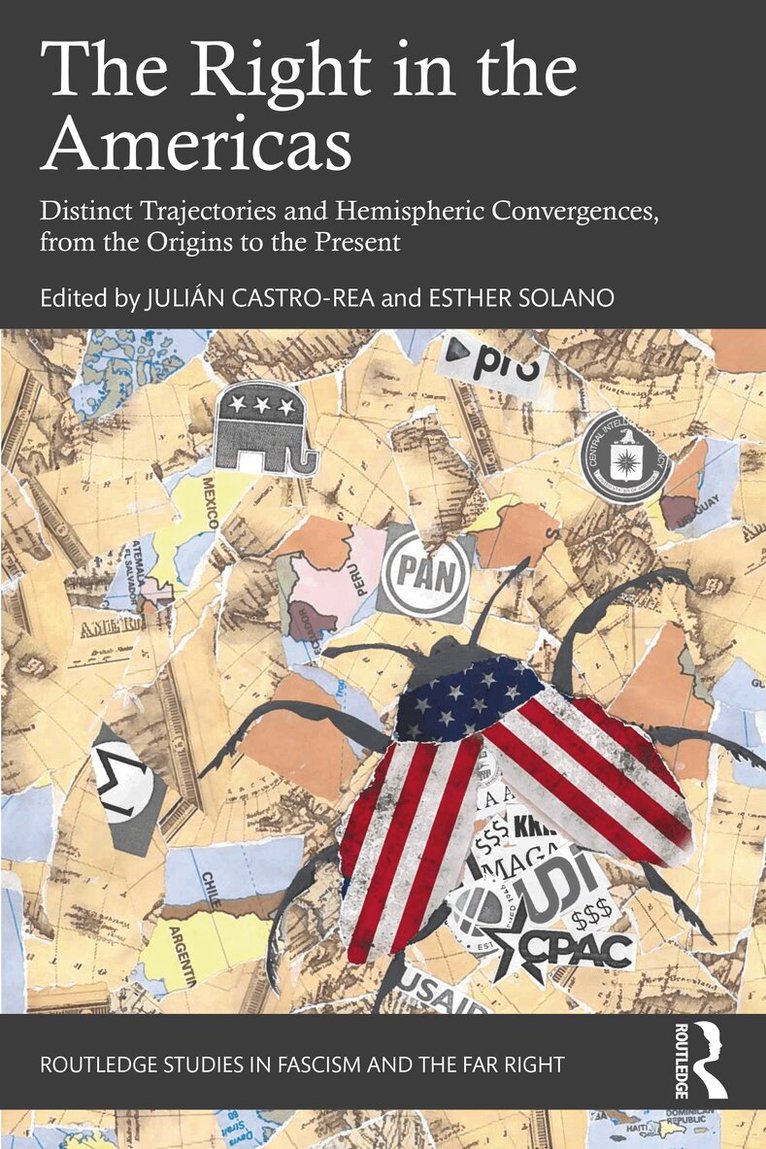
Right in the Americas
Distinct Trajectories and Hemispheric Convergences, from the Origins to the Present
Av Julián Castro-Rea, Esther Solano
Häftad, 2023
650 kr
Lägg i varukorg
The Right in the Americas discusses the origins, development, and current state of conservative and right-wing movements in ten countries in the Americas. The growth of the right is one of the most important issues of the moment in global politics. Within the context of democracy erosion, rejection …
Right in the Americas
Distinct Trajectories and Hemispheric Convergences, from the Origins to the Present
Av Julián Castro-Rea, Esther Solano
Inbunden, 2023
2578 kr
Lägg i varukorg
The Right in the Americas discusses the origins, development, and current state of conservative and right-wing movements in ten countries in the Americas. The growth of the right is one of the most important issues of the moment in global politics. Within the context of democracy erosion, rejection …
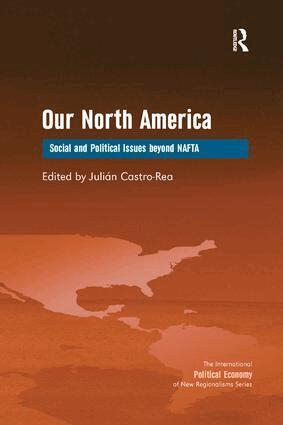
Our North America
Social and Political Issues beyond NAFTA
Häftad, 2016
934 kr
Lägg i varukorg
What we call "North America" today is a human space that has been constructed over the centuries, perceived from time immemorial by its original inhabitants as a unified whole, and named Turtle Island. What is North America today? Is it more than the sum of its parts? Does it qualify as a distinct …
Re-mapping the Americas
Trends in Region-making
Av W. Andy Knight, Julián Castro-Rea m. fl.
Häftad, 2016
559 kr
Lägg i varukorg
Since the end of the Second World War the map of the Americas has changed dramatically. Not only were many former European colonies turned into sovereign states, there was also an ongoing process of region-making recognizable throughout the hemisphere and obvious through the establishment of …
Re-mapping the Americas
Trends in Region-making
Av Hamid Ghany, Julian Castro-Rea m. fl.
E-bok, 2016
658 kr
Lägg i varukorg
Since the end of the Second World War the map of the Americas has changed dramatically. Not only were many former European colonies turned into sovereign states, there was also an ongoing process of region-making recognizable throughout the hemisphere and obvious through the establishment of …
Re-mapping the Americas
Trends in Region-making
Av Hamid Ghany, Julian Castro-Rea m. fl.
E-bok, 2016
658 kr
Lägg i varukorg
Since the end of the Second World War the map of the Americas has changed dramatically. Not only were many former European colonies turned into sovereign states, there was also an ongoing process of region-making recognizable throughout the hemisphere and obvious through the establishment of …
Our North America
Social and Political Issues beyond NAFTA
E-bok, 2016
1074 kr
Lägg i varukorg
What we call "North America" today is a human space that has been constructed over the centuries, perceived from time immemorial by its original inhabitants as a unified whole, and named Turtle Island. What is North America today? Is it more than the sum of its parts? Does it qualify as a distinct …
Our North America
Social and Political Issues beyond NAFTA
E-bok, 2016
1074 kr
Lägg i varukorg
What we call "North America" today is a human space that has been constructed over the centuries, perceived from time immemorial by its original inhabitants as a unified whole, and named Turtle Island. What is North America today? Is it more than the sum of its parts? Does it qualify as a distinct …
Our North America
Social and Political Issues beyond NAFTA
Inbunden, 2012
2578 kr
Lägg i varukorg
What we call "North America" today is a human space that has been constructed over the centuries, perceived from time immemorial by its original inhabitants as a unified whole, and named Turtle Island. What is North America today? Is it more than the sum of its parts? Does it qualify as a distinct …
Re-mapping the Americas
Trends in Region-making
Av W. Andy Knight, Julián Castro-Rea m. fl.
Inbunden, 2014
1517 kr
Lägg i varukorg
Since the end of the Second World War the map of the Americas has changed dramatically. Not only were many former European colonies turned into sovereign states, there was also an ongoing process of region-making recognizable throughout the hemisphere and obvious through the establishment of …