Julian Swann - Böcker
Visar alla böcker från författaren Julian Swann. Handla med fri frakt och snabb leverans.
7 produkter
7 produkter
Del 184 - Proceedings of the British Academy
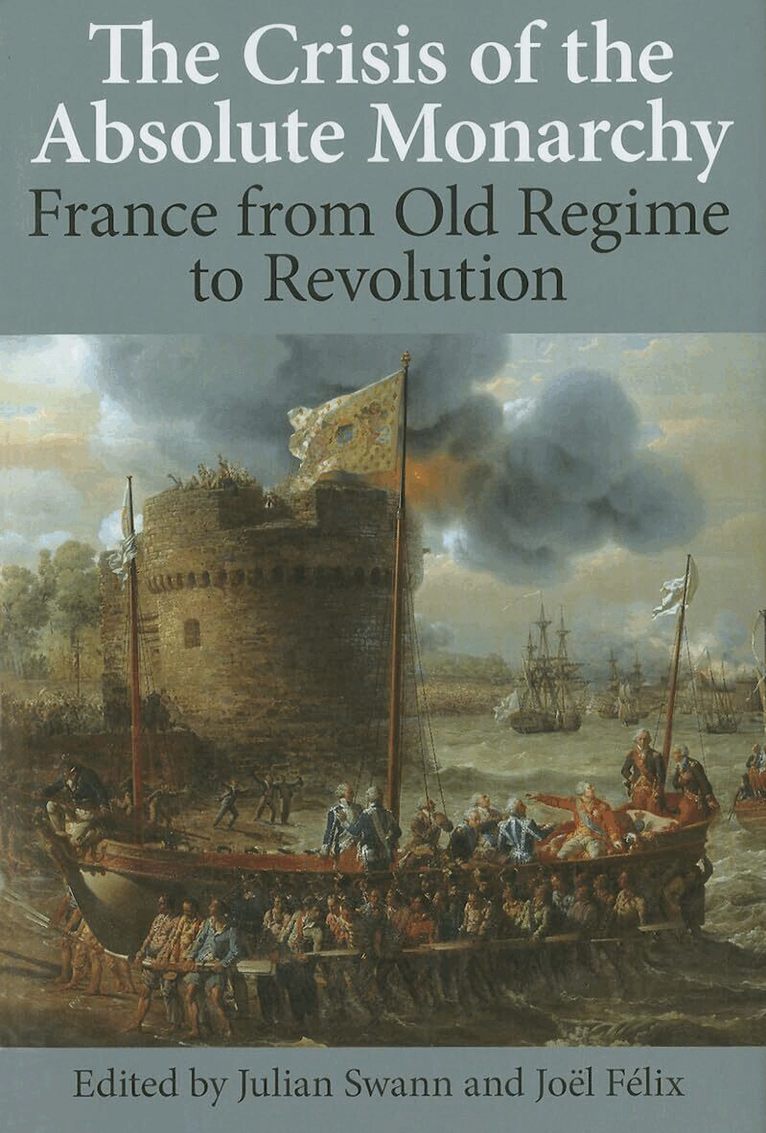
The Crisis of the Absolute Monarchy
From the Old Regime to the French Revolution
Inbunden, Engelska, 2013
1 174 kr
Skickas inom 7-10 vardagar
For generations of historians, 1789 was a defining moment in world history and it has been said to mark, amongst other things, the triumph of the bourgeoisie, the birth of modernity, the rise of nationalism or even the invention of ideology. To explain an event of such magnitude it was understandable that historians should seek no less portentous explanations of its origins and that factors such as the rise of capitalism, class struggle or the impact of the Enlightenment were cited as the long-term causes of Revolution.In recent years, however, there has been a preoccupation with the actual course of the Revolution. The prevailing concern with political culture and gender as analytical tools has illuminated developments in Paris and in the French provinces, and has brought to prominence many themes inadequately explored during earlier scholarly generations. Rather less attention is given currently to how France was plunged into revolutionary turmoil, which is now taken largely as a 'given'. The present collection, by contrast, focuses once again upon the origins of the dramatic events within and beyond France which transformed later eighteenth-century Europe so comprehensively and established the terms of political and social struggle for the next two centuries. It presents a series of up-to-date essays which, collectively, provide a new interpretation of the origins of the Revolution. Uniquely among recent contributions to the field, this volume transcends national historiographical traditions and includes contributions by leading experts from France, Britain and the United States, giving it a breadth of approach which previous scholarship has lacked.
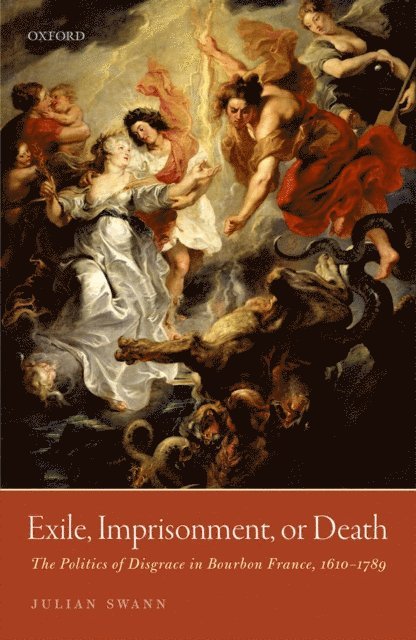
Exile, Imprisonment, or Death
The Politics of Disgrace in Bourbon France, 1610-1789
Inbunden, Engelska, 2017
2 393 kr
Skickas inom 5-8 vardagar
On the accession of Louis XIII in 1610 following the assassination of his father, the Bourbon dynasty stood on unstable foundations. For all of Henri IV's undoubted achievements, he had left his son a realm that was still prey to the ambitions of an aristocracy that possessed independent military force and was prepared to resort to violence and vendetta in order to defend its interests and honour. To establish his personal authority, Louis XIII was forced to resort to conspiracy and murder, and even then his authority was constantly challenged. Yet a little over a century later, as the reign of Louis XIV drew to a close, such disobedience was impossible. Instead, a simple royal command expressing the sovereign's disgrace was sufficient to compel the most powerful men and women in the kingdom to submit to imprisonment or internal exile without a trial or an opportunity to justify their conduct, abandoning their normal lives, leaving families, careers, offices, and possessions behind in obedience to their sovereign. To explain that transformation, this volume examines the development of this new 'politics of disgrace', why it emerged, how it was conceptualised, the conventions that governed its use, and reactions to it, not only from the perspective of the monarch and his noble subjects, but also the great corporations of the realm and the wider public. Although that new model of disgrace proved remarkably successful, influencing the ideas and actions of the dominant social elites, it was nevertheless contested, and the critique of disgrace connects to the second aim of this work, which is to use shifting attitudes to the practice as a means of investigating the nature of Ancien Régime political culture and some of the dramatic and profound changes it experienced in the years separating Louis XIII's dramatic seizure of power from the French Revolution.
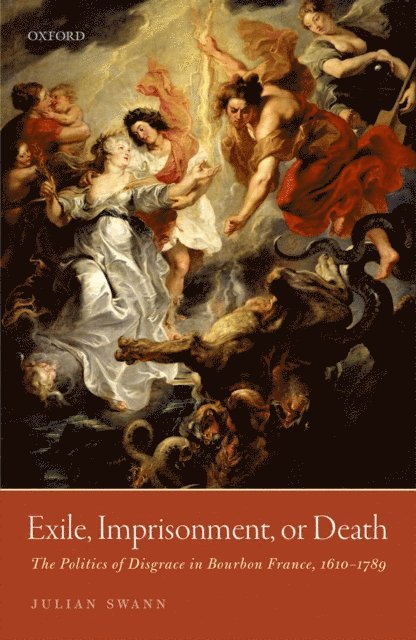
Exile, Imprisonment, or Death
The Politics of Disgrace in Bourbon France, 1610-1789
Häftad, Engelska, 2019
579 kr
Skickas inom 5-8 vardagar
On the accession of Louis XIII in 1610 following the assassination of his father, the Bourbon dynasty stood on unstable foundations. For all of Henri IV's undoubted achievements, he had left his son a realm that was still prey to the ambitions of an aristocracy that possessed independent military force and was prepared to resort to violence and vendetta in order to defend its interests and honour. To establish his personal authority, Louis XIII was forced to resort to conspiracy and murder, and even then his authority was constantly challenged. Yet a little over a century later, as the reign of Louis XIV drew to a close, such disobedience was impossible. Instead, a simple royal command expressing the sovereign's disgrace was sufficient to compel the most powerful men and women in the kingdom to submit to imprisonment or internal exile without a trial or an opportunity to justify their conduct, abandoning their normal lives, leaving families, careers, offices, and possessions behind in obedience to their sovereign. To explain that transformation, this volume examines the development of this new 'politics of disgrace', why it emerged, how it was conceptualised, the conventions that governed its use, and reactions to it, not only from the perspective of the monarch and his noble subjects, but also the great corporations of the realm and the wider public. Although that new model of disgrace proved remarkably successful, influencing the ideas and actions of the dominant social elites, it was nevertheless contested, and the critique of disgrace connects to the second aim of this work, which is to use shifting attitudes to the practice as a means of investigating the nature of Old Regime political culture and some of the dramatic and profound changes it experienced in the years separating Louis XIII's dramatic seizure of power from the French Revolution.
Provincial Power and Absolute Monarchy
The Estates General of Burgundy, 1661-1790
Häftad, Engelska, 2007
699 kr
Skickas inom 7-10 vardagar
This is the first book in English to study the history of the Estates General of Burgundy during the classic period of absolute monarchy. Although not a representative institution in any modern sense, the Estates were constantly engaged in a process of bargaining with the French crown, and this book examines that relationship under the Ancien Régime. Julian Swann analyses the organization, membership and powers of the Estates and explores their administration, their struggles for power with rival institutions and their relationship with the crown and with the Burgundian people. The Estates proved remarkably resilient when confronted by the challenges posed by the Bourbon monarchy, and by the reign of Louis XVI they were seemingly more powerful than ever. However the desire to protect their privileges and to extend their authority had not been accompanied by an attempt to forge a meaningful relationship with the people they claimed to serve.
631 kr
Skickas inom 7-10 vardagar
Politics in eighteenth-century France was dominated by the relationship between the crown and the magistrates of the Parlement of Paris. The Parlement provided a traditional check upon the King's authority, but after 1750 it entered a period of prolonged confrontation with the government of Louis XV. The religious, financial and administrative policies of the monarchy were subject to sustained opposition, and the magistrates employed arguments which challenged the foundations of royal authority. This struggle was brought to an abrupt conclusion in 1771, when Chancellor de Maupeou implemented a royal revolution, breaking the power of the Parlement. In order to explain why the crown and the Parlement drifted into conflict, this study re-examines the conduct of government under Louis XV, the role of the magistrates, and the structure of judicial politics in eighteenth-century France.
Provincial Power and Absolute Monarchy
The Estates General of Burgundy, 1661-1790
Inbunden, Engelska, 2003
1 634 kr
Skickas inom 7-10 vardagar
This is the first book in English to study the history of the Estates General of Burgundy during the classic period of absolute monarchy. Although not a representative institution in any modern sense, the Estates were constantly engaged in a process of bargaining with the French crown, and this book examines that relationship under the Ancien Régime. Julian Swann analyses the organization, membership and powers of the Estates and explores their administration, their struggles for power with rival institutions and their relationship with the crown and with the Burgundian people. The Estates proved remarkably resilient when confronted by the challenges posed by the Bourbon monarchy, and by the reign of Louis XVI they were seemingly more powerful than ever. However the desire to protect their privileges and to extend their authority had not been accompanied by an attempt to forge a meaningful relationship with the people they claimed to serve.
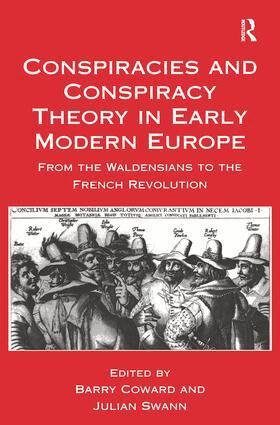
Conspiracies and Conspiracy Theory in Early Modern Europe
From the Waldensians to the French Revolution
Inbunden, Engelska, 2004
2 617 kr
Skickas inom 5-8 vardagar
For many generations, Guy Fawkes and his gunpowder plot, the 'Man in the Iron Mask' and the 'Devils of Loudun' have offered some of the most compelling images of the early modern period. Conspiracies, real or imagined, were an essential feature of early modern life, offering a seemingly rational and convincing explanation for patterns of political and social behaviour. This volume examines conspiracies and conspiracy theory from a broad historical and interdisciplinary perspective, by combining the theoretical approach of the history of ideas with specific examples from the period. Each contribution addresses a number of common themes, such as the popularity of conspiracy theory as a mode of explanation through a series of original case studies. Individual chapters examine, for example, why witches, religious minorities and other groups were perceived in conspiratorial terms, and how far, if at all, these attitudes were challenged or redefined by the Enlightenment. Cultural influences on conspiracy theory are also discussed, particularly in those chapters dealing with the relationship between literature and politics. As prevailing notions of royal sovereignty equated open opposition with treason, almost any political activity had to be clandestine in nature, and conspiracy theory was central to interpretations of early modern politics. Factions and cabals abounded in European courts as a result, and their actions were frequently interpreted in conspiratorial terms. By the late eighteenth century it seemed as if this had begun to change, and in Britain in particular the notion of a 'loyal opposition' had begun to take shape. Yet the outbreak of the French Revolution was frequently explained in conspiratorial terms, and subsequently European rulers and their subjects remained obsessed with conspiracies both real and imagined. This volume helps us to understand why.