Juliana Schiesari - Böcker
Visar alla böcker från författaren Juliana Schiesari. Handla med fri frakt och snabb leverans.
4 produkter
4 produkter
Del 10 - FlashPoints
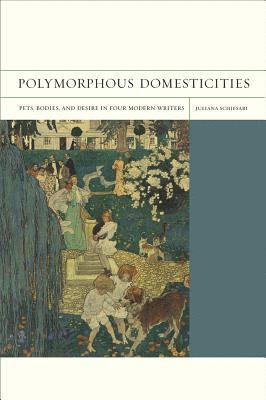
Polymorphous Domesticities
Pets, Bodies, and Desire in Four Modern Writers
Häftad, Engelska, 2012
798 kr
Skickas inom 3-6 vardagar
"Polymorphous Domesticities" maps out the play of gender, sexuality, and alternative forms of domesticity in the works of four modern European and American writers - Edith Wharton, Djuna Barnes, Colette, and J.R. Ackerley. What these four writers have in common is a defiance of patriarchal paradigms in their lives as well as in their works. Not only did they live outside the norms of the heterosexual family unit, they also pursued and wrote about alternative lifestyles that prominently involved animals. Through close readings from a feminist perspective, Juliana Schiesari reconfigures the ways in which interspecies relationships inflect domestic spheres, reading the "Other" through the lens of gender, home, and family. As she explores how domestic life is refigured by the presence of animals, Schiesari challenges anthropocentric frames of reference and brings the very definition of "human" into question.
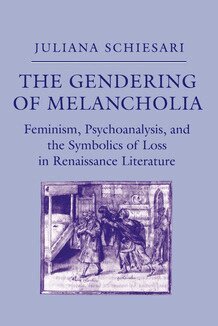
Gendering of Melancholia
Feminism, Psychoanalysis, and the Symbolics of Loss in Renaissance Literature
Inbunden, Engelska, 1992
773 kr
Skickas inom 10-15 vardagar
The pantheon of renowned melancholics—from Shakespeare's Hamlet to Walter Benjamin—includes no women, an absence that in Juliana Schiesari's view points less to a dearth of unhappy women in patriarchal culture than to the lack of significance accorded to women's grief. Through penetrating readings of texts from Aristotle to Kristeva, she illuminates the complex history of the symbolics of loss in Renaissance literature.The pantheon of renowned melancholics—from Shakespeare's Hamlet to Walter Benjamin—includes no women, an absence that in Juliana Schiesari's view points less to a dearth of unhappy women in patriarchal culture than to the lack of significance accorded to women's grief. Through penetrating readings of texts from Aristotle to Kristeva, she illuminates the complex history of the symbolics of loss in Renaissance literature.Schiesari first considers the development of the concept of melancholia in the writings of Freud and then surveys recent responses by such theorists as Luce Irigaray, KaJa Silverman, and Julia Kristeva. Schiesari provides fresh interpretations of works by Aristotle, Hildegard of Bingen, and Ficino and she considers women's poetry of the Italian Renaissance, key works by Tasso and Shakespeare, and the writings of Walter Benjamin and Jacques Lacan. According to Schiesari, male melancholia was celebrated during the Renaissance as a sign of inspired genius, at the same time as public rituals of mourning led by women were suppressed.The Gendering of Melancholia will be stimulating reading for scholars and students in the fields of feminist criticism, psychoanalytic and literary theory, and Renaissance studies, and for anyone interested in Western cultural history.
Gendering of Melancholia
Feminism, Psychoanalysis, and the Symbolics of Loss in Renaissance Literature
Häftad, Engelska, 1992
498 kr
Skickas inom 10-15 vardagar
The pantheon of renowned melancholics—from Shakespeare's Hamlet to Walter Benjamin—includes no women, an absence that in Juliana Schiesari's view points less to a dearth of unhappy women in patriarchal culture than to the lack of significance accorded to women's grief. Through penetrating readings of texts from Aristotle to Kristeva, she illuminates the complex history of the symbolics of loss in Renaissance literature.The pantheon of renowned melancholics—from Shakespeare's Hamlet to Walter Benjamin—includes no women, an absence that in Juliana Schiesari's view points less to a dearth of unhappy women in patriarchal culture than to the lack of significance accorded to women's grief. Through penetrating readings of texts from Aristotle to Kristeva, she illuminates the complex history of the symbolics of loss in Renaissance literature.Schiesari first considers the development of the concept of melancholia in the writings of Freud and then surveys recent responses by such theorists as Luce Irigaray, KaJa Silverman, and Julia Kristeva. Schiesari provides fresh interpretations of works by Aristotle, Hildegard of Bingen, and Ficino and she considers women's poetry of the Italian Renaissance, key works by Tasso and Shakespeare, and the writings of Walter Benjamin and Jacques Lacan. According to Schiesari, male melancholia was celebrated during the Renaissance as a sign of inspired genius, at the same time as public rituals of mourning led by women were suppressed.The Gendering of Melancholia will be stimulating reading for scholars and students in the fields of feminist criticism, psychoanalytic and literary theory, and Renaissance studies, and for anyone interested in Western cultural history.
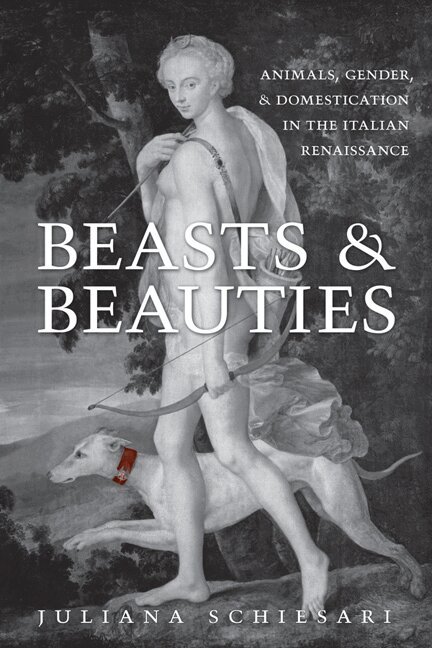
Beasts and Beauties
Animals, Gender, and Domestication in the Italian Renaissance
Inbunden, Engelska, 2010
536 kr
Skickas inom 11-20 vardagar
The question of what it means to be human has preoccupied thinkers since antiquity. The classical humanism of the Italian Renaissance saw humanity as hierarchical, with elite European males at the apex while women, lower class or foreign men, and animals occupied varying lesser degrees of being. Using the theme of domestication to interrogate the intertwined notions of femininity, sexuality, and animality, Juliana Schiesari looks to early modern Italy to uncover the origins of the modern conception of the human.Beasts and Beauties examines the relationship between domesticity and power by focusing on the contemporaneous development of two phenomena - the invention of the 'pet' and the delineation of the home as a uniquely private enclosure, where the pater familias ruled over his own secluded world of domesticated wife, children, servants, and animals. Drawing upon canonical works and authors of the Italian Renaissance, Schiesari discusses how the figure of the animal resituates these works and provides a fresh perspective to how we as human beings perceive ourselves in relation to the world.