Julie L. Andsager – författare
Visar alla böcker från författaren Julie L. Andsager. Handla med fri frakt och snabb leverans.
7 produkter
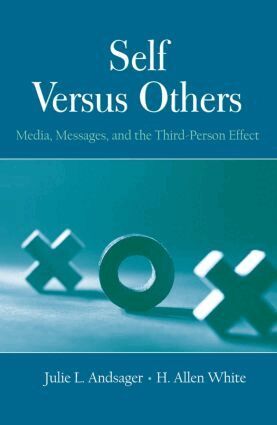
Self Versus Others
Media, Messages, and the Third-Person Effect
Av Julie L. Andsager, H. Allen White
Häftad, 2013
808 kr
Lägg i varukorg
Self Versus Others explores the third-person effect and its role in media as a means of persuasion. This scholarly work synthesizes more than two decades of research on the third-person effect, the process in which individuals do not perceive themselves to be impacted by particular messages—such as …
Self Versus Others
Media, Messages, and the Third-Person Effect
Av Julie L. Andsager, H. Allen White
Inbunden, 2007
2448 kr
Lägg i varukorg
Self Versus Others explores the third-person effect and its role in media as a means of persuasion. This scholarly work synthesizes more than two decades of research on the third-person effect, the process in which individuals do not perceive themselves to be impacted by particular messages—such as …
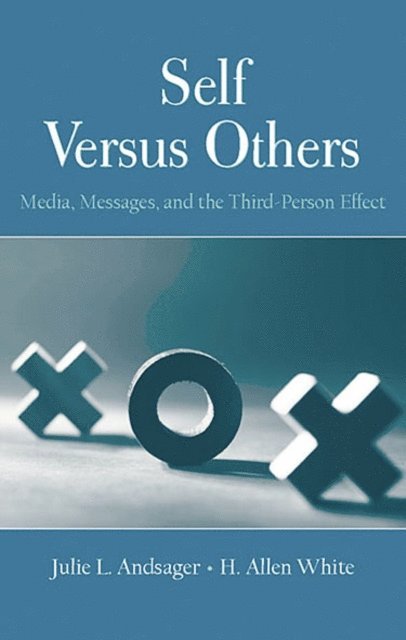
Self Versus Others
Media, Messages, and the Third-Person Effect
Av H. Allen White, Julie L. Andsager
E-bok, 2009
926 kr
Lägg i varukorg
Self Versus Others explores the third-person effect and its role in media as a means of persuasion. This scholarly work synthesizes more than two decades of research on the third-person effect, the process in which individuals do not perceive themselves to be impacted by particular messages—such …
Self Versus Others
Media, Messages, and the Third-Person Effect
Av H. Allen White, Julie L. Andsager
E-bok, 2009
926 kr
Lägg i varukorg
Self Versus Others explores the third-person effect and its role in media as a means of persuasion. This scholarly work synthesizes more than two decades of research on the third-person effect, the process in which individuals do not perceive themselves to be impacted by particular messages—such …
Free Expression in Five Democratic Publics
Support for Individual and Media Rights
Av Julie L. Andsager, Robert O Wyatt m. fl.
Inbunden, 2004
800 kr
Lägg i varukorg
To date, scholarly work on public support for free expression has been rather sporadic and primarily descriptive. The authors propose the theory that those who hold power in a society are more likely than the comparatively disenfranchised to support free speech and free press rights. They support …
Free Expression in Five Democratic Publics
Support for Individual and Media Rights
Av Julie L. Andsager, Robert O Wyatt m. fl.
Häftad, 2004
333 kr
Lägg i varukorg
To date, scholarly work on public support for free expression has been rather sporadic and primarily descriptive. The authors propose the theory that those who hold power in a society are more likely than the comparatively disenfranchised to support gree speech and free press rights. They support …