Julie M. Johnson – författare
Visar alla böcker från författaren . Handla med fri frakt och snabb leverans.
3 produkter
3 produkter
Häftad, Engelska, 2009
752 kr
Skickas inom 10-15 vardagar
Immigration to America is an issue that often sparks intense emotional reactions—from passion and compassion to anger and even rage. Often missing from the dialogue, however, is discussion of the strengths of immigrant newcomers—the abilities and positive characteristics they bring as individuals and families to our country, and how these contribute to the agency, growth, and vitality of America. This book was intended to move the discussion of immigration, generally speaking, and of immigrant families specifically, to include how and in what ways new immigrants to America (those arriving within the past thirty years) have changed the social and geocultural landscape of this country in positive, beneficial, and valuable ways. The book is comprised of nineteen chapters written by scholars with expertise on immigrant families representing every corner of the globe—from Africa and India to Europe and Central America. In each chapter, the unique factors, processes, and worldviews which help shape and mold the immigrant experience are articulated, as are the strengths immigrant newcomers bring to America. In addition, beyond explicating the strengths of immigrant families, each of the nineteen contributing chapters focuses on the implications of these strengths for families, communities, and the culture. Thus, the book provides a springboard from which to answer the application and "what now" questions for those who work with immigrant families in a variety of capacities—from academicians and researchers to educators and human-service providers.
E-bok
Engelska, 2012268 kr
Läs direkt efter köp
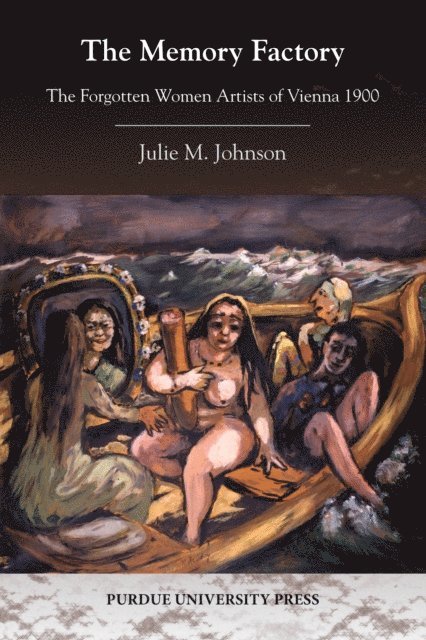
The Memory Factory introduces an English-speaking public to the significant women artists of Vienna at the turn of the twentieth century, each chosen for her aesthetic innovations and participation in public exhibitions. These women played important public roles as exhibiting artists, both individually and in collectives, but this history has been silenced over time. Their stories show that the city of Vienna was contradictory and cosmopolitan: despite men-only policies in its main art institutions, it offered a myriad of unexpected ways for women artists to forge successful public careers. Women artists came from the provinces, Russia, and Germany to participate in its vibrant art scene. However, and especially because so many of the artists were Jewish, their contributions were actively obscured beginning in the late 1930s. Many had to flee Austria, losing their studios and lifework in the process. Some were killed in concentration camps. Along with the stories of individual women artists, the author reconstructs the history of separate women artists'' associations and their exhibitions. Chapters covering the careers of Tina Blau, Elena Luksch-Makowsky, Bronica Koller, Helene Funke, and Teresa Ries (among others) point to a more integrated and cosmopolitan art world than previously thought; one where women became part of the avant-garde, accepted and even highlighted in major exhibitions at the Secession and with the Klimt group.
E-bok
PDF, Engelska, 2012277 kr
Läs direkt efter köp
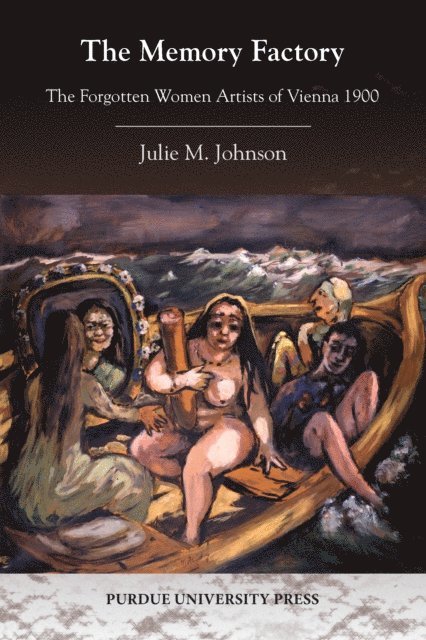
The Memory Factory introduces an English-speaking public to the significant women artists of Vienna at the turn of the twentieth century, each chosen for her aesthetic innovations and participation in public exhibitions. These women played important public roles as exhibiting artists, both individually and in collectives, but this history has been silenced over time. Their stories show that the city of Vienna was contradictory and cosmopolitan: despite men-only policies in its main art institutions, it offered a myriad of unexpected ways for women artists to forge successful public careers. Women artists came from the provinces, Russia, and Germany to participate in its vibrant art scene. However, and especially because so many of the artists were Jewish, their contributions were actively obscured beginning in the late 1930s. Many had to flee Austria, losing their studios and lifework in the process. Some were killed in concentration camps. Along with the stories of individual women artists, the author reconstructs the history of separate women artists'' associations and their exhibitions. Chapters covering the careers of Tina Blau, Elena Luksch-Makowsky, Bronica Koller, Helene Funke, and Teresa Ries (among others) point to a more integrated and cosmopolitan art world than previously thought; one where women became part of the avant-garde, accepted and even highlighted in major exhibitions at the Secession and with the Klimt group.