

Julie Parle – författare
Visar alla böcker från författaren . Handla med fri frakt och snabb leverans.
2 produkter
2 produkter
Häftad, Engelska, 2007
447 kr
Skickas inom 5-8 vardagar
This study of mental illness and its cures in colonial and immediately post-Union Natal and Zululand investigates Westernised treatments of insanity at the Natal Government Asylum, as well as less well-known routes back to health via African and Indian modes of healing. Julie Parle writes of the amandiki, bands of frenzied women who explained their illness as caused by possession by a male ancestor. She discusses quacks, medicines for hysteria and drunkenness, faith healers of different kinds, and suicide in all communities. Finally, she considers how mental health services became centralised under state control from Pretoria, with important consequences for the future of psychiatry and mental health services in modern South Africa.
E-bok
PDF, Engelska, 2019734 kr
Läs direkt efter köp
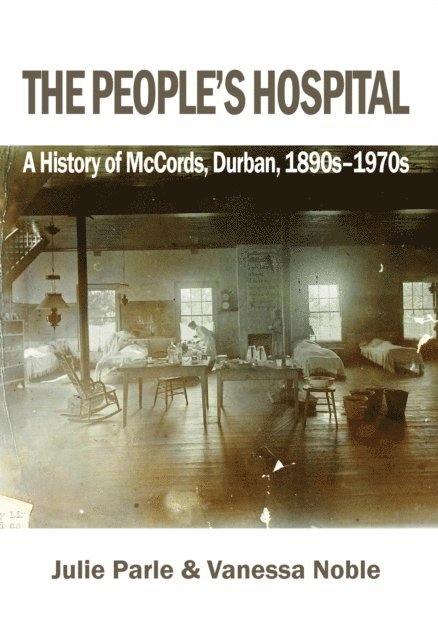
Durban''s McCord Hospital, this book argues, is one of the most important hospitals of the twentieth century. Founded ''for the Zulu'' in 1909 by American Christian missionaries, Dr James B. McCord and Margaret Mellen McCord, for more than a century it was a centre of affordable health care for the under privileged of many faiths, cultures and political persuasions. It also pioneered the training of black nurses, midwives and doctors and was supported by prominent figures such as John L. Dube and Chief Albert Luthuli. It initially faced, however, strong opposition from white factions in Durban and, by the 1960s was directly targeted for closure by South African Prime Minister Hendrik Verwoerd himself. McCords survived in part because apartheid forces did not understand that for several generations and for many communities, it had come to be a ''people''s hospital''. This identity would help carry it through to the early twenty-first century with the conviction and courage, when necessary, to stand up against the State when its policies threatened the health of all South Africa''s people. This is a history of the religious, health, medical and political contexts of Natal and South Africa from the late 1800s to the 1970s. There are many stories of important firsts and milestones, but what emerges is more than simply a straightforward tale of heroism and triumph. Instead, we tell multiple stories of struggles, successes, failures, frustrations, sacrifices, and how, on occasion, difficult choices and compromises had to be made.