Julie Yingling - Böcker
Visar alla böcker från författaren Julie Yingling. Handla med fri frakt och snabb leverans.
4 produkter
4 produkter
Del 1 - Key Themes in Family Communication
Families Communicating With Children
Inbunden, Engelska, 2010
715 kr
Skickas inom 7-10 vardagar
This book offers a fresh and insightful introduction to children's communication development that emphasizes how families help children learn to communicate optimally. Writing for communication students, parents, teachers, and all who care for children, the authors argue that optimal development of children's communication competencies depends on family participation in everyday learning situations that challenge children's skills and build communication confidence. The book mirrors the organization and coverage of existing family communication textbooks, making it a valuable addition to coursework about families, communication, and development. Chapter topics include: an overview of communication development: universal stages and cultural variations; communication development at home: nonverbal, verbal and mediated skills; relational and group dynamics in the home, including variations by ethnicity and family configuration; family roles and family rules for providing stability and structuring behavior; family resiliency in coping with challenges; strategies for fostering positive communication development in the home. Families Communicating with Children emphasizes the positive effects of family influence, and draws attention to cross-cultural variations in parenting as well as universal steps in development. These features clarify the process of communication development and offer an optimistic view of the future for the many shapes families assume today.
Del 2 - Key Themes in Family Communication
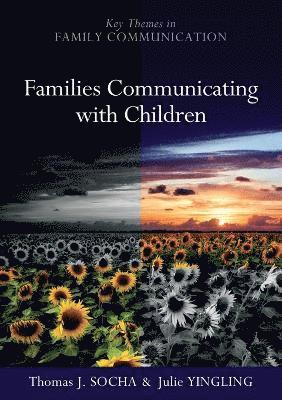
Families Communicating With Children
Häftad, Engelska, 2010
263 kr
Skickas inom 5-8 vardagar
This book offers a fresh and insightful introduction to children's communication development that emphasizes how families help children learn to communicate optimally. Writing for communication students, parents, teachers, and all who care for children, the authors argue that optimal development of children's communication competencies depends on family participation in everyday learning situations that challenge children's skills and build communication confidence. The book mirrors the organization and coverage of existing family communication textbooks, making it a valuable addition to coursework about families, communication, and development. Chapter topics include: an overview of communication development: universal stages and cultural variations; communication development at home: nonverbal, verbal and mediated skills; relational and group dynamics in the home, including variations by ethnicity and family configuration; family roles and family rules for providing stability and structuring behavior; family resiliency in coping with challenges; strategies for fostering positive communication development in the home. Families Communicating with Children emphasizes the positive effects of family influence, and draws attention to cross-cultural variations in parenting as well as universal steps in development. These features clarify the process of communication development and offer an optimistic view of the future for the many shapes families assume today.
2 554 kr
Skickas inom 5-8 vardagar
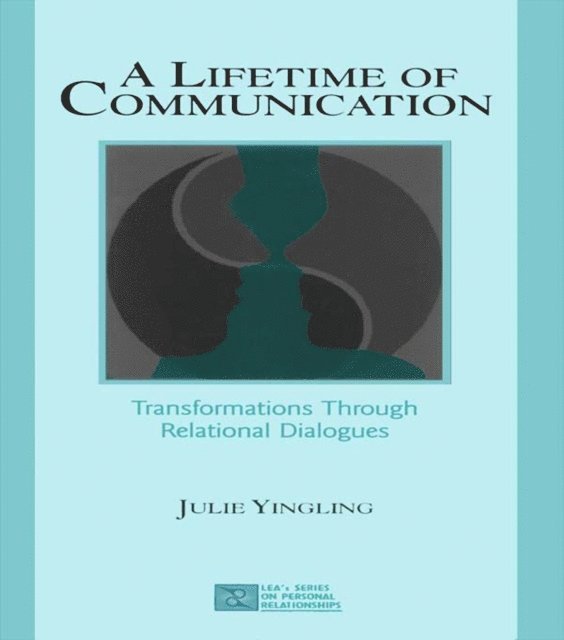
A Lifetime of Communication explores the developmental processes that make for uniquely human change and growth. In this distinctive work, author Julie Yingling utilizes a single case example of a child, her parents, and other influential figures to demonstrate developmental interaction and transformational life events. Using relational and dialogic perspectives, Yingling follows the child from infancy into adolescence and adulthood, through the stages which the child acquires the means to communicate, to form and develop through relationships, to build human cognitive processes, and to understand the self as a responsible part of the social world. The work presents traditional and cutting-edge developmental theories as well as current research and relational perspectives in a palatable framework, employing a case example from a person's life at the start of each content chapter. Yingling examines communication and cognition in the various stages of human development, making connections between communication, relationships, and maturation. She also distinguishes the biological and physiological portions of development from those that are relational and self-directed. She concludes the volume with a summary of relational dialogical theory and a discussion of the implications of this perspective of development-both for the future of communication study and for personal growth.This monograph offers many new insights to scholars in human development, relationships, family studies, social psychology, and others interested in communication and relationships across the life span. It is also appropriate for advanced undergraduate and graduate courses in relationships, developmental communication, and relational communication.
703 kr
Skickas inom 10-15 vardagar
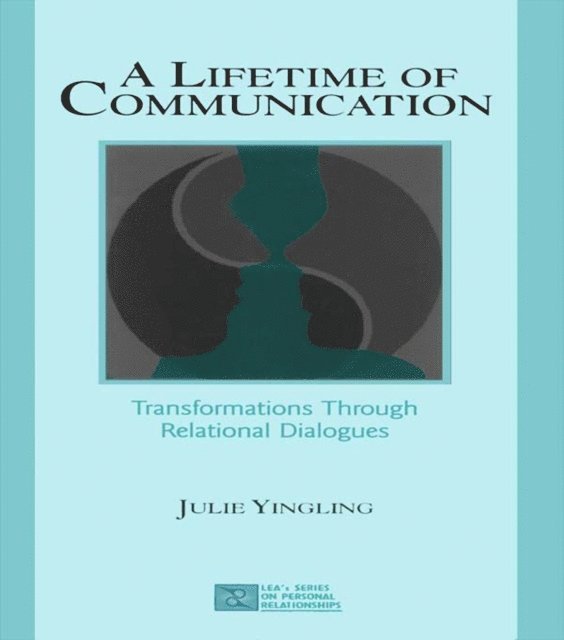
A Lifetime of Communication explores the developmental processes that make for uniquely human change and growth. In this distinctive work, author Julie Yingling utilizes a single case example of a child, her parents, and other influential figures to demonstrate developmental interaction and transformational life events. Using relational and dialogic perspectives, Yingling follows the child from infancy into adolescence and adulthood, through the stages which the child acquires the means to communicate, to form and develop through relationships, to build human cognitive processes, and to understand the self as a responsible part of the social world. The work presents traditional and cutting-edge developmental theories as well as current research and relational perspectives in a palatable framework, employing a case example from a person's life at the start of each content chapter. Yingling examines communication and cognition in the various stages of human development, making connections between communication, relationships, and maturation. She also distinguishes the biological and physiological portions of development from those that are relational and self-directed. She concludes the volume with a summary of relational dialogical theory and a discussion of the implications of this perspective of development-both for the future of communication study and for personal growth.This monograph offers many new insights to scholars in human development, relationships, family studies, social psychology, and others interested in communication and relationships across the life span. It is also appropriate for advanced undergraduate and graduate courses in relationships, developmental communication, and relational communication.