Julieanna Preston – författare
Visar alla böcker från författaren Julieanna Preston. Handla med fri frakt och snabb leverans.
10 produkter
10 produkter
Häftad, Engelska, 2006
628 kr
Skickas inom 5-8 vardagar
Walter Benjamin observed in his writings on the interior that 'to live means to leave traces.' This interior design theory reader focuses on just how such traces might manifest themselves. In order to explore interior design's links to other disciplines, the selected texts reflect a wide range of interests extending beyond the traditional confines of design and architecture. It is conceived as a matrix, which intersects social, political, psychological, philosophical, technological and gender discourse, with practice issues, such as materials, lighting, colour, furnishing, and the body. The anthology presents a complex and sometimes conflicting terrain, while also creating a distinct body of knowledge particular to the interior. Locating theory on the interior through these multifarious sources, it encourages future discourse in an area often marginalised but now emerging in its own right. Within the reader individual excerpts are referenced to their place in the matrix and sequenced alphabetically. This organising strategy resists both a chronological and themed structure in order to provoke associations and inferences between excerpts. In this way the book offers the possibility of examining the interior from multiple vantage points: a disciplinary focus, the spatial and physical attributes of interiors, historical sequence, and topical issue based. Excerpts from Thomas Hope, Catherine E. Beecher and Harriet Beecher Stowe, Edith Wharton and Charles Eastlake provide contemporary nineteenth century accounts as the profession emerges, whereas Barbara Penner, Penny Sparke, Charles Rice, Georges Teyssot and Rebecca Houze offer re-interpretations of this period. The complexities of the twentieth-century interior are revealed by Robyn Longhurst, Kevin Melchionne, George Wagner, John Macgregor Wise, Joel Sanders and many others.
Häftad, Engelska, 2026
506 kr
Skickas
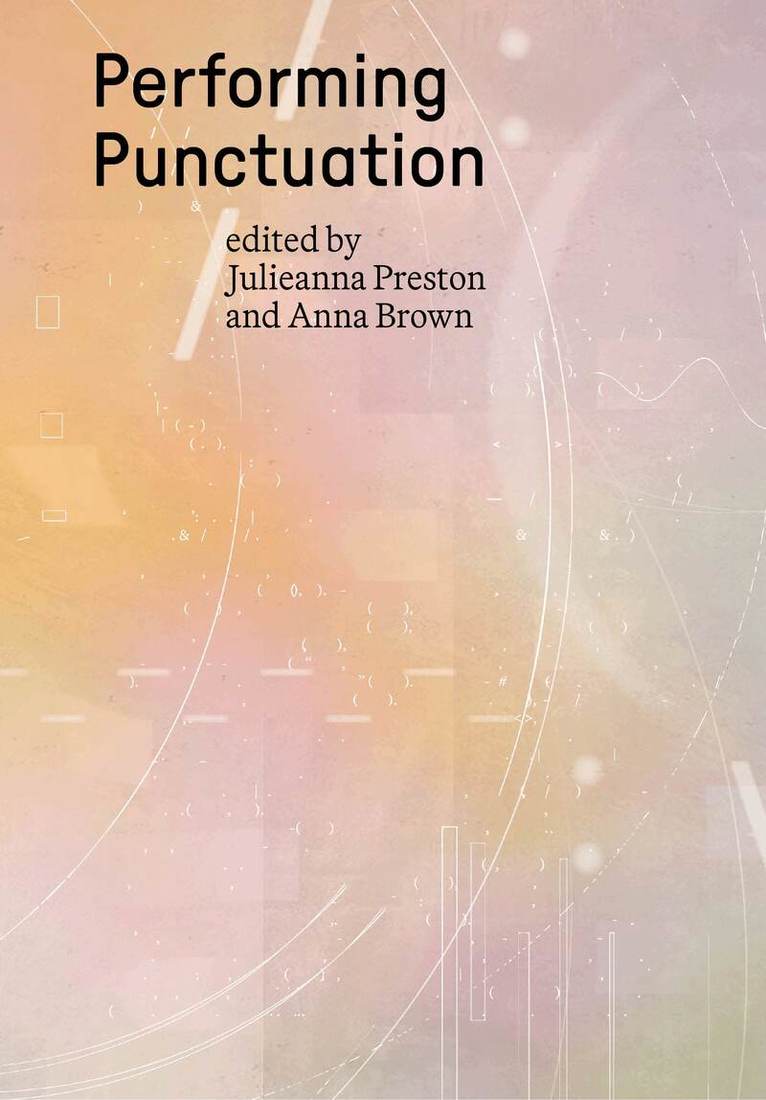
Performing Punctuation gathers writers/performers to highlight, question and contest colonising facets of English language punctuation, while looking for ways to reveal and rarefy these proprietary rules such that they are responsive, playful, generous, generative, and ultimately more inclusive.A transdisciplinary collaborative book that brings awareness to the limiting effects of the prevailing dominance of English language and its vociferous use of punctuation. The book's content and design is guided by this question: How can English language punctuation discard its domineering and strident overcoat to enable a greater diversity of readers, listeners, performers, writers, and practices?Performing Punctuation, bears out digressions, indiscretions, transgressions and fabulations of grammatical marks unfaithful to propriety. It makes public an on-going and refreshed movement to play humorously and tenaciously with those small but powerful writing marks that regulate, discipline and structure textual language and spoken discourse. These marks, symbols and rule-makers are anything but a mere neutral grammatical systems; they are language gremlins and pixies; inflecting and infecting agents with histories, voices and messages of their own accord. These marks are understood as part and parcel to the on-going colonising history of the English language.The collection brings together of a range of voices – Māori and Pākehā – and the collaborative editorial relationship with contributors allows conversation to develop between the elements of the book.
E-bok
PDF, Engelska, 2020166 kr
Läs direkt efter köp
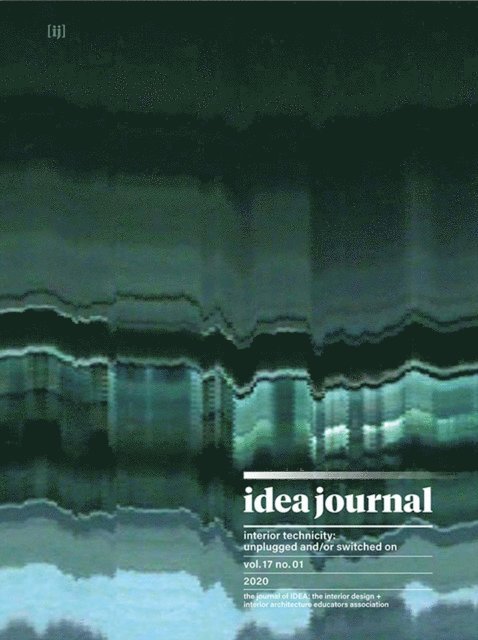
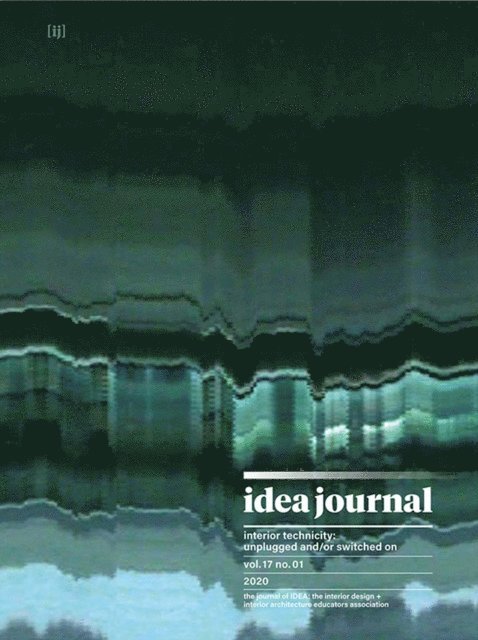
Interior Technicity: Unplugged and/ or Switched On invites reflection on how interiors have always been augmenting entities and how they continue to be so—in other words, extending, facilitating and consolidating bodies within socio-cultural environments. Rather than seeing an interior as an ''inside'' in opposition to a world beyond, it asks what modes of ''folding inward'' have equipped and enabled the spatial environment? Technicity—the world of tools and technical objects that extend and mediate memory, as Bernard Steigler (1998) describes it—has never been what inside-ness, in its sheltering of life, keeps at bay; mediation is from the start technical, indexed to inscribing practices rich in temporal and embodied implications. By this reading, interiors have always been augmented and augmenting (in the sense of the Latin"augmentare": to increase, enlarge, or enrich).This IDEA Journal issue considers this mode of ''folding inward'' as a condition of an interior''sspecificity. Whether it be a small structure such as a tramping hut or a tiny house, a large complex interior environment such as an airport or shopping mall, handmade with local materials such as Samoan fale, or the result of manufacturing processes assembling artificial and prefabricated elements as in the case of a spacecraft, boat or train, interiors are augmented, mediated, generated or embellished by technologies. The effect of these technologies is not neutral; one''s experience of an interior is significantly influenced by the affective resonance of its technologies.
E-bok
PDF, Engelska, 2020166 kr
Läs direkt efter köp
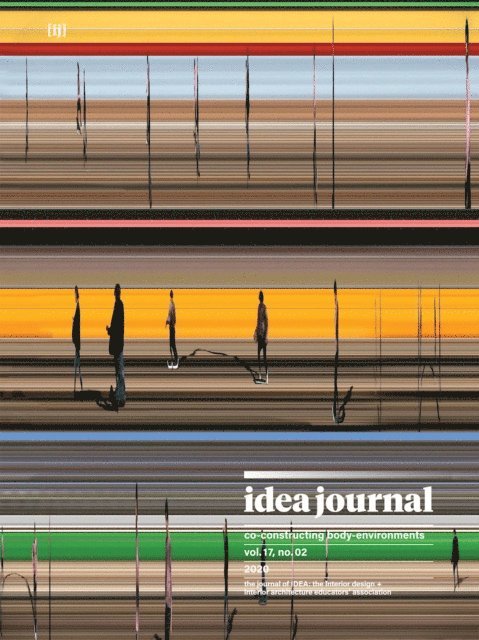
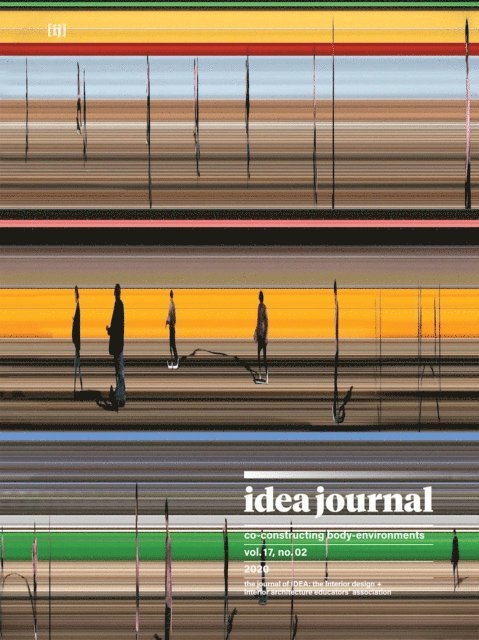
This special guest-edited issue extends the current discussions of art (inclusive of interior/ spatial design and architecture) as a process of social cognition and to address the gap between descriptions of embodied cognition and the co-construction of lived experience. Papers and exhibitions presented at the 2019 Bodies of Knowledge Conference have been advanced significantly as research articles and visual essays to focus on interdisciplinary connections across research practices that involve art and theories of cognition. These contributions emphasise how spatial art and design research approaches have enabled the articulation of a complex understanding of environments, spaces and experiences, including the spatial distribution of cultural, organizational and conceptual structures and relationships, as well as surrounding design features. Contributions address the following questions:• How do art and spatial practices increase the potential for knowledge transfer and celebrate diverse forms of embodied expertise? • How the examination of cultures of practice, Indigenous knowledges and cultural practices offer perspectives on inclusion, diversity, neurodiversity, disability and social justice issues? • How the art and spatial practices may contribute to research perspectives from contemporary cognitive neuroscience and the philosophy of mind? • The dynamic between an organism and its surroundings for example: How does art and design shift the way knowledge and thinking processes are acquired, extended and distributed? • How do art and design practices demonstrate the ways different forms of acquiring and producing knowledge intersect?
E-bok
PDF, Engelska, 2021166 kr
Läs direkt efter köp
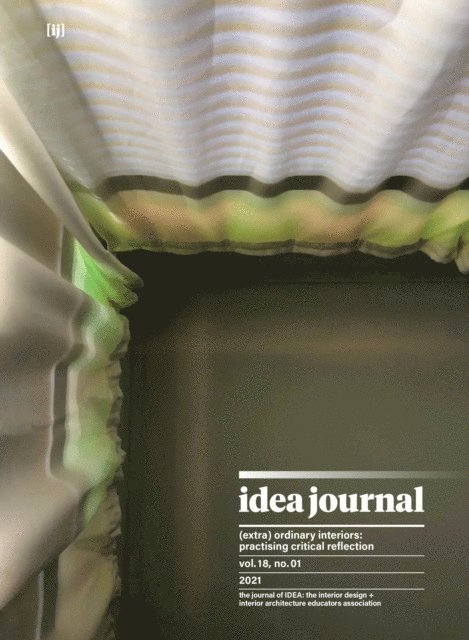
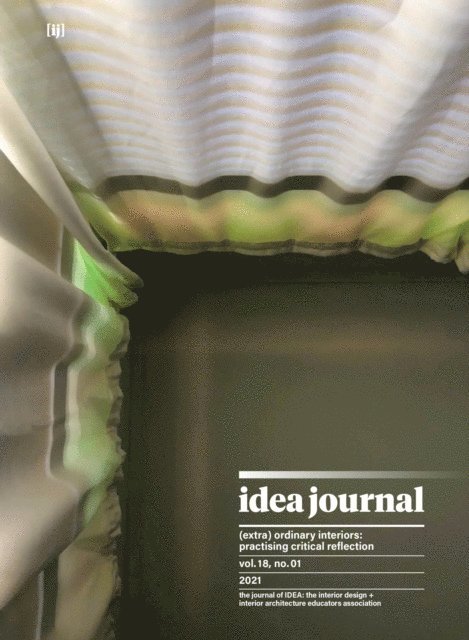
(Extra) Ordinary Interiors features research articles and visual essays by academics, research students and practitioners that demonstrate contemporary modes of criticality and reflection on specific interior environments in ways that expand upon that which is ordinary (of the everyday, common, banal, or taken for granted).
E-bok
Engelska, 2020166 kr
Läs direkt efter köp
Interior Technicity: Unplugged and/ or Switched On invites reflection on how interiors have always been augmenting entities and how they continue to be so—in other words, extending, facilitating and consolidating bodies within socio-cultural environments. Rather than seeing an interior as an ''inside'' in opposition to a world beyond, it asks what modes of ''folding inward'' have equipped and enabled the spatial environment? Technicity—the world of tools and technical objects that extend and mediate memory, as Bernard Steigler (1998) describes it—has never been what inside-ness, in its sheltering of life, keeps at bay; mediation is from the start technical, indexed to inscribing practices rich in temporal and embodied implications. By this reading, interiors have always been augmented and augmenting (in the sense of the Latin"augmentare": to increase, enlarge, or enrich).This IDEA Journal issue considers this mode of ''folding inward'' as a condition of an interior''sspecificity. Whether it be a small structure such as a tramping hut or a tiny house, a large complex interior environment such as an airport or shopping mall, handmade with local materials such as Samoan fale, or the result of manufacturing processes assembling artificial and prefabricated elements as in the case of a spacecraft, boat or train, interiors are augmented, mediated, generated or embellished by technologies. The effect of these technologies is not neutral; one''s experience of an interior is significantly influenced by the affective resonance of its technologies.
E-bok
Engelska, 2020166 kr
Läs direkt efter köp
This special guest-edited issue extends the current discussions of art (inclusive of interior/ spatial design and architecture) as a process of social cognition and to address the gap between descriptions of embodied cognition and the co-construction of lived experience. Papers and exhibitions presented at the 2019 Bodies of Knowledge Conference have been advanced significantly as research articles and visual essays to focus on interdisciplinary connections across research practices that involve art and theories of cognition. These contributions emphasise how spatial art and design research approaches have enabled the articulation of a complex understanding of environments, spaces and experiences, including the spatial distribution of cultural, organizational and conceptual structures and relationships, as well as surrounding design features. Contributions address the following questions:• How do art and spatial practices increase the potential for knowledge transfer and celebrate diverse forms of embodied expertise? • How the examination of cultures of practice, Indigenous knowledges and cultural practices offer perspectives on inclusion, diversity, neurodiversity, disability and social justice issues? • How the art and spatial practices may contribute to research perspectives from contemporary cognitive neuroscience and the philosophy of mind? • The dynamic between an organism and its surroundings for example: How does art and design shift the way knowledge and thinking processes are acquired, extended and distributed? • How do art and design practices demonstrate the ways different forms of acquiring and producing knowledge intersect?
E-bok
Engelska, 2021166 kr
Läs direkt efter köp
(Extra) Ordinary Interiors features research articles and visual essays by academics, research students and practitioners that demonstrate contemporary modes of criticality and reflection on specific interior environments in ways that expand upon that which is ordinary (of the everyday, common, banal, or taken for granted).
Engelska, 2026
522 kr
Tillfälligt slut
Engelska, 2026
504 kr
Tillfälligt slut