Julio C. Teehankee - Böcker
Visar alla böcker från författaren Julio C. Teehankee. Handla med fri frakt och snabb leverans.
3 produkter
3 produkter
576 kr
Skickas inom 10-15 vardagar
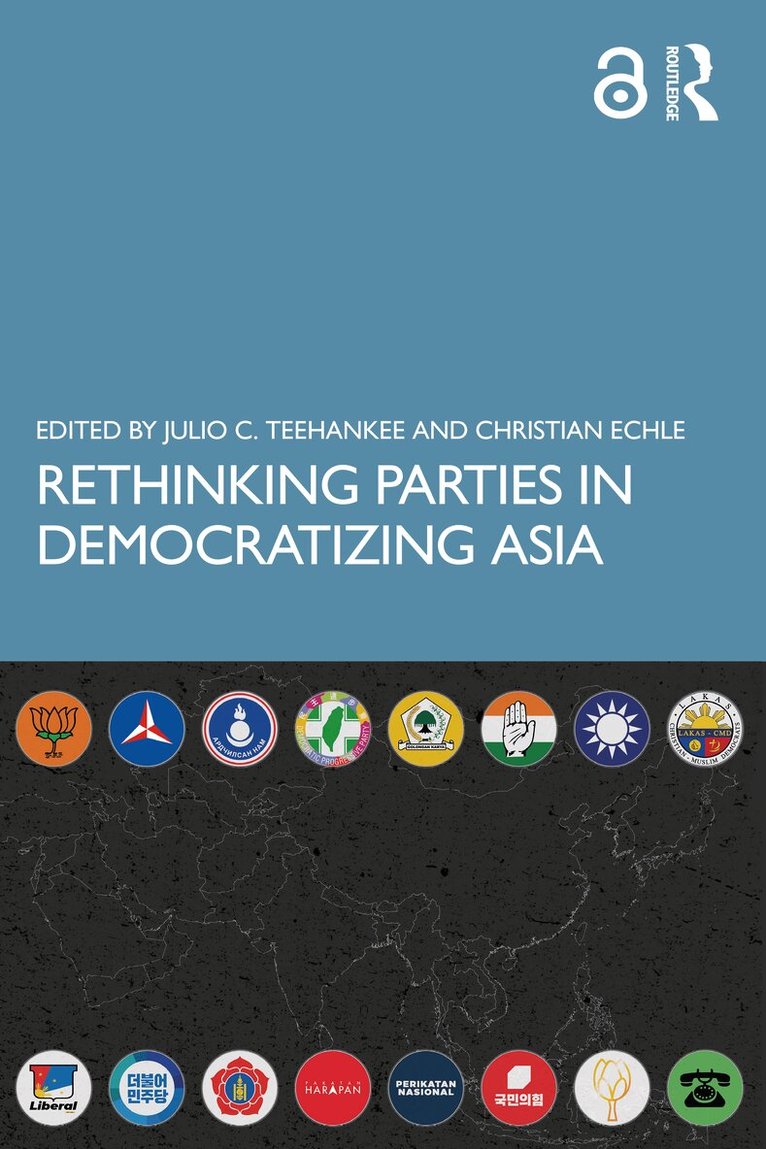
Looking at eight case studies of Asian democracies, the contributors to this volume analyze the role of political parties in stabilizing and institutionalizing democracies. How have democracies such as Indonesia, Sri Lanka, and the Philippines survived against the odds, despite struggling economic performance and highly unequal distribution of income? How have formerly authoritarian regimes in places like South Korea and Taiwan evolved into stable democracies? The contributors to this volume examine these case studies, along with Mongolia, Malaysia, and India, arguing that the common element is the extent to which political parties, including opposition parties, have become institutionalized and act as stabilizers on democracy. They contend that the role of political parties has been significantly underestimated in comparison with structural elements, which are insufficient to explain how these democracies have persisted. An essential resource for students and scholars of Asian politics, especially those with a focus on comparative politics, political parties, and institutions.The Open Access version of this book, available at www.taylorfrancis.com, has been made available under a Creative Commons Attribution-Non Commercial-No Derivatives 4.0 license. Funded by Konrad-Adenauer-Stiftung.
2 088 kr
Skickas inom 10-15 vardagar
Looking at eight case studies of Asian democracies, the contributors to this volume analyze the role of political parties in stabilizing and institutionalizing democracies. How have democracies such as Indonesia, Sri Lanka, and the Philippines survived against the odds, despite struggling economic performance and highly unequal distribution of income? How have formerly authoritarian regimes in places like South Korea and Taiwan evolved into stable democracies? The contributors to this volume examine these case studies, along with Mongolia, Malaysia, and India, arguing that the common element is the extent to which political parties, including opposition parties, have become institutionalized and act as stabilizers on democracy. They contend that the role of political parties has been significantly underestimated in comparison with structural elements, which are insufficient to explain how these democracies have persisted. An essential resource for students and scholars of Asian politics, especially those with a focus on comparative politics, political parties, and institutions.The Open Access version of this book, available at www.taylorfrancis.com, has been made available under a Creative Commons Attribution-Non Commercial-No Derivatives 4.0 license. Funded by Konrad-Adenauer-Stiftung.
2 192 kr
Skickas inom 3-6 vardagar
Containing the latest research and insights of academics and development practitioners pursuing political and economic reforms in the ASEAN region, Building Inclusive Democracies in ASEAN recognizes that a well-functioning democracy is part of what ultimately fosters inclusive growth and development. Inequitable access to democratic processes and mechanisms produce government policies and initiatives that are inconsistent with the needs of the majority.The chapters include empirical research on the symptoms and effects of traditional patron-client politics, experiences, insights, analyses, and policy recommendations, as well as reflections, on reform efforts along the lines of citizens' participation, transparency, and evidence-based policymaking.