Jun-Hyeok Kwak - Böcker
Visar alla böcker från författaren Jun-Hyeok Kwak. Handla med fri frakt och snabb leverans.
18 produkter
18 produkter
2 088 kr
Skickas inom 10-15 vardagar
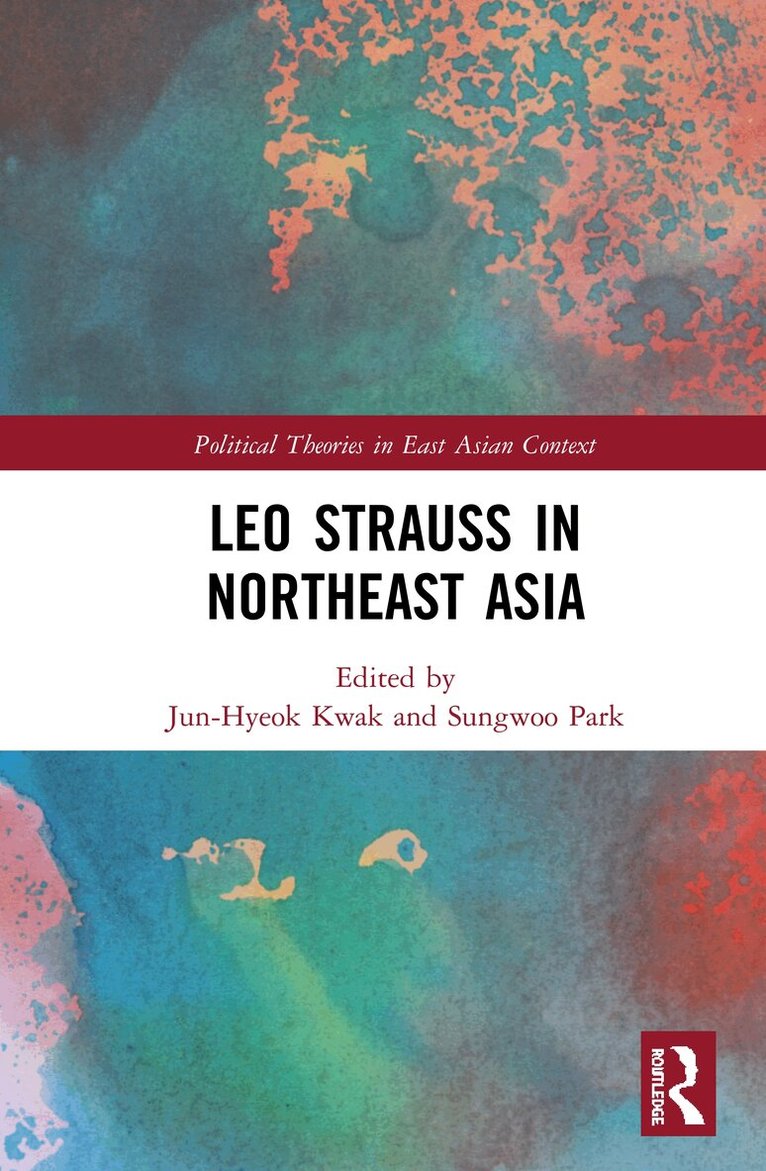
This book analyzes the reception of Leo Strauss and his political philosophy in Northeast Asia. By juxtaposing the central idea of Strauss’s political philosophy with the question of modernity, the contributors explore the eclectic adaptations of Strauss in Northeast Asian countries as a philosophical appropriation across cultures.Examining how Strauss’s philosophy was first introduced in Northeast Asia, the book sheds light on the similarities and differences in experiences, challenging the dominant approach which attributes various receptions of Strauss in Northeast Asia solely to sociopolitical circumstances. This book also seeks to move beyond a China-centric approach to investigate the possible transcultural appeals of Strauss’s political philosophy by exploring the cases of Japan and South Korea.Appealing to a wide network of scholars and practitioners in East Asia engaged in rethinking cultural particularities, this volume will be attractive to upper-level undergraduate students, graduate students, and advanced researchers in political philosophy, political theory, and Asian politics.
644 kr
Skickas inom 10-15 vardagar
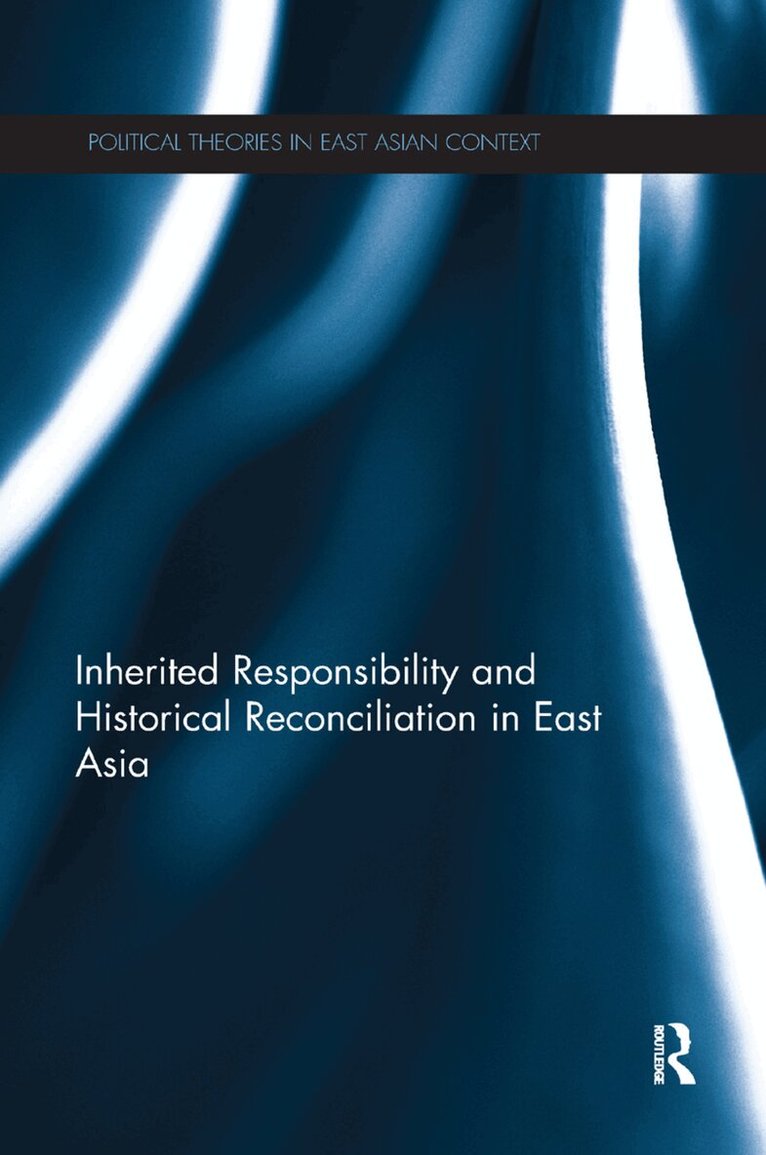
Contemporary East Asian societies are still struggling with complex legacies of colonialism, war and domination. Years of Japanese imperial occupation followed by the Cold War have entrenched competing historical understandings of responsibility for past crimes in Korea, China, Japan and elsewhere in the region. In this context, even the impressive economic and cultural networks that have developed over the past sixty years have failed to secure peaceful coexistence and overcome lingering attitudes of distrust and misunderstanding in the region. This book examines the challenges of historical reconciliation in East Asia, and, in doing so, calls for a reimagining of how we understand both historical identity and responsibility. It suggests that by adopting a ‘forward-looking’ approach that eschews obsession with the past, in favour of a reflective and deliberative engagement with history, real progress can be made towards peaceful coexistence in East Asia. With chapters that focus on select experiences from East Asia, while simultaneously situating them within a wider comparative perspective, the contributors to this volume focus on the close relationship between reconciliation and ‘inherited responsibility’ and reveal the contested nature of both concepts. Finally, this volume suggests that historical reconciliation is essential for strengthening mutual trust between the states and people of East Asia, and suggests ways in which such divisive legacies of conflict can be overcome. Providing both an overview of the theoretical arguments surrounding reconciliation and inherited responsibility, alongside examples of these concepts from across East Asia, this book will be valuable to students and scholars interested in Asian politics, Asian history and international relations more broadly.
2 088 kr
Skickas inom 10-15 vardagar
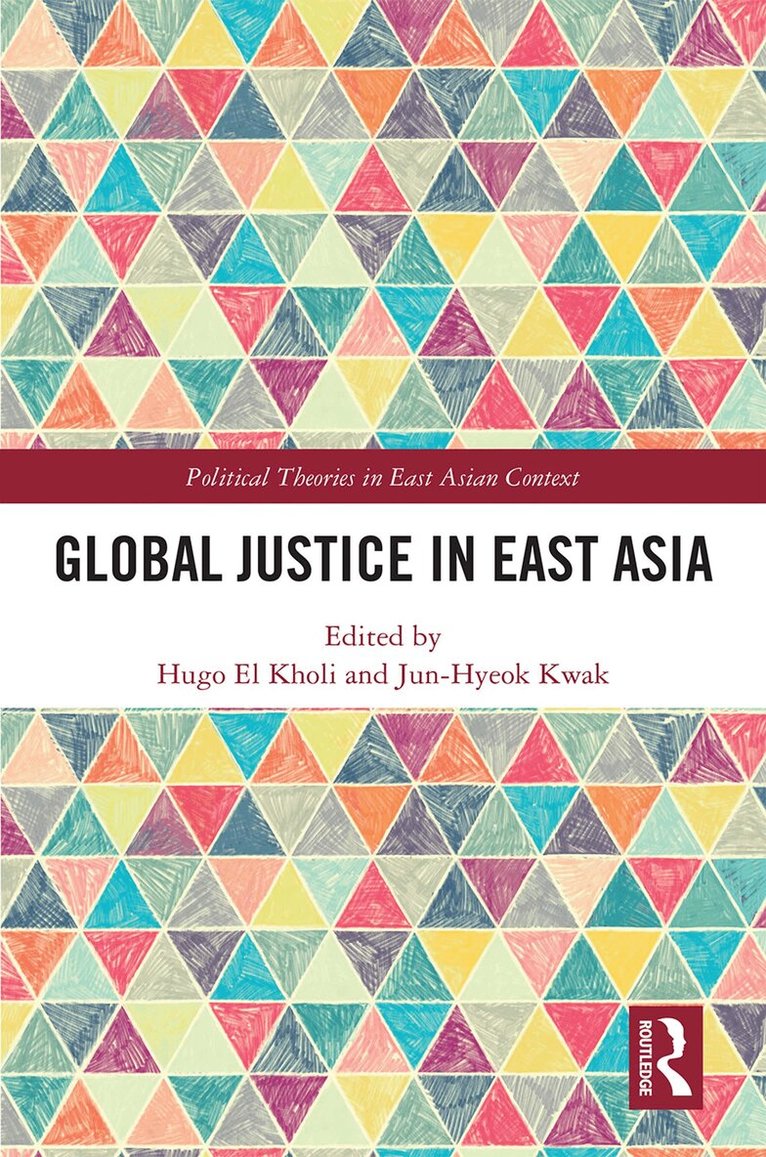
As a fascinating study of global justice in Asia, this book presents a series of contributions reflecting upon the conditions of a greater involvement of East Asian traditions of thought in the debate on global justice.Including chapters on diverse issues such as global social inequalities, human rights practice and the functioning of international institutions, this book examines the political cultures of East Asia in order to help political theorists better appraise the distinctiveness of non‐Western ideas of justice. Confirming the persistence of a strong social ethos, the contributions also demonstrate the long-lasting influence of Buddhism, Taoism and Confucianism in shaping East Asian public conceptions of justice.Bringing much needed non-Western voices to the global justice debate, this book will appeal to students and scholars of politics, law and philosophy, as well as activists involved in the global justice movement.
2 155 kr
Skickas inom 10-15 vardagar
Contemporary East Asian societies are still struggling with complex legacies of colonialism, war and domination. Years of Japanese imperial occupation followed by the Cold War have entrenched competing historical understandings of responsibility for past crimes in Korea, China, Japan and elsewhere in the region. In this context, even the impressive economic and cultural networks that have developed over the past sixty years have failed to secure peaceful coexistence and overcome lingering attitudes of distrust and misunderstanding in the region. This book examines the challenges of historical reconciliation in East Asia, and, in doing so, calls for a reimagining of how we understand both historical identity and responsibility. It suggests that by adopting a ‘forward-looking’ approach that eschews obsession with the past, in favour of a reflective and deliberative engagement with history, real progress can be made towards peaceful coexistence in East Asia. With chapters that focus on select experiences from East Asia, while simultaneously situating them within a wider comparative perspective, the contributors to this volume focus on the close relationship between reconciliation and ‘inherited responsibility’ and reveal the contested nature of both concepts. Finally, this volume suggests that historical reconciliation is essential for strengthening mutual trust between the states and people of East Asia, and suggests ways in which such divisive legacies of conflict can be overcome. Providing both an overview of the theoretical arguments surrounding reconciliation and inherited responsibility, alongside examples of these concepts from across East Asia, this book will be valuable to students and scholars interested in Asian politics, Asian history and international relations more broadly.
2 155 kr
Skickas inom 10-15 vardagar
Current territorial disputes between the Northeast Asian countries have stimulated a resurgence of bellicose nationalism, and threaten to upset recent efforts to achieve regional cooperation and economic integration in East Asia. Alongside this, debates over pre-1945 Japanese wartime atrocities, aggravated by still unresolved territorial disputes between Japan and its neighbours have triggered diplomatic conflicts in Japanese-South Korean relations, virulent anti-Japanese protests in China, and a dramatic increase of right-wing nationalism in Japan. Many have perceived these phenomena as inevitable corollaries, inasmuch as they regard the Northeast Asian countries as historically homogeneous and nationalistic states, and have begun to question the feasibility of the post-Cold War efforts to replace nationalism with a moderate version of civic solidarity. This book contributes to the debates surrounding patriotism and nationalism in Northeast Asia, and investigates the feasibility of non-ethnocentric patriotism in countries across the region. In doing so, it highlights the differences between Asian and Western concepts of republican patriotism via theoretical discussions of the evolving discourses on nationalism, patriotism, democracy and civic solidarity. The chapters combine theoretical discussion with historical case studies such as modern state building in late Qing Dynasty; nineteenth century Japanese political thought; and the twentieth century Korean independence movement. In turn, the contributors explore the possibilities for republican patriotism in contemporary Northeast Asia, with a focus on the Chinese term minzu, and the possibilities it holds for an alternative configuration of national identity in the age of globalization; Maruyama Masao’s theories of nationalism in Japan; the National Security Law in South Korea, and the impact it has had on the country’s political culture; and the Taiwanese movement for self-governance.Patriotism in East Asia will appeal to students and scholars of Asian politics, political theory, Asian history and peace studies, as well as to those interested in issues of nationalism.
2 155 kr
Skickas inom 10-15 vardagar
As rapid economic development brings increasing uncertainty in East Asia, interest in a new version of republicanism, termed iscalled neo-Roman republicanism, is growing across the region. Conceptualized as liberty as non-domination, this new form of republicanism has inspired not only Western but also East Asian political theorists. However, neo-Roman republican ideas in Northeast Asian countries continue to face serious conceptual and political challenges, which scholarly literature on both republicanism and on East Asian politics has largely failed to confront. This book addresses these challenges by surveying the latest theoretical contributions to the studies of republicanism in Western countries and the latest interpretations of how republicanism, including both communitarian republicanism and neo-Roman republicanism, has been appropriated in countries in East Asia. In particular, it deals with the key question of whether liberty as non-domination can work in non-Western contexts where the fundamental tenets of liberal democracy, such as moral individualism and value pluralism, do not predominate. Across three sections, the chapters first provide a conceptual overview of republicanism as a global political theory, they then consider how republicanism has historically been received, resisted, and translated into East Asia., and Ffinally, they examine how historically informed possibilities fit with the emergent needs of contemporary Northeast Asian societies. Overall, the contributors show that republicanism is an always-ongoing project, whose terms must be interpreted and translated into the various communities they inform. Normative considerations about whether or how republicanism applies in East Asia cannot be divorced from historical and empirical approaches which consider the various ways in which republican ideals reflect the realities of life there.Dealing with the issue of republicanism from a new, comparative perspective, this book will have broad appeal to students and scholars of Asian studies, comparative political theory, political philosophy, sociology, and history.
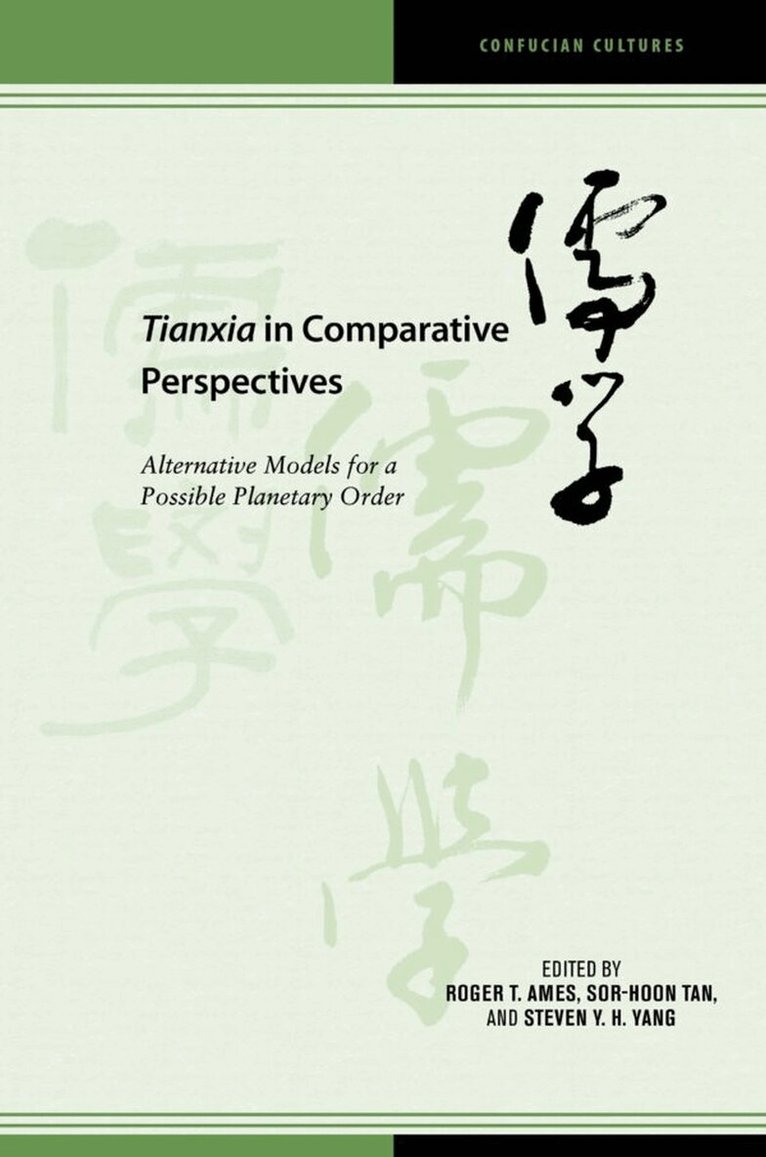
Tianxia in Comparative Perspectives
Alternative Models for a Possible Planetary Order
Inbunden, Engelska, 2023
730 kr
Skickas inom 7-10 vardagar
Tianxia—conventionally translated as "all-under-Heaven"—in everyday Chinese parlance simply means "the world." But tianxia is also a geopolitical term found in canonical writings that has a deeper historical and philosophical significance. Although there are many understandings of tianxia in this literature, interpretations within the Chinese process cosmology generally begin with an ecological understanding of intra-national relations that acknowledge the mutuality and interdependence of all economic and political activity.This volume contextualizes the tianxia vision of geopolitical order within a variety of strategies drawn from a broad spectrum of cultures and peoples: Buddhist, Islamic, Indian, African, Confucian, European. The conversation among the contributors is guided by several central questions: Is tianxia the only model of cosmopolitanism? Are there ideas and ideals comparable to tianxia that exist in other cultures? What alternative perspectives of global justice have inspired Western, Indian, Islamic, Buddhist, and African cultural traditions? The fundamental premise here is that in order for a planetary tianxia system to be relevant and significant for the present time and for our vision of the future, it must acknowledge the plurality of moral ideals defining the world’s cultures while at the same time seek practical ways to formulate a minimalist morality that can provide the solidarity needed to bring the world’s people together.
617 kr
Skickas inom 10-15 vardagar
As a fascinating study of global justice in Asia, this book presents a series of contributions reflecting upon the conditions of a greater involvement of East Asian traditions of thought in the debate on global justice.Including chapters on diverse issues such as global social inequalities, human rights practice and the functioning of international institutions, this book examines the political cultures of East Asia in order to help political theorists better appraise the distinctiveness of non‐Western ideas of justice. Confirming the persistence of a strong social ethos, the contributions also demonstrate the long-lasting influence of Buddhism, Taoism and Confucianism in shaping East Asian public conceptions of justice.Bringing much needed non-Western voices to the global justice debate, this book will appeal to students and scholars of politics, law and philosophy, as well as activists involved in the global justice movement.
617 kr
Skickas inom 10-15 vardagar
This book analyzes the reception of Leo Strauss and his political philosophy in Northeast Asia. By juxtaposing the central idea of Strauss’s political philosophy with the question of modernity, the contributors explore the eclectic adaptations of Strauss in Northeast Asian countries as a philosophical appropriation across cultures.Examining how Strauss’s philosophy was first introduced in Northeast Asia, the book sheds light on the similarities and differences in experiences, challenging the dominant approach which attributes various receptions of Strauss in Northeast Asia solely to sociopolitical circumstances. This book also seeks to move beyond a China-centric approach to investigate the possible transcultural appeals of Strauss’s political philosophy by exploring the cases of Japan and South Korea.Appealing to a wide network of scholars and practitioners in East Asia engaged in rethinking cultural particularities, this volume will be attractive to upper-level undergraduate students, graduate students, and advanced researchers in political philosophy, political theory, and Asian politics.
1 886 kr
Skickas inom 10-15 vardagar
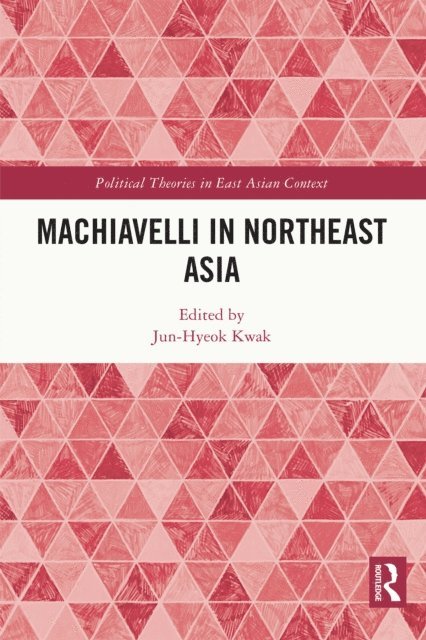
Analyzing the multifaceted receptions of Machiavelli from early modernity to the present history of Northeast Asia, this book explores a better East-West dialogue through which Machiavelli’s political philosophy can be appropriated properly in Northeast Asian practices. First, comparing the receptions of Machiavelli in Europe with the early introduction of his texts in Northeast Asia, it investigates what has been missing from the reception of his ideas in Northeast Asia. Second, examining the imperative issues which haven’t been construed appropriately even in recent reinterpretations of Machiavelli’s political philosophy in Northeast Asia, it searches for a direction of East-West dialogue through which Machiavelli’s political philosophy is not inordinately contextualized within the sociopolitical demands of Northeast Asian societies in accordance with time and place. Third, given the continuing interest in Machiavelli’s political realism, it examines the different conjunctions of his political realism with diverse traditional and contemporary political thinking in Northeast Asia. This book will be attractive to scholars in political philosophy, history, political theory, comparative philosophy, and area studies focused on East Asia, as well as scholars working in the field of comparative literature.
576 kr
Skickas inom 10-15 vardagar
Analyzing the multifaceted receptions of Machiavelli from early modernity to the present history of Northeast Asia, this book explores a better East-West dialogue through which Machiavelli’s political philosophy can be appropriated properly in Northeast Asian practices. First, comparing the receptions of Machiavelli in Europe with the early introduction of his texts in Northeast Asia, it investigates what has been missing from the reception of his ideas in Northeast Asia. Second, examining the imperative issues which haven’t been construed appropriately even in recent reinterpretations of Machiavelli’s political philosophy in Northeast Asia, it searches for a direction of East-West dialogue through which Machiavelli’s political philosophy is not inordinately contextualized within the sociopolitical demands of Northeast Asian societies in accordance with time and place. Third, given the continuing interest in Machiavelli’s political realism, it examines the different conjunctions of his political realism with diverse traditional and contemporary political thinking in Northeast Asia. This book will be attractive to scholars in political philosophy, history, political theory, comparative philosophy, and area studies focused on East Asia, as well as scholars working in the field of comparative literature.
2 088 kr
Skickas inom 10-15 vardagar
To form a truer portrait of Northeast Asian perspectives on modernity, this book presents a broad range of analyses from philosophical and political-philosophical scholars specializing in the region.The book considers the encounter between "Western" modernity and "Eastern" tradition not as a simple clash of cultures, but as a generative and hybridizing process of negotiation. It examines the concrete manifestations of modernity in various intellectual and political movements that attempted to radically restructure Northeast Asian societies. And through these situated perspectives, it rethinks and redefines the idea of "modernity" itself, challenging and presenting alternatives to Western-centric thinking on the topic.This book will be of particular interest to political philosophers, political theorists, comparative philosophers, regional specialists in East Asia, and all scholars grappling with the perplexities of global "modernity."
576 kr
Skickas inom 10-15 vardagar
To form a truer portrait of Northeast Asian perspectives on modernity, this book presents a broad range of analyses from philosophical and political-philosophical scholars specializing in the region.The book considers the encounter between "Western" modernity and "Eastern" tradition not as a simple clash of cultures, but as a generative and hybridizing process of negotiation. It examines the concrete manifestations of modernity in various intellectual and political movements that attempted to radically restructure Northeast Asian societies. And through these situated perspectives, it rethinks and redefines the idea of "modernity" itself, challenging and presenting alternatives to Western-centric thinking on the topic.This book will be of particular interest to political philosophers, political theorists, comparative philosophers, regional specialists in East Asia, and all scholars grappling with the perplexities of global "modernity."
1 953 kr
Skickas inom 10-15 vardagar
This book explores how the concept of “relationality” can offer a strong basis for cross-cultural dialogue between Western and non-Western traditions of moral and political philosophy.As addressed in this book, the implications of relationality go beyond a Eurocentric binary of Western individualism and non-Western collectivism. Instead, the contributors seek to establish an appropriate discursive stance for understanding and deliberating over relationality across cultural boundaries. Through an investigation of the theoretical and practical meanings of relationality across East and West, it offers possible frameworks for reconciling the emphasis on individual choice in modern Western social and political philosophy with the amorphous dynamics of relational morality in non-Western philosophical discourses.Examining relationality in practical forms and culturally situated contexts, rather than positing an essentialist view of the relational self, this book will be of interest to scholars in political philosophy, intellectual history, contemporary political theory, and Northeast Asian regional studies.
675 kr
Kommande
This book explores how the concept of ‘relationality’ can offer a strong basis for cross-cultural dialogue between Western and non-Western traditions of moral and political philosophy.As addressed in this book, the implications of relationality go beyond a Eurocentric binary of Western individualism and non-Western collectivism. Instead, the contributors seek to establish an appropriate discursive stance for understanding and deliberating over relationality across cultural boundaries. Through an investigation of the theoretical and practical meanings of relationality across East and West, it offers possible frameworks for reconciling the emphasis on individual choice in modern Western social and political philosophy with the amorphous dynamics of relational morality in non-Western philosophical discourses.Examining relationality in practical forms and culturally-situated contexts, rather than positing an essentialist view of the relational self, this book will be of interest to scholars in political philosophy, intellectual history, contemporary political theory and Northeast Asian regional studies.
2 088 kr
Skickas inom 10-15 vardagar
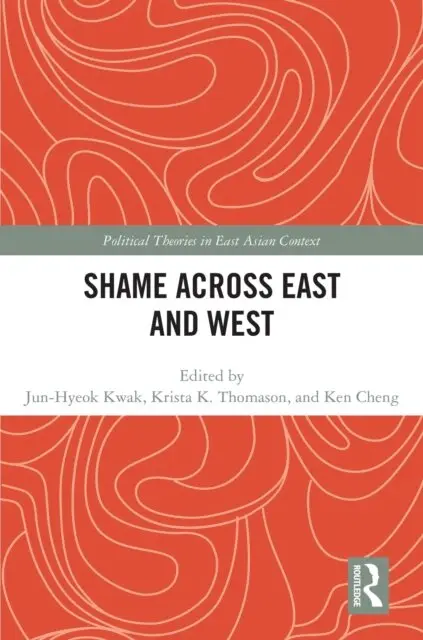
In order to gain a deeper understanding of shame and shamelessness as ethico-political phenomena in the contemporary world, this book stages a cross-cultural dialogue that questions and unsettles established views.Expounding and evaluating a range of perspectives on shame, from the ancient Greeks and classical Confucians to modern liberalism, the chapters in this collection reflect on how we should understand the movement of shame from private morality into the collective sphere, and ask what role shame can or should play, as emotional support or ethical corrective, to the normative frameworks of social and political civility.Covering the prominent discourses of Western modernity, as well as non-Western, and oppositional traditions, this volume will be of interest to students and scholars in moral and political philosophy, contemporary democratic theory, and comparative philosophy.
725 kr
Skickas inom 10-15 vardagar
Current territorial disputes between the Northeast Asian countries have stimulated a resurgence of bellicose nationalism, and threaten to upset recent efforts to achieve regional cooperation and economic integration in East Asia. Alongside this, debates over pre-1945 Japanese wartime atrocities, aggravated by still unresolved territorial disputes between Japan and its neighbours have triggered diplomatic conflicts in Japanese-South Korean relations, virulent anti-Japanese protests in China, and a dramatic increase of right-wing nationalism in Japan. Many have perceived these phenomena as inevitable corollaries, inasmuch as they regard the Northeast Asian countries as historically homogeneous and nationalistic states, and have begun to question the feasibility of the post-Cold War efforts to replace nationalism with a moderate version of civic solidarity. This book contributes to the debates surrounding patriotism and nationalism in Northeast Asia, and investigates the feasibility of non-ethnocentric patriotism in countries across the region. In doing so, it highlights the differences between Asian and Western concepts of republican patriotism via theoretical discussions of the evolving discourses on nationalism, patriotism, democracy and civic solidarity. The chapters combine theoretical discussion with historical case studies such as modern state building in late Qing Dynasty; nineteenth century Japanese political thought; and the twentieth century Korean independence movement. In turn, the contributors explore the possibilities for republican patriotism in contemporary Northeast Asia, with a focus on the Chinese term minzu, and the possibilities it holds for an alternative configuration of national identity in the age of globalization; Maruyama Masao’s theories of nationalism in Japan; the National Security Law in South Korea, and the impact it has had on the country’s political culture; and the Taiwanese movement for self-governance.Patriotism in East Asia will appeal to students and scholars of Asian politics, political theory, Asian history and peace studies, as well as to those interested in issues of nationalism.
725 kr
Skickas inom 10-15 vardagar
As rapid economic development brings increasing uncertainty in East Asia, interest in a new version of republicanism, termed iscalled neo-Roman republicanism, is growing across the region. Conceptualized as liberty as non-domination, this new form of republicanism has inspired not only Western but also East Asian political theorists. However, neo-Roman republican ideas in Northeast Asian countries continue to face serious conceptual and political challenges, which scholarly literature on both republicanism and on East Asian politics has largely failed to confront. This book addresses these challenges by surveying the latest theoretical contributions to the studies of republicanism in Western countries and the latest interpretations of how republicanism, including both communitarian republicanism and neo-Roman republicanism, has been appropriated in countries in East Asia. In particular, it deals with the key question of whether liberty as non-domination can work in non-Western contexts where the fundamental tenets of liberal democracy, such as moral individualism and value pluralism, do not predominate. Across three sections, the chapters first provide a conceptual overview of republicanism as a global political theory, they then consider how republicanism has historically been received, resisted, and translated into East Asia., and Ffinally, they examine how historically informed possibilities fit with the emergent needs of contemporary Northeast Asian societies. Overall, the contributors show that republicanism is an always-ongoing project, whose terms must be interpreted and translated into the various communities they inform. Normative considerations about whether or how republicanism applies in East Asia cannot be divorced from historical and empirical approaches which consider the various ways in which republican ideals reflect the realities of life there.Dealing with the issue of republicanism from a new, comparative perspective, this book will have broad appeal to students and scholars of Asian studies, comparative political theory, political philosophy, sociology, and history.