Junichiro Makino – författare
Visar alla böcker från författaren Junichiro Makino. Handla med fri frakt och snabb leverans.
9 produkter
9 produkter
Inbunden, Engelska, 1998
3 724 kr
Skickas inom 5-8 vardagar
Scientific Simulations with Special-Purpose Computers. The GRAPE Systems J. Makino University of Tokyo, Japan and M. Taiji Institute for Statistical Mathematics, Tokyo, Japan Physics is full of complex many-body problems, i.e. problems where there are a large number of bodies interacting. This is particularly true in astrophysics, where stars or galaxies can be thought of as individual particles, but also in plasma physics, hydrodynamics and molecular dynamics. Special purpose computers have been developed to handle these highly complex problems. Scientific Simulations with Special-Purpose Computers gives an overview of these systems, and then focuses on an extremely high profile and successful project-the GRAPE computer at the University of Tokyo-and discusses its development, performance and applications across a range of problems. The future development and applications of special purpose computers are also discussed. Written by two of the leading developers of the GRAPE system, this unique volume will be of great interest to readers across a wide range of fields, including, astrophysicists, astronomers, plasma physicists, researchers in molecular dynamics and computer scientists.
Inbunden, Engelska, 1996
1 626 kr
Skickas inom 10-15 vardagar
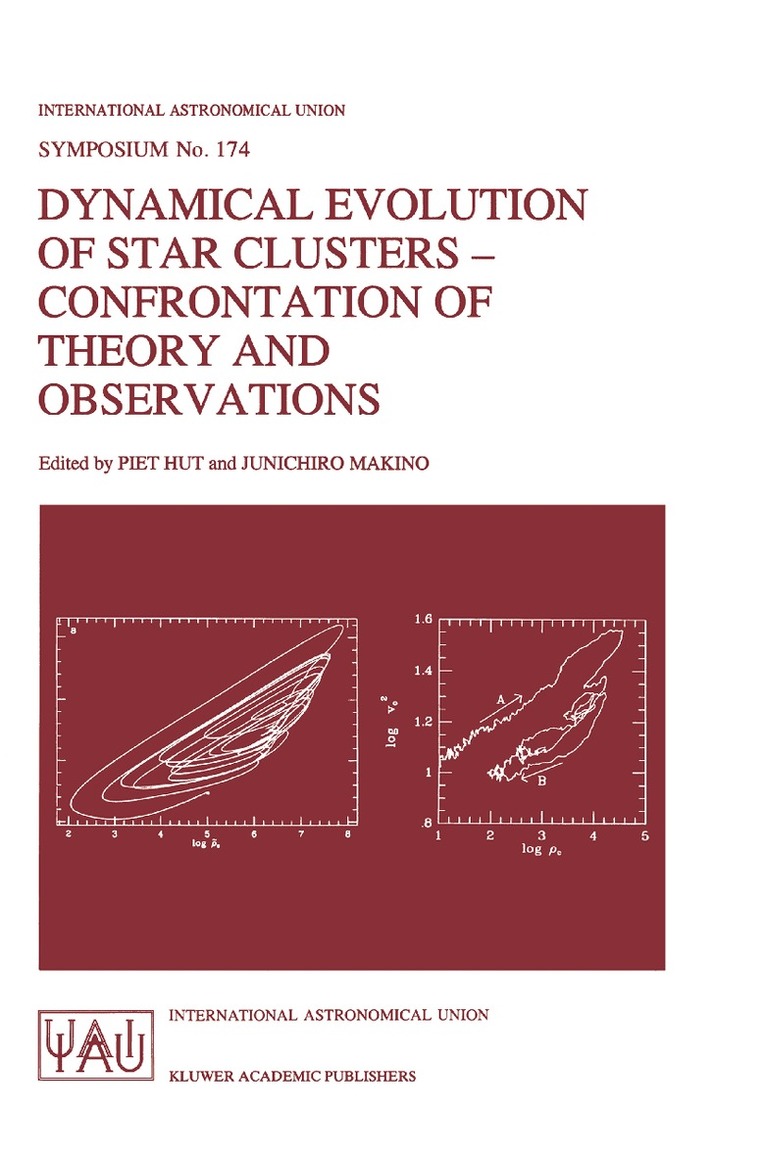
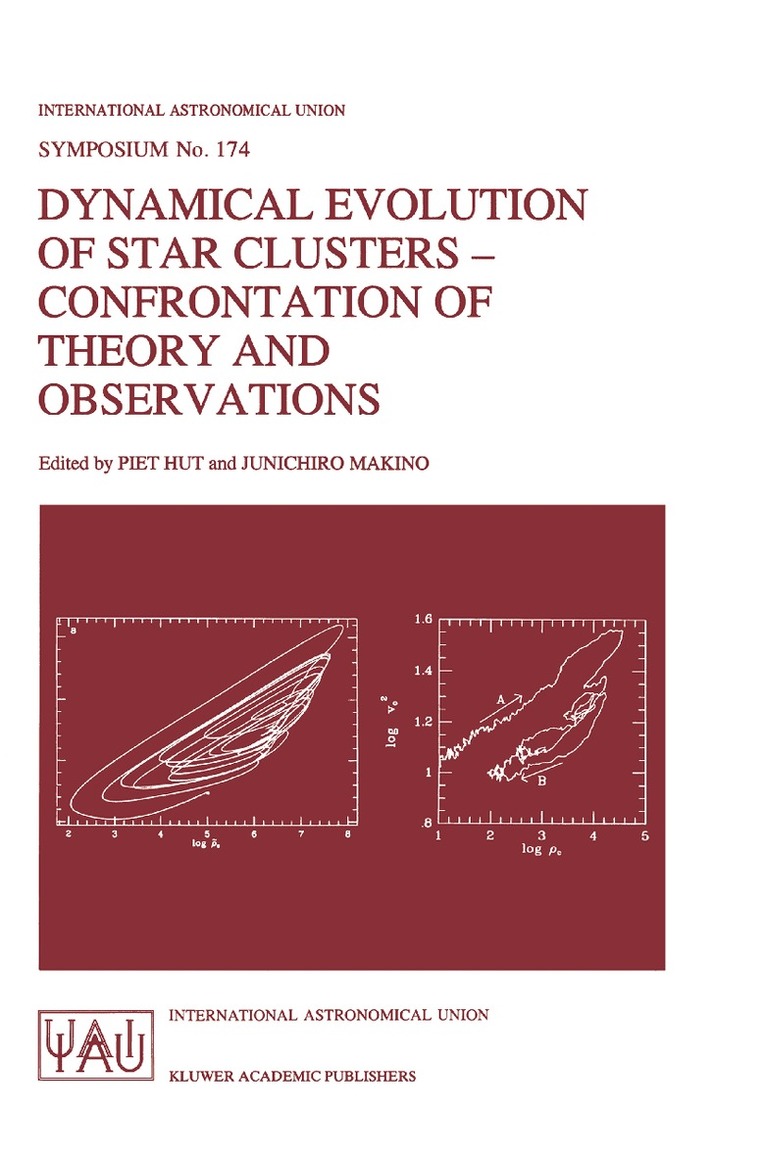
This volume reviews progress in the study of dynamics of star clusters. It focuses on the progress of both the observation and the theoretical modelling of star clusters. Results from the refurbished Hubble Space Telescope (HST) include the mass function down to the hydrogen burning limits, white dwarf sequence, and central density profiles of "post-collapse" clusters by star counts. On the theoretical side, this symposium saw the first direct evidence of gravothermal oscillation through N-body simulation, which was made possible by GRAPE-4, the dedicated special-purpose computer for N-body simulation. Numerical techniques to combine stellar evolution and dynamical evolution of the cluster were presented.
Häftad, Engelska, 1996
1 626 kr
Skickas inom 10-15 vardagar
This volume reviews recent progress in the study of dynamics of star clusters. The meeting focused on the enormous progress of both the observation and the theoretical modeling of star clusters. New results from the refurbished Hubble Space Telescope (HST) include the mass function down to the hydrogen burning limits, white dwarf sequence, and central density profiles of `post-collapse' clusters by star counts. On the theoretical side, this symposium saw the first direct evidence of gravothermal oscillation through N-body simulation, which was made possible by GRAPE-4, the dedicated special-purpose computer for N-body simulation. Numerical techniques to combine stellar evolution and dynamical evolution of the cluster were presented. The book will be of primary interest to astrophysicists.
Del 263 - Astrophysics and Space Science Library
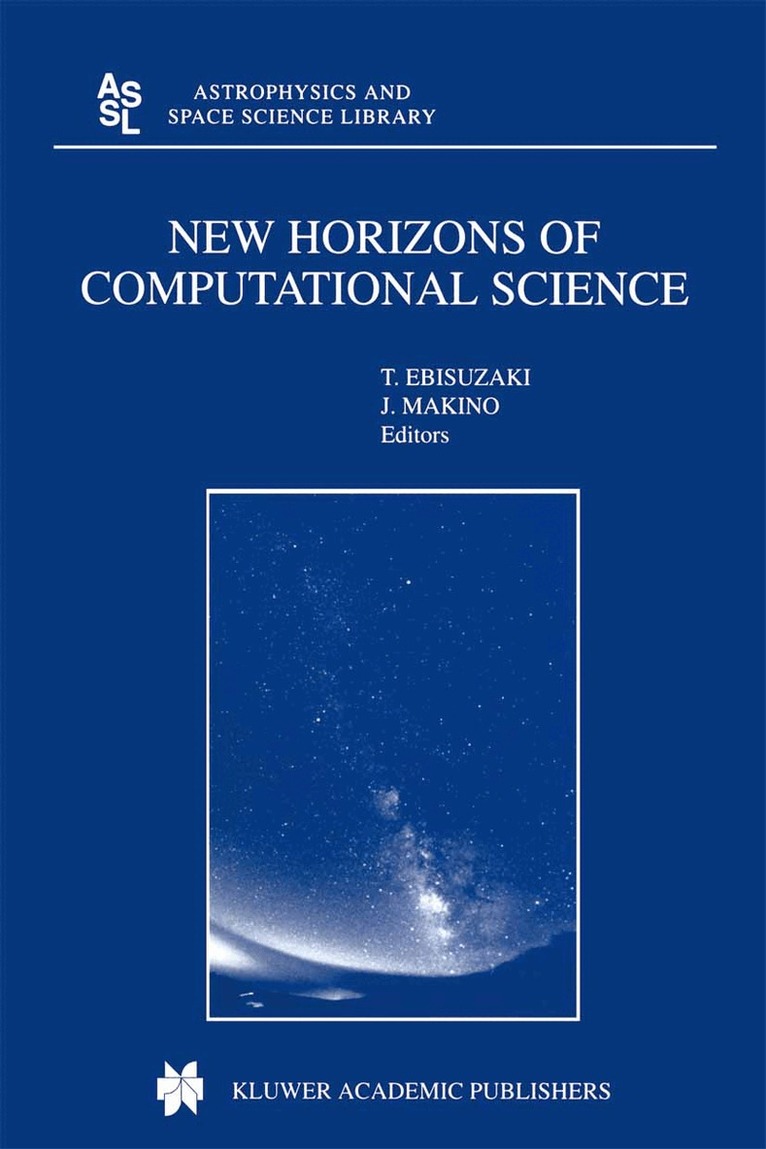
New Horizons of Computational Science
Proceedings of the International Symposium on Supercomputing held in Tokyo, Japan, September 1—3, 1997
Inbunden, Engelska, 2001
2 166 kr
Skickas inom 10-15 vardagar
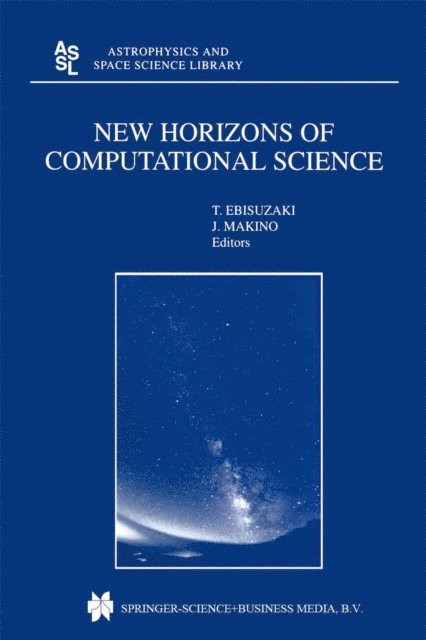
The International Symposium on Supercomputing - New Horizon of Computational Science was held on September 1-3, 1997 at the Science MuseuminTokyo,tocelebrate60-yearbirthdayofProfessorDaiichiroSug- imoto,who hasbeenleadingtheoreticalandnumericalastrophysicsfor 30 years. The conference coveredexceptionally wide range ofsubjects, to follow Sugimoto'saccomplishmentsinmanyfields.Onthefirstdaywehadthree talksonstellarevolutionandsixtalksonstellardynamics. Onthesecond day, six talks on special-purpose computingand four talks on large-scale computing in MolecularDynamicswere given. Onthethirdandthelast day,threetalks on dedicatedcomputerson LatticeQCDcalculationsand sixtalksonpresentandfutureofgeneral-purposeHPCsystemsweregiven. Inaddition,some30posterswerepresentedonvarioussubjectsincompu- tationalscience. Instellarevolution, D.Arnett (Univ. ofArizona) gaveanexcellenttalk on the recent development in three-dimensionalsimulation ofSupernova, inparticularonquantitativecomparisonbetweendifferenttechniquessuch asgrid-basedmethodsandSPH (SmoothedParticleHydrodynamics). Y. Kondo (NASA) discussedresentadvanceinthemodelingoftheevolution ofbinarystars,and1.Hachisu(Univ. ofTokyo)discussedRayleigh-Taylor instabilitiesinsupernovae(contributionnotincluded).Instellardynamics, P.Hut(lAS)gaveasuperbreviewonthelong-term evolution ofstellarsystem, J. Makino (Univ. ofTokyo) described briefly theresultsobtainedonGRAPE-4special-purposecomputerandthefollow- up project,GRAPE-6,whichisapprovedas ofJune 1997. GRAPE-6will be completed by year 2001 with the peak speed around 200 Tflops. R. Spurzem (Rechen-Inst.) and D. Heggie (Univ. of Edinburgh) talked on recentadvanceinthestudyofstarclusters,andE.Athanassoula(Marseille Observatory) describedthe work doneusingtheirGRAPE-3 systems. S. Ida (TokyoInst. ofTechnology) describedthe result ofthe simulationof theformationofMoon. Thefirst talkoftheseconddaywas given by F-H. Hsu oftheIBMT.J. Watson Research center, on "Deep Blue", the special-purpose computer for Chess,which, forthefirst timeinthehistory, wonthematchwiththe besthumanplayer,Mr. GaryKasparov(unfortunately,Hsu'scontribution isnot included in this volume). Then A. Bakker of Delft Inst. of Tech- nology looked back his 20 years ofdevelopingspecial-purpose computers formoleculardynamicsandsimulationofspinsystems. J.Arnoldgavean overviewoftheemergingnewfieldofreconfigurablecomputing,whichfalls inbetweentraditionalgeneral-purposecomputersandspecial-purposecom- puters.S.Okumura(NAO)describedthehistoryofultra-high-performance digital signalprocessors for radio astronomy. They havebuilt a machine with 20GaPS performance in early 80s, and keep improvingthe speed. M. Taiji (ISM) told on general aspects of GRAPE-type systems, and T. Narumi (Univ. of Tokyo) the 100-Tflops GRAPE-type machine for MD calculations,whichwillbefinished by 1999.
Inbunden, Engelska, 2021
1 904 kr
Skickas inom 10-15 vardagar
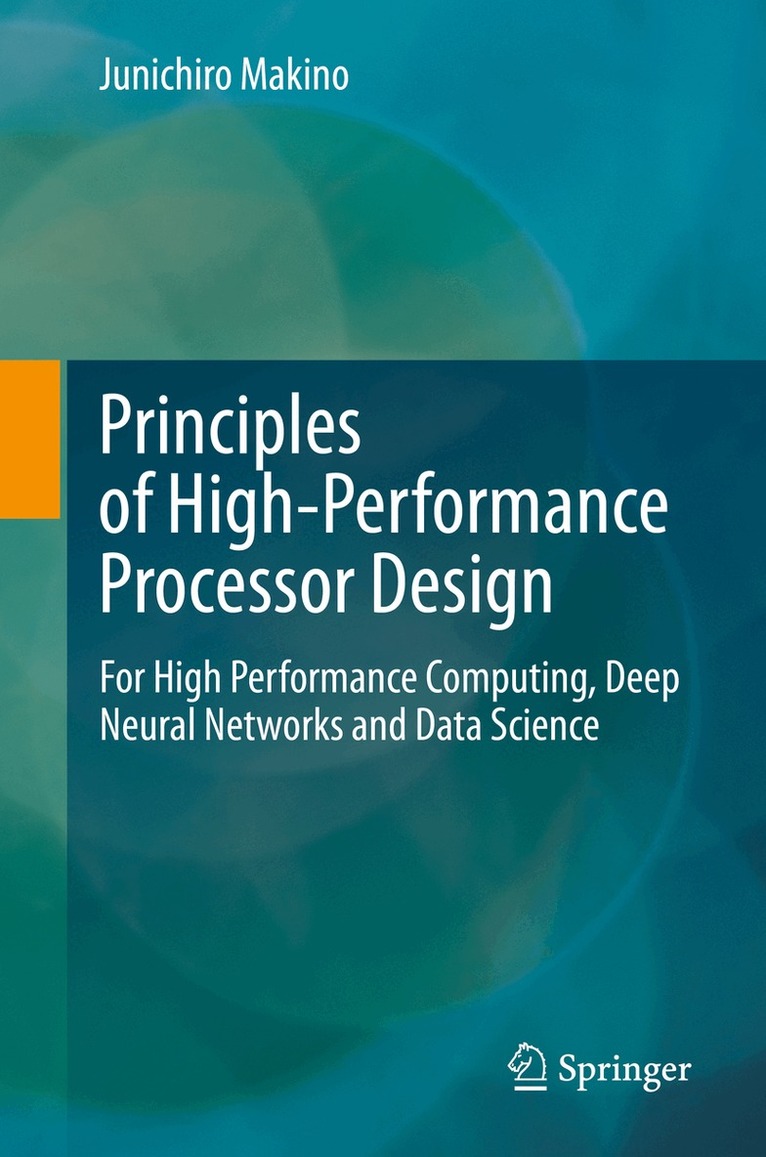
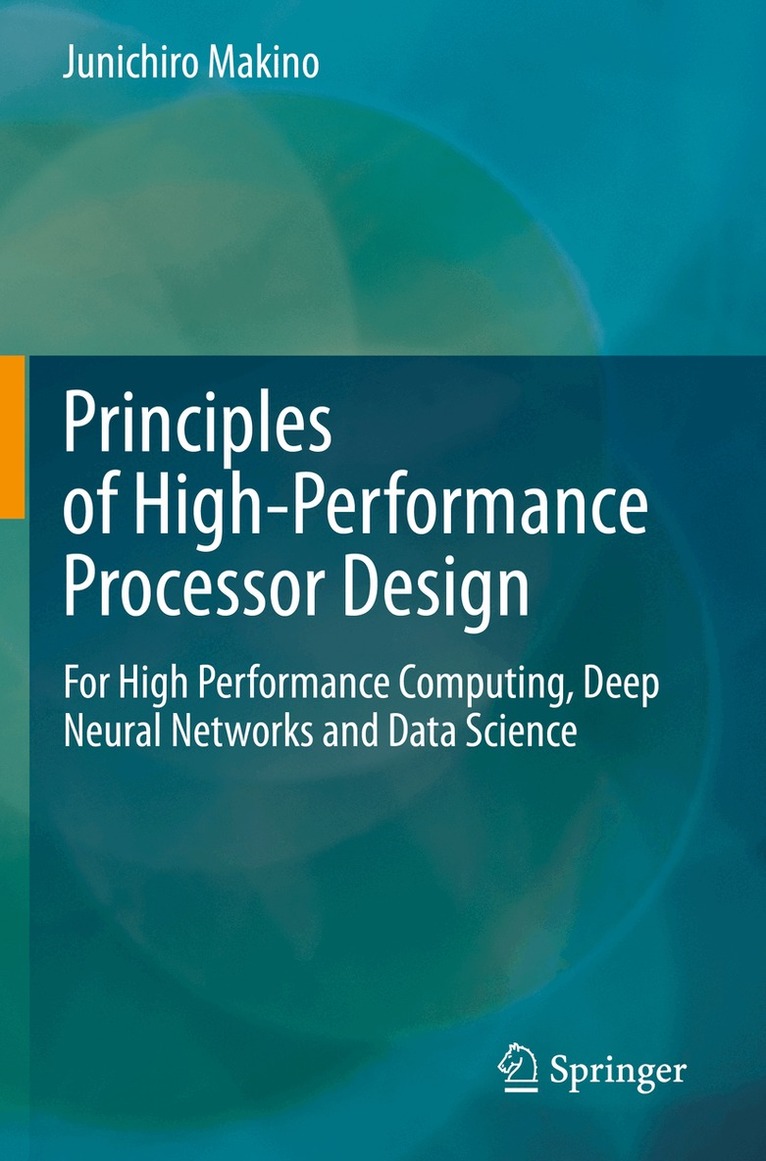
This book describes how we can design and make efficient processors for high-performance computing, AI, and data science. Although there are many textbooks on the design of processors we do not have a widely accepted definition of the efficiency of a general-purpose computer architecture. Without a definition of the efficiency, it is difficult to make scientific approach to the processor design. In this book, a clear definition of efficiency is given and thus a scientific approach for processor design is made possible. In chapter 2, the history of the development of high-performance processor is overviewed, to discuss what quantity we can use to measure the efficiency of these processors. The proposed quantity is the ratio between the minimum possible energy consumption and the actual energy consumption for a given application using a given semiconductor technology. In chapter 3, whether or not this quantity can be used in practice is discussed, for many real-world applications. In chapter 4, general-purpose processors in the past and present are discussed from this viewpoint. In chapter 5, how we can actually design processors with near-optimal efficiencies is described, and in chapter 6 how we can program such processors. This book gives a new way to look at the field of the design of high-performance processors.
E-bok
Engelska, 20212 351 kr
Läs direkt efter köp
This book describes how we can design and make efficient processors for high-performance computing, AI, and data science. Although there are many textbooks on the design of processors we do not have a widely accepted definition of the efficiency of a general-purpose computer architecture. Without a definition of the efficiency, it is difficult to make scientific approach to the processor design. In this book, a clear definition of efficiency is given and thus a scientific approach for processor design is made possible. In chapter 2, the history of the development of high-performance processor is overviewed, to discuss what quantity we can use to measure the efficiency of these processors. The proposed quantity is the ratio between the minimum possible energy consumption and the actual energy consumption for a given application using a given semiconductor technology. In chapter 3, whether or not this quantity can be used in practice is discussed, for many real-world applications. In chapter 4, general-purpose processors in the past and present are discussed from this viewpoint. In chapter 5, how we can actually design processors with near-optimal efficiencies is described, and in chapter 6 how we can program such processors. This book gives a new way to look at the field of the design of high-performance processors.
Häftad, Engelska, 2022
1 904 kr
Skickas inom 10-15 vardagar
This book describes how we can design and make efficient processors for high-performance computing, AI, and data science. Although there are many textbooks on the design of processors we do not have a widely accepted definition of the efficiency of a general-purpose computer architecture. Without a definition of the efficiency, it is difficult to make scientific approach to the processor design. In this book, a clear definition of efficiency is given and thus a scientific approach for processor design is made possible. In chapter 2, the history of the development of high-performance processor is overviewed, to discuss what quantity we can use to measure the efficiency of these processors. The proposed quantity is the ratio between the minimum possible energy consumption and the actual energy consumption for a given application using a given semiconductor technology. In chapter 3, whether or not this quantity can be used in practice is discussed, for many real-world applications. In chapter 4, general-purpose processors in the past and present are discussed from this viewpoint. In chapter 5, how we can actually design processors with near-optimal efficiencies is described, and in chapter 6 how we can program such processors. This book gives a new way to look at the field of the design of high-performance processors.
E-bok
PDF, Engelska, 20122 840 kr
Läs direkt efter köp
Häftad, Engelska, 2012
2 174 kr
Skickas inom 10-15 vardagar
The International Symposium on Supercomputing - New Horizon of Computational Science was held on September 1-3, 1997 at the Science MuseuminTokyo,tocelebrate60-yearbirthdayofProfessorDaiichiroSug- imoto,who hasbeenleadingtheoreticalandnumericalastrophysicsfor 30 years. The conference coveredexceptionally wide range ofsubjects, to follow Sugimoto'saccomplishmentsinmanyfields.Onthefirstdaywehadthree talksonstellarevolutionandsixtalksonstellardynamics. Onthesecond day, six talks on special-purpose computingand four talks on large-scale computing in MolecularDynamicswere given. Onthethirdandthelast day,threetalks on dedicatedcomputerson LatticeQCDcalculationsand sixtalksonpresentandfutureofgeneral-purposeHPCsystemsweregiven. Inaddition,some30posterswerepresentedonvarioussubjectsincompu- tationalscience. Instellarevolution, D.Arnett (Univ. ofArizona) gaveanexcellenttalk on the recent development in three-dimensionalsimulation ofSupernova, inparticularonquantitativecomparisonbetweendifferenttechniquessuch asgrid-basedmethodsandSPH (SmoothedParticleHydrodynamics). Y. Kondo (NASA) discussedresentadvanceinthemodelingoftheevolution ofbinarystars,and1.Hachisu(Univ. ofTokyo)discussedRayleigh-Taylor instabilitiesinsupernovae(contributionnotincluded).Instellardynamics, P.Hut(lAS)gaveasuperbreviewonthelong-term evolution ofstellarsystem, J. Makino (Univ. ofTokyo) described briefly theresultsobtainedonGRAPE-4special-purposecomputerandthefollow- up project,GRAPE-6,whichisapprovedas ofJune 1997. GRAPE-6will be completed by year 2001 with the peak speed around 200 Tflops. R. Spurzem (Rechen-Inst.) and D. Heggie (Univ. of Edinburgh) talked on recentadvanceinthestudyofstarclusters,andE.Athanassoula(Marseille Observatory) describedthe work doneusingtheirGRAPE-3 systems. S. Ida (TokyoInst. ofTechnology) describedthe result ofthe simulationof theformationofMoon. Thefirst talkoftheseconddaywas given by F-H. Hsu oftheIBMT.J. Watson Research center, on "Deep Blue", the special-purpose computer for Chess,which, forthefirst timeinthehistory, wonthematchwiththe besthumanplayer,Mr. GaryKasparov(unfortunately,Hsu'scontribution isnot included in this volume). Then A. Bakker of Delft Inst. of Tech- nology looked back his 20 years ofdevelopingspecial-purpose computers formoleculardynamicsandsimulationofspinsystems. J.Arnoldgavean overviewoftheemergingnewfieldofreconfigurablecomputing,whichfalls inbetweentraditionalgeneral-purposecomputersandspecial-purposecom- puters.S.Okumura(NAO)describedthehistoryofultra-high-performance digital signalprocessors for radio astronomy. They havebuilt a machine with 20GaPS performance in early 80s, and keep improvingthe speed. M. Taiji (ISM) told on general aspects of GRAPE-type systems, and T. Narumi (Univ. of Tokyo) the 100-Tflops GRAPE-type machine for MD calculations,whichwillbefinished by 1999.