Jürgen Altmann – författare
Visar alla böcker från författaren Jürgen Altmann. Handla med fri frakt och snabb leverans.
8 produkter
8 produkter
Inbunden, Engelska, 2005
2 123 kr
Skickas inom 10-15 vardagar
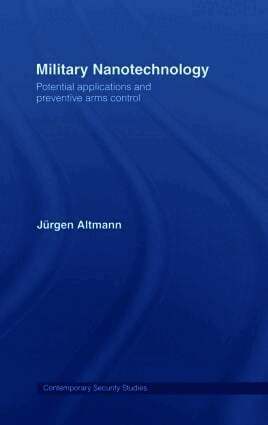
With revolutionary changes in nanotechnology (NT) now on the horizon, many countries have started major research and development (R&D) programmes, which are mainly civilian. Often overlooked are military R&D programmes – in particular those of the US government. This is the first systematic and comprehensive presentation of the potential military applications of NT. In ten to twenty years, these applications may include extremely small computers, robots, missiles, satellites, launchers and sensors. They may also provide lighter and stronger materials for vehicles and weapons, implants in soldiers’ bodies, metal-free firearms, autonomous fighting systems, and smaller chemical and biological weapons.These potential uses raise strong concerns. This assessment is made from a viewpoint of international security, considering the new criteria of dangers for arms control and the international law of warfare, dangers for stability through potential new arms races and proliferation, and dangers for humans and society. Some military applications, such as computers, will be so close to civilian uses that limits are impractical. Others, such as sensors for biological-warfare agents, may contribute to stronger protection against terrorist attacks and better verification of compliance with arms-control treaties. For preventive limitation of these new technologies, specific approaches are proposed that balance positive civilian uses and take into account verification of compliance, with a view to international peace and security, not national military strength. This book will be of great interest to scholars of military technology, non-lethal weapons, disarmament and security studies in general.
Häftad, Engelska, 2006
698 kr
Skickas inom 10-15 vardagar
With revolutionary changes in nanotechnology (NT) now on the horizon, many countries have started major research and development (R&D) programmes, which are mainly civilian. Often overlooked are military R&D programmes – in particular those of the US government. This is the first systematic and comprehensive presentation of the potential military applications of NT. In ten to twenty years, these applications may include extremely small computers, robots, missiles, satellites, launchers and sensors. They may also provide lighter and stronger materials for vehicles and weapons, implants in soldiers’ bodies, metal-free firearms, autonomous fighting systems, and smaller chemical and biological weapons.These potential uses raise strong concerns. This assessment is made from a viewpoint of international security, considering the new criteria of dangers for arms control and the international law of warfare, dangers for stability through potential new arms races and proliferation, and dangers for humans and society. Some military applications, such as computers, will be so close to civilian uses that limits are impractical. Others, such as sensors for biological-warfare agents, may contribute to stronger protection against terrorist attacks and better verification of compliance with arms-control treaties. For preventive limitation of these new technologies, specific approaches are proposed that balance positive civilian uses and take into account verification of compliance, with a view to international peace and security, not national military strength. This book will be of great interest to scholars of military technology, non-lethal weapons, disarmament and security studies in general.
E-bok
PDF, Tyska, 2007443 kr
Läs direkt efter köp
E-bok
PDF, Engelska, 20121 416 kr
Läs direkt efter köp
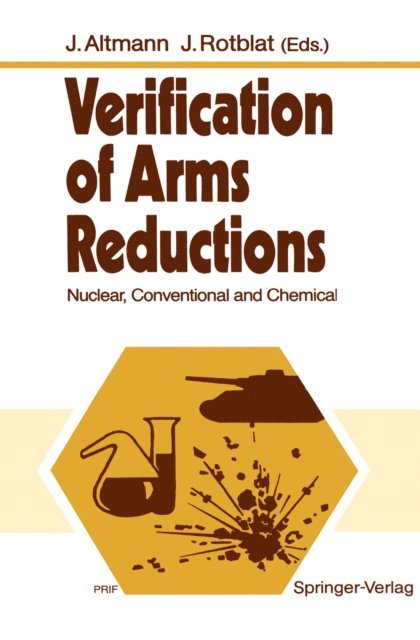
Anybody concerned about the maintenance of peace in our world, and in prospects of reaching agreements on arms control and disarmament, is bound to be interested in one of the key pre-conditions for related international treaties: the verification of compliance with such treaties. This book presents an up-to-date exposition of the latest developments in science and practice of international verification. It contains an account of the experience with new practical results of scientific research, devoted to solving verification problems in areas where agreements have not yet been concluded. The authors are scientists and practitioners from governments and research institutes in East and West. This book is required reading for anybody interested in the field: especially for decision-makers, government and military experts, natural scientists, technologists, those working in political and historical science. Among the topics covered are: INF Treaty, nuclear test ban, control of mobile missiles, and fissile material, demilitarization of space, stability and reductions of conventional forces, ban on chemical weapons. From the Reviews: "Verfication of Arms Reductions is packed with information and analysis which is vital for arms-control students, negotiators and other practitioners. The strength of the book lies in the science and technology contributions, but there are comprehensive political analyses also which have been written for longevity and are unlikely to become dated too quickly."
Häftad, Engelska, 2012
1 082 kr
Skickas inom 10-15 vardagar
Anybody concerned about the maintenance of peace in our world, and in prospects of reaching agreements on arms control and disarmament, is bound to be interested in one of the key pre-conditions for related international treaties: the verification of compliance with such treaties. This book presents an up-to-date exposition of the latest developments in science and practice of international verification. It contains an account of the experience with new practical results of scientific research, devoted to solving verification problems in areas where agreements have not yet been concluded. The authors are scientists and practitioners from governments and research institutes in East and West. This book is required reading for anybody interested in the field: especially for decision-makers, government and military experts, natural scientists, technologists, those working in political and historical science. Among the topics covered are: INF Treaty, nuclear test ban, control of mobile missiles, and fissile material, demilitarization of space, stability and reductions of conventional forces, ban on chemical weapons. From the Reviews: "Verfication of Arms Reductions is packed with information and analysis which is vital for arms-control students, negotiators and other practitioners. The strength of the book lies in the science and technology contributions, but there are comprehensive political analyses also which have been written for longevity and are unlikely to become dated too quickly."
Häftad, Tyska, 2017
509 kr
Skickas inom 10-15 vardagar
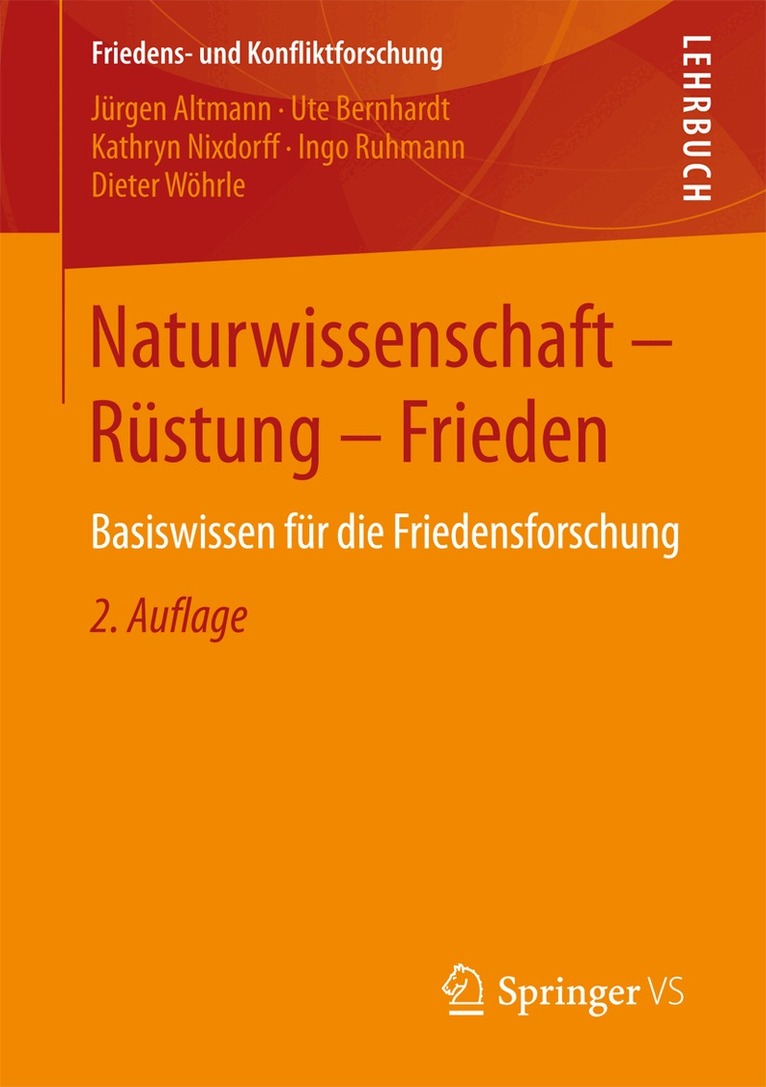
Diese Einführung stellt die naturwissenschaftlichen Grundlagen für die Friedens- und Konfliktforschung einleitend und verständlich dar. Damit wird Studierenden die Möglichkeit geboten, wichtiges Hintergrundwissen in den Bereichen Physik, Chemie, Biologie und Informatik zu erlangen und Konflikte, Krisensituationen und Kriege auch von den naturwissenschaftlichen Möglichkeiten und Bedingungen her einzuschätzen.
E-bok
PDF, Tyska, 2017507 kr
Läs direkt efter köp
Diese Einführung stellt die naturwissenschaftlichen Grundlagen für die Friedens- und Konfliktforschung einleitend und verständlich dar. Damit wird Studierenden die Möglichkeit geboten, wichtiges Hintergrundwissen in den Bereichen Physik, Chemie, Biologie und Informatik zu erlangen und Konflikte, Krisensituationen und Kriege auch von den naturwissenschaftlichen Möglichkeiten und Bedingungen her einzuschätzen.
E-bok
Tyska, 2014149 kr
Läs direkt efter köp
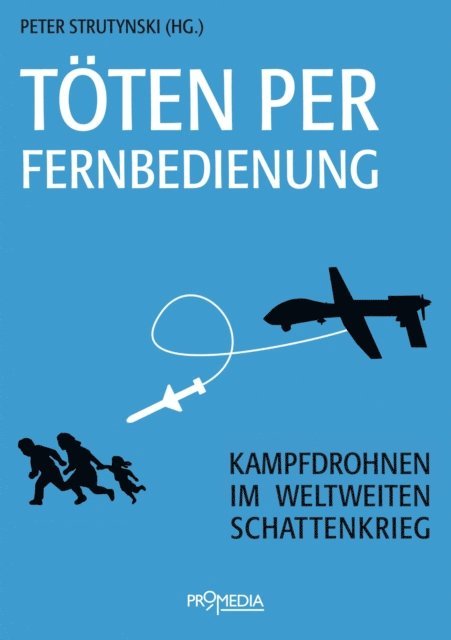
Beinahe täglich fliegen unbemannte, schwer bewaffnete Drohnen ihre von der Öffentlichkeit weitgehend unbemerkten Einsätze. Vor Bildschirmen sitzende Krieger in US-amerikanischen Militärbasen, britischen und demnächst vielleicht auch deutschen Kasernen töten per Mausklick nach politischen Vorgaben. Im Fadenkreuz dieses für die Täter digitalen und die Opfer tödlichen Vorgangs befinden sich Islamisten und andere als Feinde der demokratischen Ordnung ausgemachte Personen.US-Präsident Barack Obama hat den Einsatz unbemannter, bewaffneter Luftfahrzeuge vorangetrieben. Gezielte Tötungen von "Verdächtigen" gehören mittlerweile zum täglichen Kriegshandwerk nicht nur der Supermacht USA, sondern auch Großbritanniens und Israels. Die Opferbilanz geht in die Tausende. Menschen in Pakistan, Jemen, Afghanistan oder dem Gazastreifen sind direkt betroffen und leiden zudem unter der permanenten Bedrohung durch ferngesteuerte Waffen.Die Ausrüstung der Streitkräfte mit Kampfdrohnen heizt den Rüstungswettlauf weiter an. Denn erstens wollen immer mehr Staaten in den Besitz dieser Killerwaffen gelangen, und zweitens wird an technischen Gegenmaßnahmen (Abwehrsysteme, Raketen, neue Ortungsverfahren usw.) gearbeitet.Peter Strutynski versammelt Rüstungsexperten, Völkerrechtler und Friedensaktivisten, die sich mit der Geschichte dieser Waffentechnik auseinandersetzen. Zudem werden die technischen Grundlagen und Unterschiede von Aufklärungs- und Kampfdrohnen behandelt. Völkerrechtliche und ethisch-moralische Fragen beschäftigen sich mit der Strategie "gezielter Tötungen" und stellen damit einen Kernpunkt des Buches dar. In einem abschließenden Kapitel werden internationale Anti-Drohnen-Initiativen vorgestellt."Töten per Fernbedienung" ist ein hoch aktuelles und brisantes Buch, das die Gefahren der vermeintlich niedrigen Schwelle zum Töten aufzeigt.