Jurgen Forster – författare
755 kr
Läs direkt efter köp
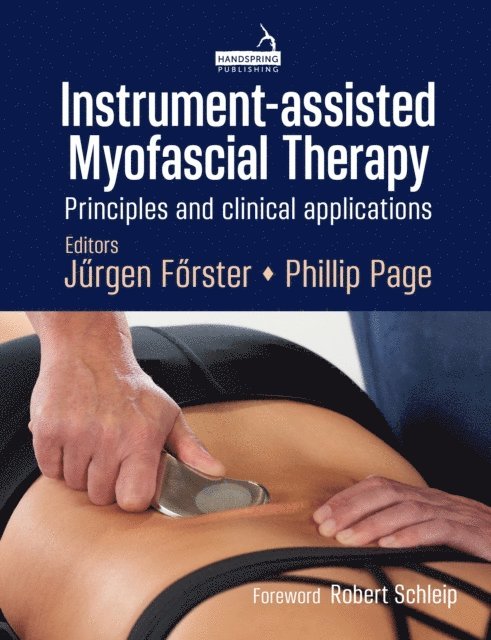
Instrument-Assisted Myofascial Therapy: Principles and Clinical Applications provides a complete overview of this effective therapy (IAMT) based on the authors'' own clinical experience of using instruments to treat myofascial lesions. The text combines the latest scientific evidence and theory with practical guidelines. The authors describe the use of various IAMT techniques which the reader will be able to easily integrate into daily clinical practice.The text progresses from didactic to practical information of relevance for a variety of clinicians:- Anatomy of the myofascial system and its role in pain/dysfunction and treatments- Science and theory of IAMT including history, types, and research on mechanisms of action and outcomes- Practical application of IAMT Practice: an overview of techniques specific to tissue type (scars, tendons, muscles)- Integration of IATM in clinical practice including clinical decision making (in diagnosis and treatment), indications, contraindications, and adjunct treatmentsThe text is intended to provide a guide for using myofascial instruments in daily practice. The reader will easily learn how to use IATM to enhance patient outcomes and to use it in a fashion which protects their own joints! Procedures are explained and demonstrated using a clear and practical approach. Full-color photographs illustrate the use of the therapy in these commonly-treated areas: Cervical spine and head, Shoulder, Elbow, wrist and hand, Thoracic spine and chest, Lumbar spine and sacroiliac joint, Hip and pelvis, Knee, Ankle and foot.Treatment protocols are provided which can be easily applied by the therapist for use with a variety of diagnoses relating to the same structures by using a standardised and precise approach. A treatment protocol is first presented on a specific structure that is commonly treated. The specific instrument is to be used is described first, then the entire treatment is explained in detail. from the starting position of the therapist and patient. Treatment progressions are then listed, as well as possible treatment options within the Myofascial Connective System (MCS). Beginning with the primarily treated structure, ''myofascial junctions'' are discussed; first regionally in a distal and proximal direction, and then within a functional myofascial chain. This unique approach greatly simplifies the various IATM procedures for the reader to easily implement in practice.Readers will learn an integrated approach to IATM in a variety of clinical practice settings. Clinicians seeing post-operative patients will benefit from a chapter dedicated to the treatment of scars. Numerous case studies and the integration of other myofascial techniques (Cupping, Flossing/Mobility Bands, Kinesiology Taping and Fascial Fitness) complete the book.Instrument-Assisted Myofascial Therapy - principles and clinical applications is the result of years of professional practice with IATM while evaluating patient outcomes. The concept is based on scientific evidence and has been developed in close collaboration with leading scientists and practitioners in the field of myofascial therapy. The text provides a pragmatic, evidence-informed approach to IATM practice.
602 kr
Läs direkt efter köp
310 kr
Läs direkt efter köp
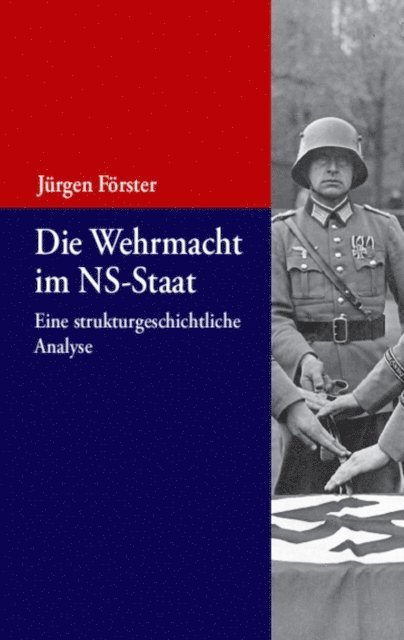
Die Wehrmacht ist weitgehend erforscht, und doch ist ihr Bild bis heute umstritten. Jürgen Förster bietet eine kurzgefasste, auf profunder Akten- und Literaturkenntnis beruhende Darstellung dieser militärischen Organisation. Beginnend bei der Reichswehr untersucht er ihre strukturelle Entwicklung bis hin zur Wehrmacht als tragender Säule des Dritten Reiches. Der Einfluss der NS-Politik, das Verhältnis zur SS, die personelle Elite in der zweiten Kriegshälfte, der 20. Juli 1944 als strukturelle Zäsur und Hitler als militärischer Führer sind weitere Themen. Försters Studie ist eine Pflichtlektüre für die zeitgeschichtlich interessierte Öffentlichkeit, Studenten und Schüler.
560 kr
Läs direkt efter köp
1 076 kr
Läs direkt efter köp
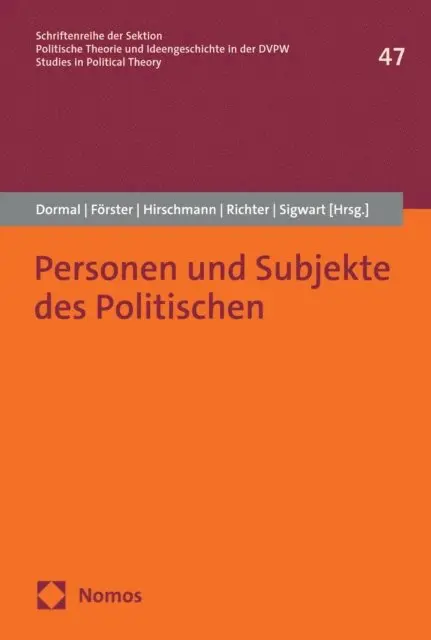
Die Beiträge dieses Bandes bieten den ersten systematischen Überblick über die Diskussion rund um zwei Grundbegriffe der Politischen Theorie und Ideengeschichte: „Personen“ und „Subjekte“. Angesichts sich häufender Befunde einer zunehmenden Personalisierung demokratischer Politik, anhaltender Debatten um sich grundlegend verändernde Bedingungen politischer Subjektivierung sowie des Akteursstatus von Individuen, aber auch der zunehmenden Bedeutung nicht-menschlicher „Akteure“, ist die Auseinandersetzung mit diesen beiden Begriffen von unmittelbarer aktueller Bedeutung. Aus politikwissenschaftlicher, philosophischer, soziologischer und juristischer Perspektive wird die politische Erklärungskraft dieser Grundbegriffe erschlossen.Mit Beiträgen vonMarlon Barbehön | Andreas Busen | Jürgen Förster | Michael Haus | Edgar Hirschmann | Tim Huttel | Frauke A. Kurbacher | Markus Llanque | Peter Niesen | Frank Nullmeier | Hans-Jörg Sigwart | Rike Sinder | Grit Straßenberger | Alexander Weiß