Jürgen Handke – författare
571 kr
Skickas inom 10-15 vardagar
2 090 kr
Skickas inom 10-15 vardagar
662 kr
Läs direkt efter köp
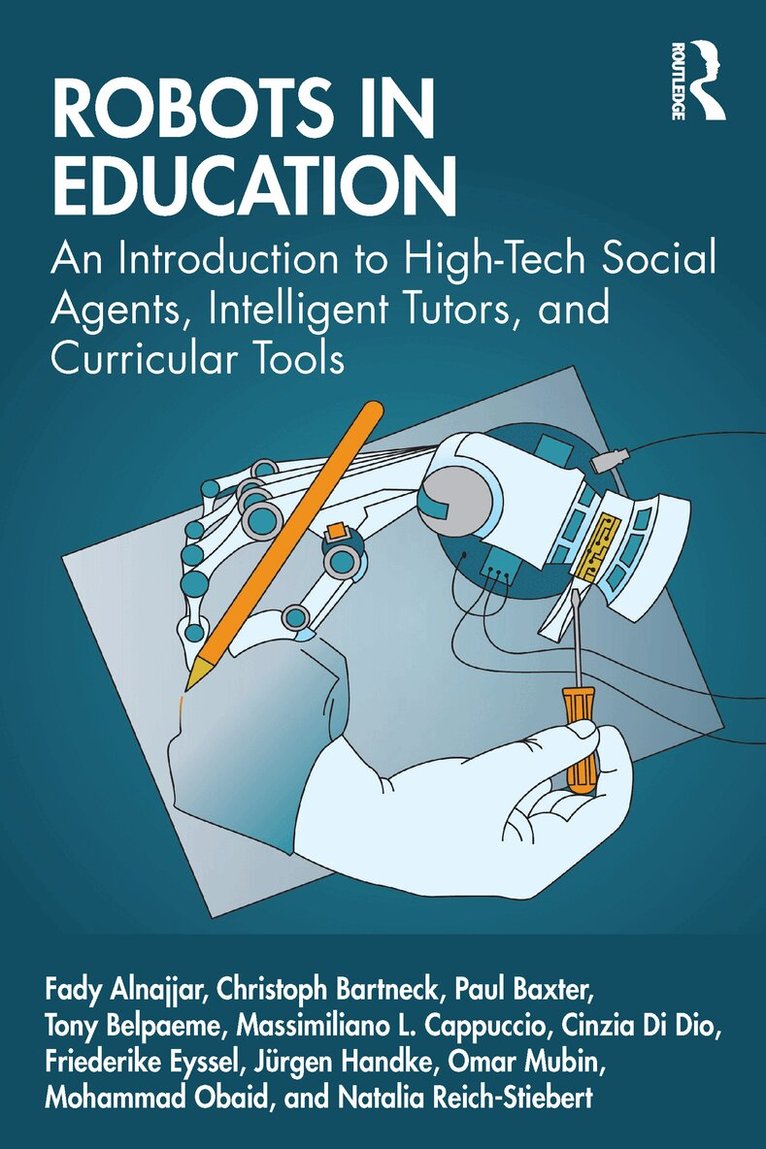
Robots in Education is an accessible introduction to the use of robotics in formal learning, encompassing pedagogical and psychological theories as well as implementation in curricula. Today, a variety of communities across education are increasingly using robots as general classroom tutors, tools in STEM projects, and subjects of study. This volume explores how the unique physical and social-interactive capabilities of educational robots can generate bonds with students while freeing instructors to focus on their individualized approaches to teaching and learning. Authored by a uniquely interdisciplinary team of scholars, the book covers the basics of robotics and their supporting technologies; attitudes toward and ethical implications of robots in learning; research methods relevant to extending our knowledge of the field; and more.
662 kr
Läs direkt efter köp
Robots in Education is an accessible introduction to the use of robotics in formal learning, encompassing pedagogical and psychological theories as well as implementation in curricula. Today, a variety of communities across education are increasingly using robots as general classroom tutors, tools in STEM projects, and subjects of study. This volume explores how the unique physical and social-interactive capabilities of educational robots can generate bonds with students while freeing instructors to focus on their individualized approaches to teaching and learning. Authored by a uniquely interdisciplinary team of scholars, the book covers the basics of robotics and their supporting technologies; attitudes toward and ethical implications of robots in learning; research methods relevant to extending our knowledge of the field; and more.
Structure of the Lexicon
Human versus Machine
1 587 kr
Skickas inom 5-8 vardagar
1 079 kr
Skickas inom 5-8 vardagar
1 247 kr
Läs direkt efter köp
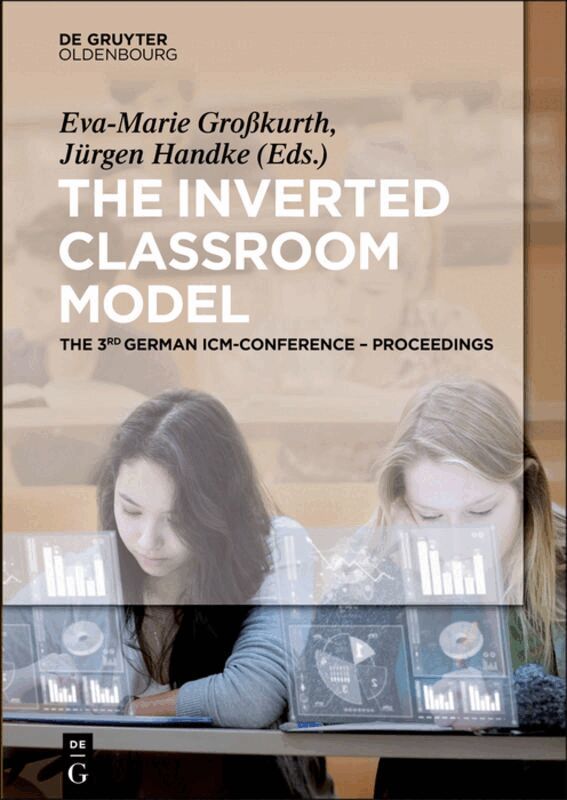
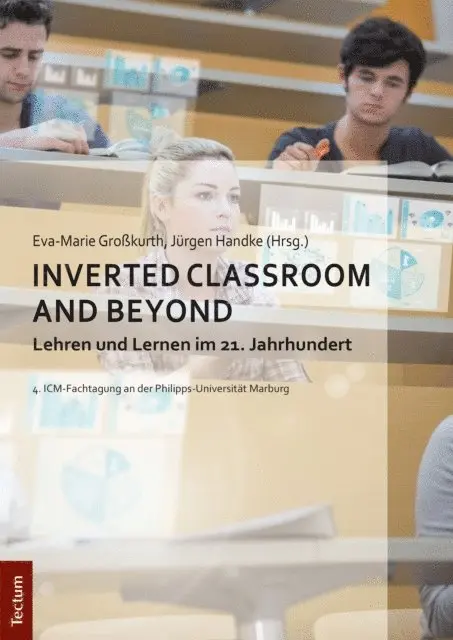
Only two years after its first run, the Inverted Classroom Conference has become a familiar event at Marburg University. Most conference participants not only knew about this digital teaching and learning scenario but were experienced users and developers. While during its predecessors most participants wanted to familiarize themselves with the central components of the Inverted Classroom Model, the focus of the 3rd German Inverted Classroom Conference in 2014, to which this conference volume is dedicated, was not only a discussion of variants of the model but also, for the first time, the inclusion of long-term evaluations and aspects of student behavior.This shift of emphasis is reflected in the contributions to this volume. Even though all central aspects of the ICM - content production and delivery, testing, and the in-class phase - are still addressed, we can now find recommendations concerning digital material acquisition, in-class tuition, the role of student tutors as well as first long-term studies about ICM effects.In general then, the focus was much wider than that of the first two ICM-conferences: from a new and originally non-familiar teaching and learning scenario to more general aspects of digitization of teaching and learning in the 21st century.
1 247 kr
Läs direkt efter köp
Only two years after its first run, the Inverted Classroom Conference has become a familiar event at Marburg University. Most conference participants not only knew about this digital teaching and learning scenario but were experienced users and developers. While during its predecessors most participants wanted to familiarize themselves with the central components of the Inverted Classroom Model, the focus of the 3rd German Inverted Classroom Conference in 2014, to which this conference volume is dedicated, was not only a discussion of variants of the model but also, for the first time, the inclusion of long-term evaluations and aspects of student behavior.This shift of emphasis is reflected in the contributions to this volume. Even though all central aspects of the ICM - content production and delivery, testing, and the in-class phase - are still addressed, we can now find recommendations concerning digital material acquisition, in-class tuition, the role of student tutors as well as first long-term studies about ICM effects.In general then, the focus was much wider than that of the first two ICM-conferences: from a new and originally non-familiar teaching and learning scenario to more general aspects of digitization of teaching and learning in the 21st century.
1 452 kr
Läs direkt efter köp
450 kr
Läs direkt efter köp
1 577 kr
Skickas inom 3-6 vardagar
1 060 kr
Skickas inom 5-8 vardagar
1 079 kr
Skickas inom 5-8 vardagar
1 182 kr
Läs direkt efter köp
1 144 kr
Skickas inom 5-8 vardagar
1 253 kr
Läs direkt efter köp
When the 1st German Inverted Classroom Conference was staged in 2012, the organizers thought that it may have been the first and last conference of this kind: Too few teachers seemed to be familiar with this model in the first place and only a tiny fragment of them would actually apply this model to their own teaching scenarios. However, in the 2013 conference, we were overwhelmed with a large number of teachers who not only wanted to find out about this teaching and learning concept but had already used it.
Consequently, the focus of the 2nd German Inverted Classroom Conference to which this conference volume is dedicated was no longer the “installation” of the Inverted Classroom Model (ICM) but fine adjustments in the actual application of it.
This is reflected in the contributions to this volume. Even though all three central aspects of the ICM are addressed, (1) content production and delivery, (2) testing, and (3) the in-class phase, there has been a shift away from mere content production towards an expansion of the model as well as a move towards fine adjustments of the three components.
1 816 kr
Läs direkt efter köp
576 kr
Skickas inom 10-15 vardagar
433 kr
Läs direkt efter köp
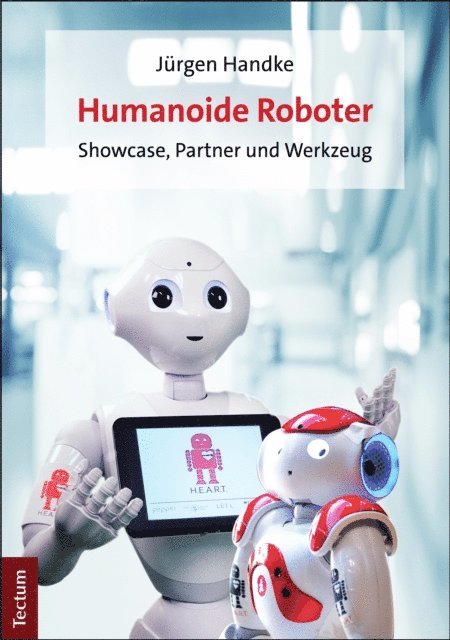
Schon seit Jahren ist die Digitalisierung der Lehre ein wichtiges Thema an den Hochschulen, hat sich aber in der Breite auch nach der Corona-Krise immer noch nicht durchgesetzt.Mit dieser überarbeiteten Anleitung zeigt Prof. Dr. Jürgen Handke Wege auf, wie der Einstieg in die Digitalisierung gelingen kann. Ausgehend von Problemen der Hochschullehre diskutiert er die Möglichkeiten der Mediennutzung und -generierung anhand von konkreten Beispielen nun auch unter Zuhilfenahme moderner KI-Assistenz-Systeme. Durch seine Vorschläge können die Probleme der klassischen Hochschullehre überwunden werden, sodass im Zusammenspiel von bewährten analogen Konzepten und digitalen Vermittlungsformen signifikante Mehrwerte entstehen.Prof. Dr. Jürgen Handke betreibt die größte digitale Lernplattform seines Faches, der Linguistik, und ist Produzent zahlreicher Lehrvideos. Handke wurde mehrfach für seine Inverted Classroom-Modelle und seine Online-Lehre ausgezeichnet, u.a. mit dem Hessischen Lehrpreis, dem Ars legendi-Preis für Digitales Lehren und Lernen und dem OER Award. Seine Projekte H.E.A.R.T. und RoboPraX sind Meilensteine für den Einsatz humanoider Roboter in der Lehre. Von dem Autor ebenfalls erschienen: Humanoide Roboter. Showcase, Partner und Werkzeug (2020).
462 kr
Skickas inom 3-6 vardagar
172 kr
Läs direkt efter köp
172 kr
Läs direkt efter köp
272 kr
Läs direkt efter köp
276 kr
Läs direkt efter köp
276 kr
Läs direkt efter köp
436 kr
Läs direkt efter köp
436 kr
Läs direkt efter köp
431 kr
Läs direkt efter köp
431 kr
Läs direkt efter köp