Jussi Backman - Böcker
Visar alla böcker från författaren Jussi Backman. Handla med fri frakt och snabb leverans.
3 produkter
3 produkter
1 469 kr
Skickas inom 3-6 vardagar
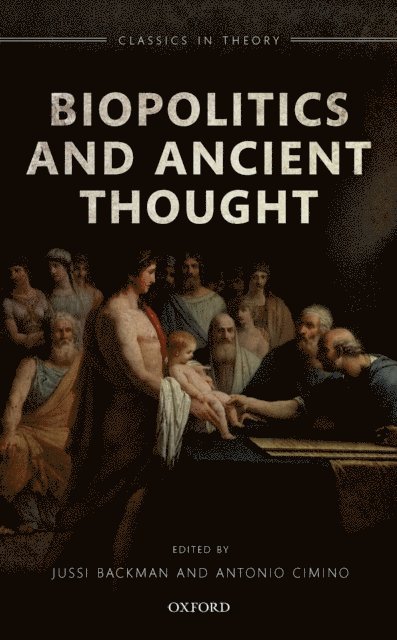
The volume studies, from different perspectives, the relationship between ancient thought and biopolitics, that is, theories, discourses, and practices in which the biological life of human populations becomes the focal point of political government. It thus continues and deepens the critical examination, in recent literature, of Michel Foucault's claim concerning the essentially modern character of biopolitics. The nine contributions comprised in the volume explore and utilize the notions of biopolitics and biopower as conceptual tools for articulating the differences and continuities between antiquity and modernity and for narrating Western intellectual and political history in general. Without committing itself to any particular thesis or approach, the volume evaluates both the relevance of ancient thought for the concept and theory of biopolitics and the relevance of biopolitical theory and ideas for the study of ancient thought. The volume is divided into three main parts: part I studies instances of biopolitics in ancient thought; part II focuses on aspects of ancient thought that elude or transcend biopolitics; and part III discusses several modern interpretations of ancient thought in the context of biopolitical theory.
594 kr
Skickas inom 3-6 vardagar
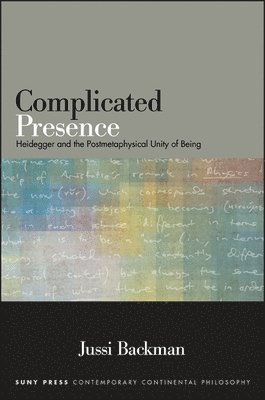
A synthetic assessment of Heidegger's entire path of thinking as a radical attempt to thematize and rethink the fundamental notions of unity dominating the Western metaphysical tradition.From its Presocratic beginnings, Western philosophy concerned itself with a quest for unity both in terms of the systematization of knowledge and as a metaphysical search for a unity of being-two trends that can be regarded as converging and culminating in Hegel's system of absolute idealism. Since Hegel, however, the philosophical quest for unity has become increasingly problematic. Jussi Backman returns to that question in this book, examining the place of the unity of being in the work of Heidegger. Backman sketches a consistent picture of Heidegger as a thinker of unity who throughout his career in different ways attempted to come to terms with both Parmenides's and Aristotle's fundamental questions concerning the singularity or multiplicity of being-attempting to do so, however, in a "postmetaphysical" manner rooted in rather than above and beyond particular, situated beings. Through his analysis, Backman offers a new way of understanding the basic continuity of Heidegger's philosophical project and the interconnectedness of such key Heideggerian concepts as ecstatic temporality, the ontological difference, the turn (Kehre), the event (Ereignis), the fourfold (Geviert), and the analysis of modern technology.
1 117 kr
Tillfälligt slut
A synthetic assessment of Heidegger's entire path of thinking as a radical attempt to thematize and rethink the fundamental notions of unity dominating the Western metaphysical tradition.From its Presocratic beginnings, Western philosophy concerned itself with a quest for unity both in terms of the systematization of knowledge and as a metaphysical search for a unity of being-two trends that can be regarded as converging and culminating in Hegel's system of absolute idealism. Since Hegel, however, the philosophical quest for unity has become increasingly problematic. Jussi Backman returns to that question in this book, examining the place of the unity of being in the work of Heidegger. Backman sketches a consistent picture of Heidegger as a thinker of unity who throughout his career in different ways attempted to come to terms with both Parmenides's and Aristotle's fundamental questions concerning the singularity or multiplicity of being-attempting to do so, however, in a "postmetaphysical" manner rooted in rather than above and beyond particular, situated beings. Through his analysis, Backman offers a new way of understanding the basic continuity of Heidegger's philosophical project and the interconnectedness of such key Heideggerian concepts as ecstatic temporality, the ontological difference, the turn (Kehre), the event (Ereignis), the fourfold (Geviert), and the analysis of modern technology.