Jussi Kantola - Böcker
Visar alla böcker från författaren Jussi Kantola. Handla med fri frakt och snabb leverans.
7 produkter
7 produkter
984 kr
Skickas inom 10-15 vardagar
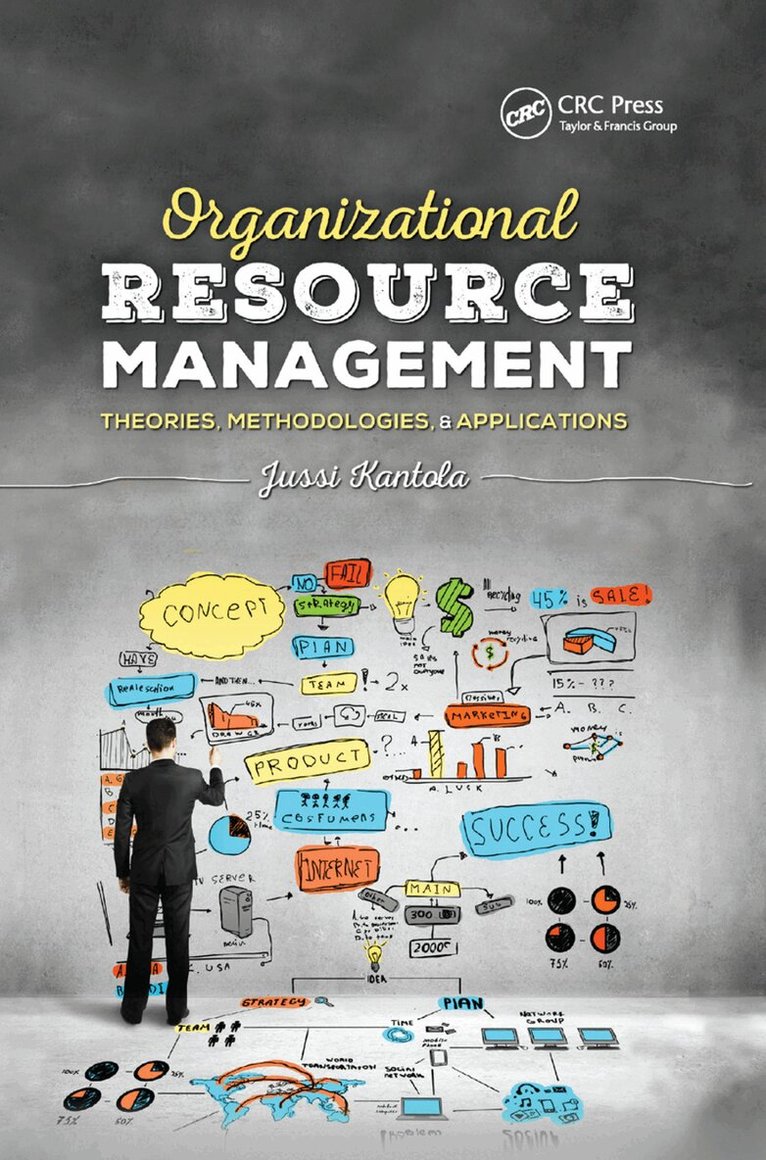
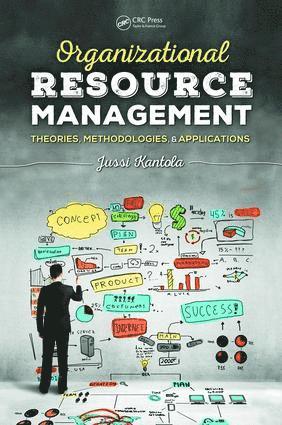
The management of organizational resources is extremely difficult. Managers face serious and complex challenges when managing the required resources for the benefit of their organization. This book presents a unique approach that aims to tackle these management challenges. This approach is based on four propositions that together form a solid framework for the management of organizational resources. The propositions state that organizational resources that are considered as management objects must first be conceptually modeled. With the help of these models, stakeholders are integrated into the management process.The new management approach presented in this book is called the Evolute approach. The Evolute approach precisely defines the meaning of organizational resources for management on three levels: concept level, organizational resource level, and situation level. The Evolute approach helps managers lead their people and manage their resources in a more targeted way, providing better results with less effort. The author includes real-world case studies that illustrate how this approach can be used in several different fields.The Evolute approach has been used and tested in many companies, organizations, and universities in more than ten languages around the world. The scope of the book is general management, since the Evolute approach is applicable to any kind of management field. It can be applied to the management of any kinds of objects—not only organizational resources. With this book, managers will have the tools to develop more relevant organizational resources and, thus, improve the performance of their entire organization in an efficient and targeted manner.
854 kr
Skickas inom 7-10 vardagar
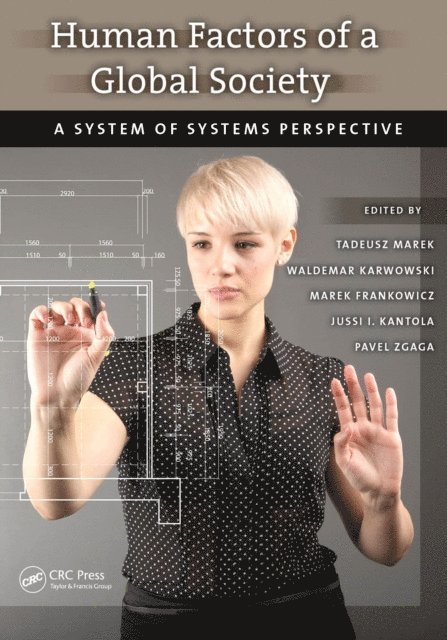
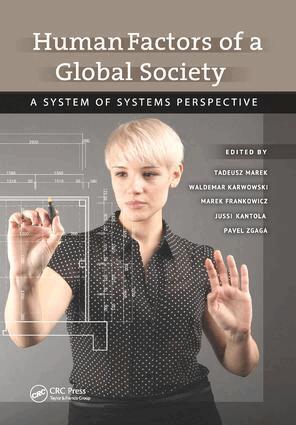
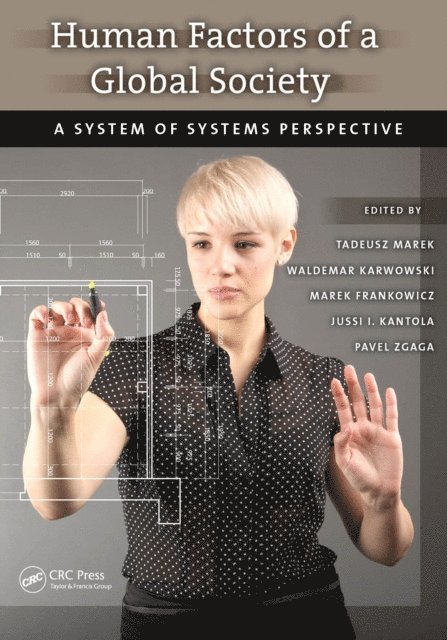
During the last 60 years the discipline of human factors (HF) has evolved alongside progress in engineering, technology, and business. Contemporary HF is clearly shifting towards addressing the human-centered design paradigm for much larger and complex societal systems, the effectiveness of which is affected by recent advances in engineering, science, and education. Human Factors of a Global Society: A System of Systems Perspective explores the future challenges and potential contributions of the human factors discipline in the Conceptual Age of human creativity and social responsibility.Written by a team of experts and pioneers, this book examines the human aspects related to contemporary societal developments in science, engineering, and higher education in the context of unprecedented progress in those areas. It also discusses new paradigms for higher education, including education delivery, and administration from a systems of systems perspective. It then examines the future challenges and potential contributions of the human factors discipline.While there are other books that focus on systems engineering or on a specific area of human factors, this book unifies these different perspectives into a holistic point of view. It gives you an understanding of human factors as it relates to the global enterprise system and its newly emerging characteristics such as quality, system complexity, evolving management system and its role in social and behavioral changes. By exploring the human aspects related to actual societal developments in science, the book opens a new horizon for the HF community.
915 kr
Skickas inom 10-15 vardagar
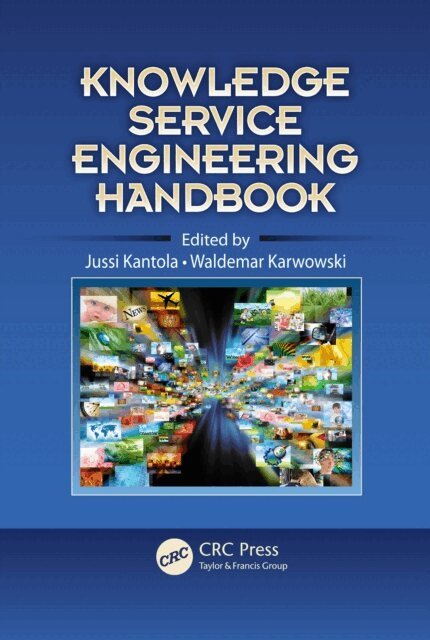
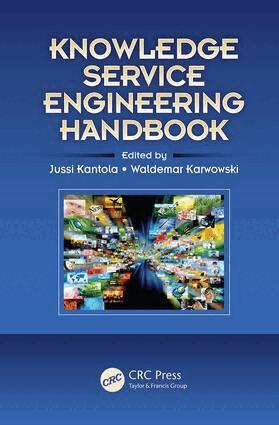
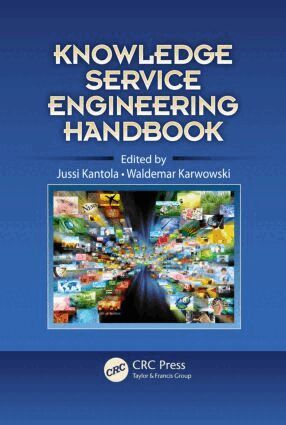
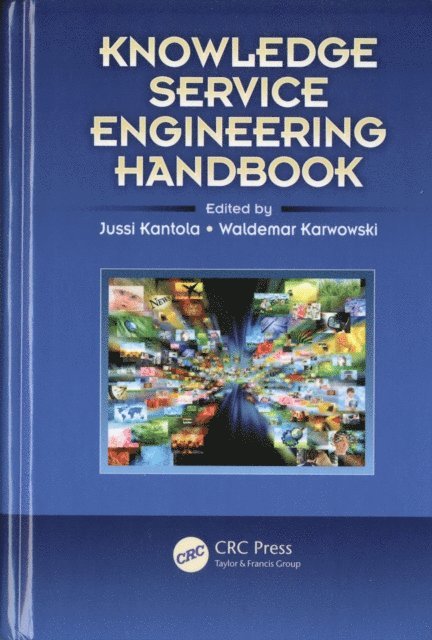
Edited by Jussi Kantola, the founding faculty member of the world’s first university Knowledge Service Engineering Department at Korea Advanced Institute of Science and Technology, and Waldemar Karwowski from the Department of Industrial Engineering and Management Systems at UCF, Knowledge Service Engineering Handbook defines what knowledge services engineering means and how it is different from service engineering and service production. This groundbreaking handbook explores recent advances in knowledge service engineering from the accomplished researchers and practitioners in this field from around the world and provides engineering, systemic, industry, and consumer use viewpoints to knowledge service systems and engineering paradigms. The handbook outlines how to acquire and utilize knowledge in the 21st century presenting multiple cultural aspects including US, European, and Asian perspectives. Organized into four parts, it begins with an introduction to the main concepts of knowledge services. It then explores data, information and knowledge based engineering methods and applications that can be used to develop knowledge services, followed by discussions of the importance of human networks in knowledge services. The handbook concludes with descriptions of high-performance knowledge service systems. This structure allows different uses: the information can be looked up as needed or read in the order presented. As with any new field, the excitement lies in seeing how to combine these advances in data, information, and human parts of knowledge services in the future. While most books on this subject concentrate on data, information, or knowledge, this handbook integrates coverage of all three, thus providing a complete examination of sustainable knowledge services. The handbook has been carefully designed to be of use to professionals who develop new knowledge services and related businesses, for academic researchers and lecturers to start new research projects, and for students studying knowledge services, knowledge service production, and knowledge service business.
1 333 kr
Skickas inom 10-15 vardagar
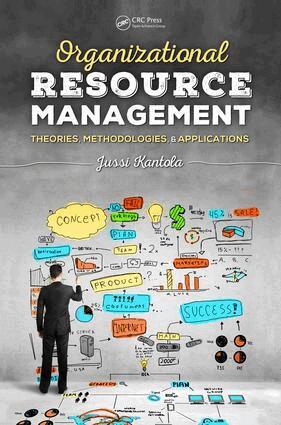
The management of organizational resources is extremely difficult. Managers face serious and complex challenges when managing the required resources for the benefit of their organization. This book presents a unique approach that aims to tackle these management challenges. This approach is based on four propositions that together form a solid framework for the management of organizational resources. The propositions state that organizational resources that are considered as management objects must first be conceptually modeled. With the help of these models, stakeholders are integrated into the management process.The new management approach presented in this book is called the Evolute approach. The Evolute approach precisely defines the meaning of organizational resources for management on three levels: concept level, organizational resource level, and situation level. The Evolute approach helps managers lead their people and manage their resources in a more targeted way, providing better results with less effort. The author includes real-world case studies that illustrate how this approach can be used in several different fields.The Evolute approach has been used and tested in many companies, organizations, and universities in more than ten languages around the world. The scope of the book is general management, since the Evolute approach is applicable to any kind of management field. It can be applied to the management of any kinds of objects—not only organizational resources. With this book, managers will have the tools to develop more relevant organizational resources and, thus, improve the performance of their entire organization in an efficient and targeted manner.
3 066 kr
Skickas inom 5-8 vardagar
Edited by Jussi Kantola, the founding faculty member of the world’s first university Knowledge Service Engineering Department at Korea Advanced Institute of Science and Technology, and Waldemar Karwowski from the Department of Industrial Engineering and Management Systems at UCF, Knowledge Service Engineering Handbook defines what knowledge services engineering means and how it is different from service engineering and service production. This groundbreaking handbook explores recent advances in knowledge service engineering from the accomplished researchers and practitioners in this field from around the world and provides engineering, systemic, industry, and consumer use viewpoints to knowledge service systems and engineering paradigms. The handbook outlines how to acquire and utilize knowledge in the 21st century presenting multiple cultural aspects including US, European, and Asian perspectives. Organized into four parts, it begins with an introduction to the main concepts of knowledge services. It then explores data, information and knowledge based engineering methods and applications that can be used to develop knowledge services, followed by discussions of the importance of human networks in knowledge services. The handbook concludes with descriptions of high-performance knowledge service systems. This structure allows different uses: the information can be looked up as needed or read in the order presented. As with any new field, the excitement lies in seeing how to combine these advances in data, information, and human parts of knowledge services in the future. While most books on this subject concentrate on data, information, or knowledge, this handbook integrates coverage of all three, thus providing a complete examination of sustainable knowledge services. The handbook has been carefully designed to be of use to professionals who develop new knowledge services and related businesses, for academic researchers and lecturers to start new research projects, and for students studying knowledge services, knowledge service production, and knowledge service business.
2 357 kr
Skickas inom 10-15 vardagar
During the last 60 years the discipline of human factors (HF) has evolved alongside progress in engineering, technology, and business. Contemporary HF is clearly shifting towards addressing the human-centered design paradigm for much larger and complex societal systems, the effectiveness of which is affected by recent advances in engineering, science, and education. Human Factors of a Global Society: A System of Systems Perspective explores the future challenges and potential contributions of the human factors discipline in the Conceptual Age of human creativity and social responsibility.Written by a team of experts and pioneers, this book examines the human aspects related to contemporary societal developments in science, engineering, and higher education in the context of unprecedented progress in those areas. It also discusses new paradigms for higher education, including education delivery, and administration from a systems of systems perspective. It then examines the future challenges and potential contributions of the human factors discipline.While there are other books that focus on systems engineering or on a specific area of human factors, this book unifies these different perspectives into a holistic point of view. It gives you an understanding of human factors as it relates to the global enterprise system and its newly emerging characteristics such as quality, system complexity, evolving management system and its role in social and behavioral changes. By exploring the human aspects related to actual societal developments in science, the book opens a new horizon for the HF community.
2 493 kr
Skickas inom 5-8 vardagar