Justin W. Garvin - Böcker
Visar alla böcker från författaren Justin W. Garvin. Handla med fri frakt och snabb leverans.
4 produkter
4 produkter
240 kr
Skickas inom 7-10 vardagar
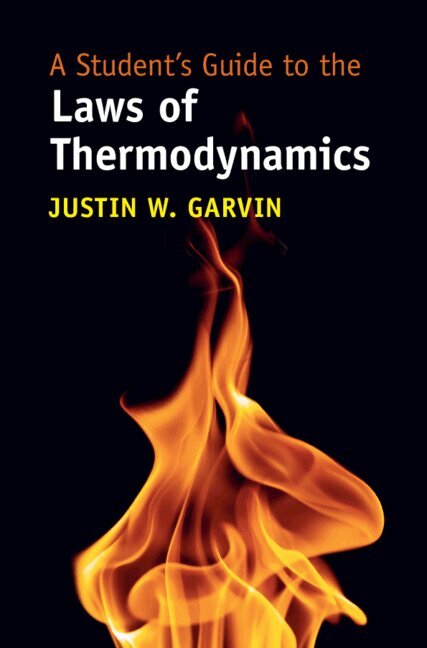
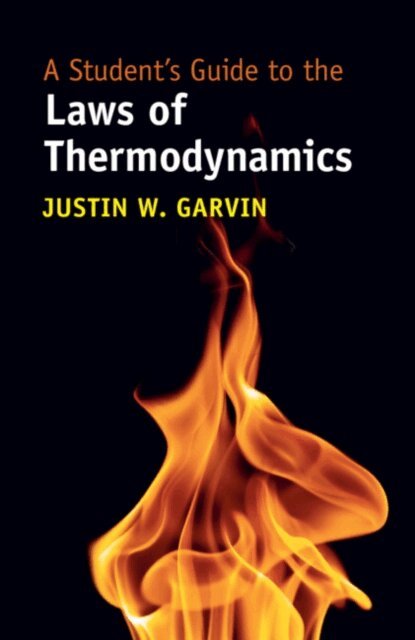
Using a welcoming and conversational style, this Student's Guide takes readers on a tour of the laws of thermodynamics, highlighting their importance for a wide range of disciplines. It will be a valuable resource for self-guided learners, students, and instructors working in physics, engineering, chemistry, meteorology, climatology, cosmology, biology, and other scientific fields. The book discusses thermodynamic properties such as temperature, internal energy, and entropy, and develops the laws through primarily observational means without extensive reference to atomic principles. This classical approach allows students to get a handle on thermodynamics as an experimental science and prepares them for more advanced study of statistical mechanics, which is introduced in the final chapter. Detailed practical examples are used to illustrate the theoretical concepts, with a selection of problems included at the end of each chapter to facilitate learning. Solutions to these problems can be found online along with additional supplemental materials.
246 kr
Skickas inom 7-10 vardagar
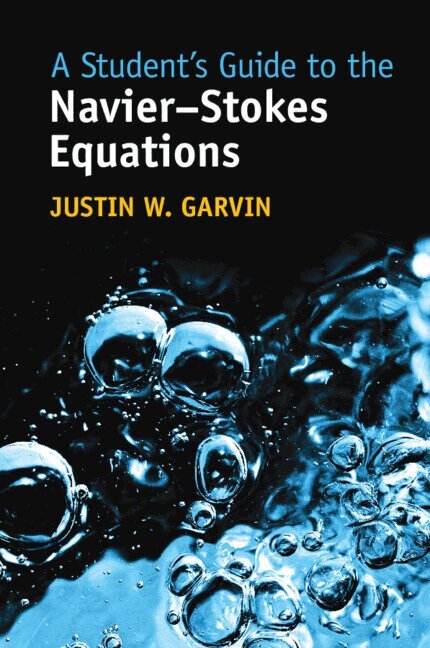
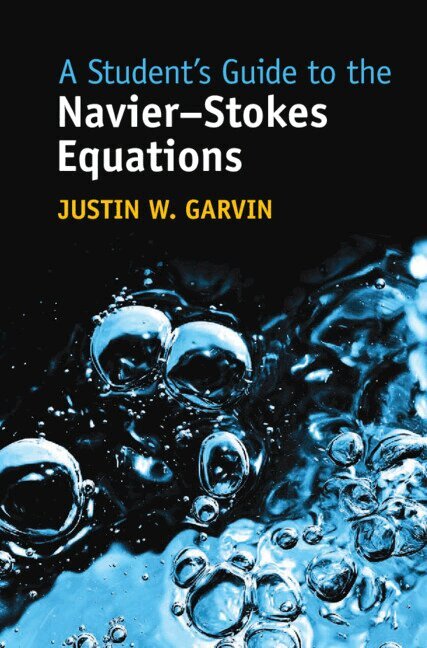
The Navier-Stokes equations describe the motion of fluids and are an invaluable addition to the toolbox of every physicist, applied mathematician, and engineer. The equations arise from applying Newton's laws of motion to a moving fluid and are considered, when used in combination with mass and energy conservation rules, to be the fundamental governing equations of fluid motion. They are relevant across many disciplines, from astrophysics and oceanic sciences to aerospace engineering and materials science. This Student's Guide provides a clear and focused presentation of the derivation, significance and applications of the Navier-Stokes equations, along with the associated continuity and energy equations. Designed as a useful supplementary resource for undergraduate and graduate students, each chapter concludes with a selection of exercises intended to reinforce and extend important concepts. Video podcasts demonstrating the solutions in full are provided online, along with written solutions and other additional resources.
626 kr
Skickas inom 7-10 vardagar
The Navier-Stokes equations describe the motion of fluids and are an invaluable addition to the toolbox of every physicist, applied mathematician, and engineer. The equations arise from applying Newton's laws of motion to a moving fluid and are considered, when used in combination with mass and energy conservation rules, to be the fundamental governing equations of fluid motion. They are relevant across many disciplines, from astrophysics and oceanic sciences to aerospace engineering and materials science. This Student's Guide provides a clear and focused presentation of the derivation, significance and applications of the Navier-Stokes equations, along with the associated continuity and energy equations. Designed as a useful supplementary resource for undergraduate and graduate students, each chapter concludes with a selection of exercises intended to reinforce and extend important concepts. Video podcasts demonstrating the solutions in full are provided online, along with written solutions and other additional resources.
591 kr
Skickas inom 7-10 vardagar
Using a welcoming and conversational style, this Student's Guide takes readers on a tour of the laws of thermodynamics, highlighting their importance for a wide range of disciplines. It will be a valuable resource for self-guided learners, students, and instructors working in physics, engineering, chemistry, meteorology, climatology, cosmology, biology, and other scientific fields. The book discusses thermodynamic properties such as temperature, internal energy, and entropy, and develops the laws through primarily observational means without extensive reference to atomic principles. This classical approach allows students to get a handle on thermodynamics as an experimental science and prepares them for more advanced study of statistical mechanics, which is introduced in the final chapter. Detailed practical examples are used to illustrate the theoretical concepts, with a selection of problems included at the end of each chapter to facilitate learning. Solutions to these problems can be found online along with additional supplemental materials.