Justo Corti Varela – författare
Visar alla böcker från författaren Justo Corti Varela. Handla med fri frakt och snabb leverans.
7 produkter
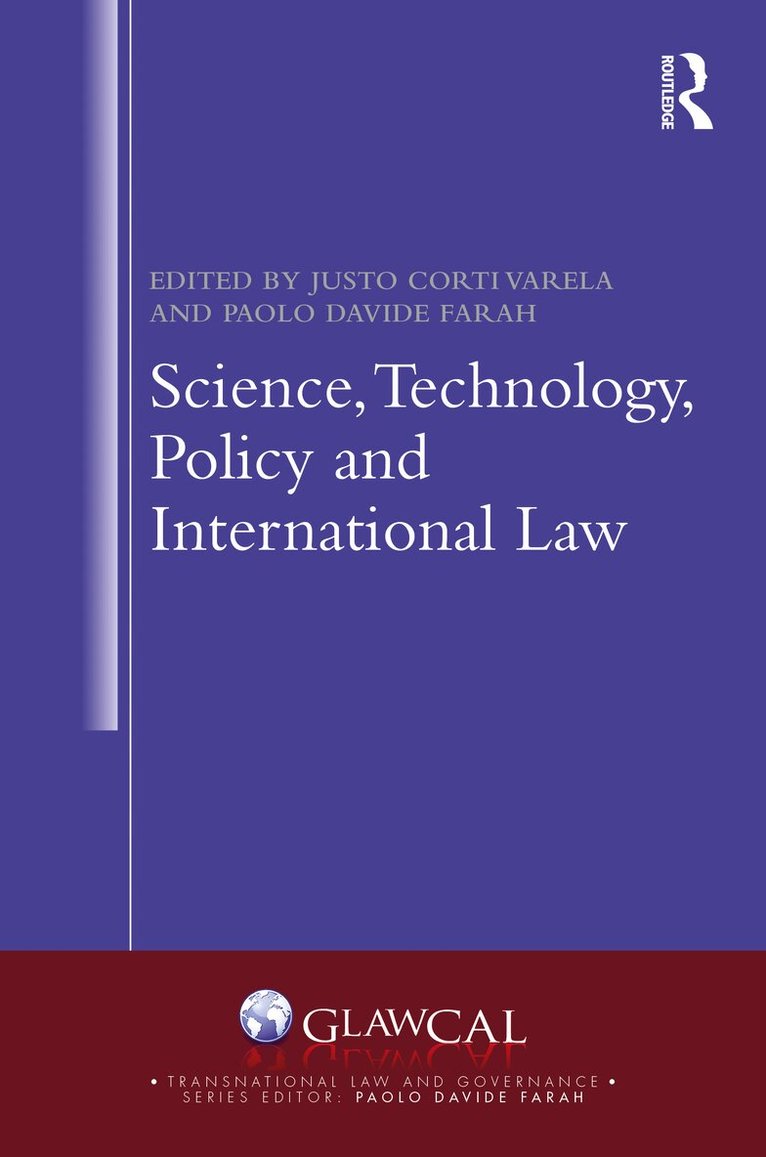
Science, Technology, Policy and International Law
Av Justo Corti Varela, Paolo Davide Farah
Inbunden, 2024
2317 kr
Lägg i varukorg
This book presents innovative insights into the intersections between science, technology, and society, and particularly their regulation by the law. Departing from the idea that law and science have similar methods and objectives, the book deals with problems, and solutions, that source from these …
Science, Technology, Policy and International Law
Av Justo Corti Varela, Paolo Davide Farah
Häftad, 2026
651 kr
Lägg i varukorg
This book presents innovative insights into the intersections between science, technology, and society, and particularly their regulation by the law. Departing from the idea that law and science have similar methods and objectives, the book deals with problems, and solutions, that source from these …
Science, Technology, Policy and International Law
Av Paolo Davide Farah, Justo Corti Varela
E-bok, 2024
765 kr
Lägg i varukorg
This book presents innovative insights into the intersections between science, technology, and society, and particularly their regulation by the law. Departing from the idea that law and science have similar methods and objectives, the book deals with problems, and solutions, that source from these …
Science, Technology, Policy and International Law
Av Paolo Davide Farah, Justo Corti Varela
E-bok, 2024
748 kr
Lägg i varukorg
This book presents innovative insights into the intersections between science, technology, and society, and particularly their regulation by the law. Departing from the idea that law and science have similar methods and objectives, the book deals with problems, and solutions, that source from these …
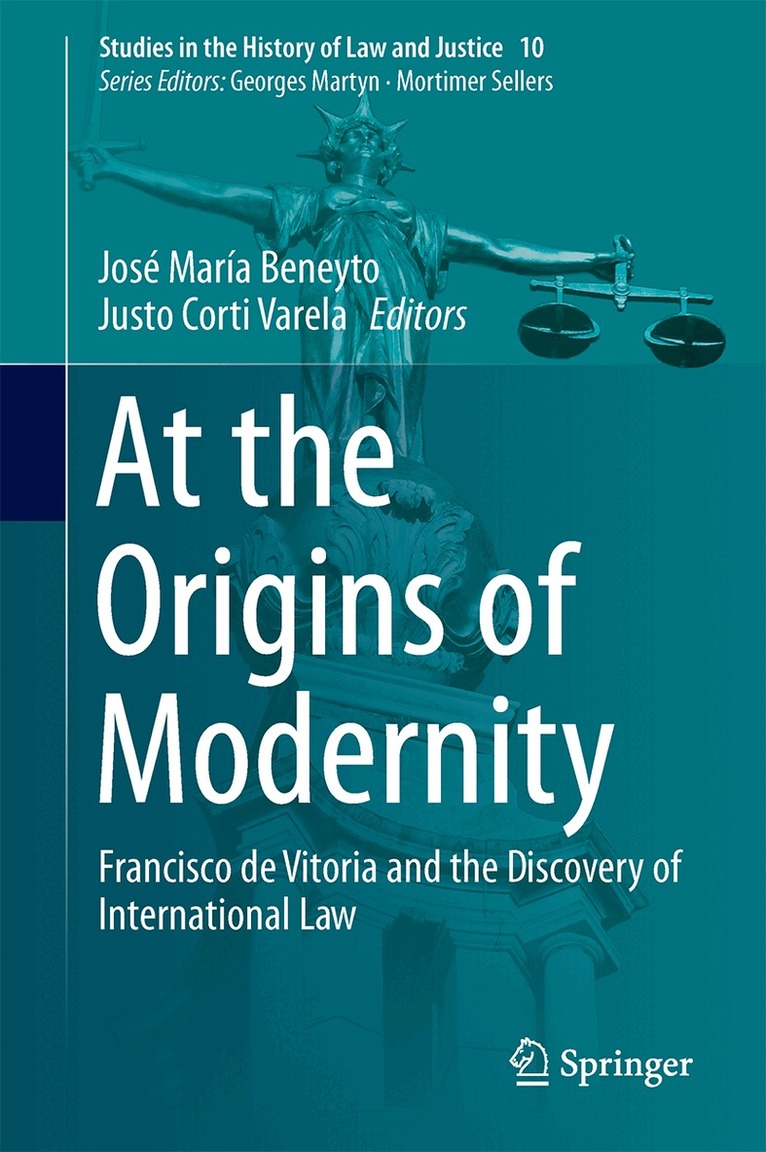
At the Origins of Modernity
Francisco de Vitoria and the Discovery of International Law
Av José María Beneyto, Justo Corti Varela
Inbunden, 2017
1713 kr
Lägg i varukorg
This book is based on an international project conducted by the Institute for European Studies of the University CEU San Pablo in Madrid and a seminar on Vitoria and International Law which took place on July 2nd 2015 in the convent of San Esteban, the place where Vitoria spent his most productive …
At the Origins of Modernity
Francisco de Vitoria and the Discovery of International Law
Av Justo Corti Varela, Jose Maria Beneyto
E-bok, 2017
2242 kr
Lägg i varukorg
This book is based on an international project conducted by the Institute for European Studies of the University CEU San Pablo in Madrid and a seminar on Vitoria and International Law which took place on July 2nd 2015 in the convent of San Esteban, the place where Vitoria spent his most productive …
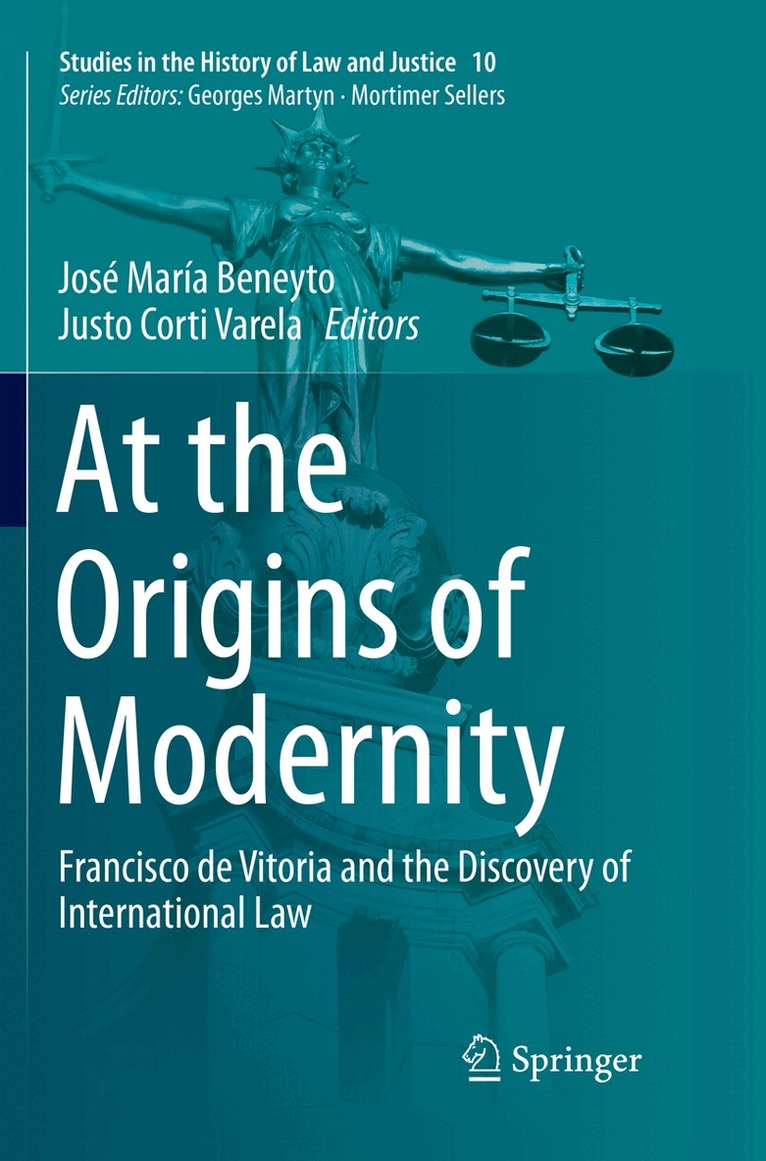
At the Origins of Modernity
Francisco de Vitoria and the Discovery of International Law
Av José María Beneyto, Justo Corti Varela
Häftad, 2018
1713 kr
Lägg i varukorg
This book is based on an international project conducted by the Institute for European Studies of the University CEU San Pablo in Madrid and a seminar on Vitoria and International Law which took place on July 2nd 2015 in the convent of San Esteban, the place where Vitoria spent his most productive …