Jyoti Hosagrahar - Böcker
Visar alla böcker från författaren Jyoti Hosagrahar. Handla med fri frakt och snabb leverans.
2 produkter
2 produkter
1 209 kr
Tillfälligt slut
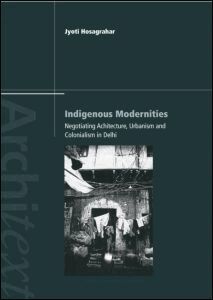
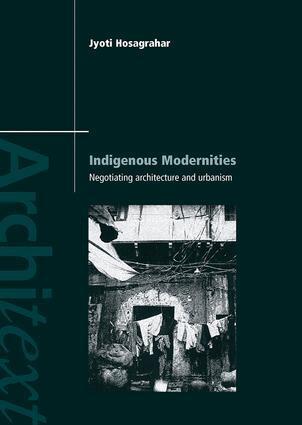
This book examines how a historic and so-called 'traditional' city quietly evolved into one that was modern in its own terms; in form, use and meaning. Through a focused study of Delhi, the author challenges prevalent assumptions in architecture and urbanism to identify an interpretation of modernism that goes beyond conventional understanding. Part one reflects on transformations and discontinuities in built form and spatial culture and questions accepted notions of the static nature of what is normally referred to as traditional and non-Western architecture.Part two is a critical discussion of Delhi in the nineteenth and early twentieth centuries, redefining modernism in a way that separates the city's architecture and society from the objectified realm of the exotic whilst acknowledging non-Western ideas of modernity. In the final part the author considers 'indigenous modernities': the irregular, the uneven and the unexpected in what uncritical observers might call a coherent 'traditional' society and built environment.
845 kr
Skickas inom 10-15 vardagar
This book examines how a historic and so-called 'traditional' city quietly evolved into one that was modern in its own terms; in form, use and meaning. Through a focused study of Delhi, the author challenges prevalent assumptions in architecture and urbanism to identify an interpretation of modernism that goes beyond conventional understanding. Part one reflects on transformations and discontinuities in built form and spatial culture and questions accepted notions of the static nature of what is normally referred to as traditional and non-Western architecture.Part two is a critical discussion of Delhi in the nineteenth and early twentieth centuries, redefining modernism in a way that separates the city's architecture and society from the objectified realm of the exotic whilst acknowledging non-Western ideas of modernity. In the final part the author considers 'indigenous modernities': the irregular, the uneven and the unexpected in what uncritical observers might call a coherent 'traditional' society and built environment.