Jyotika Ramaprasad - Böcker
Visar alla böcker från författaren Jyotika Ramaprasad. Handla med fri frakt och snabb leverans.
5 produkter
5 produkter
1 264 kr
Skickas inom 7-10 vardagar
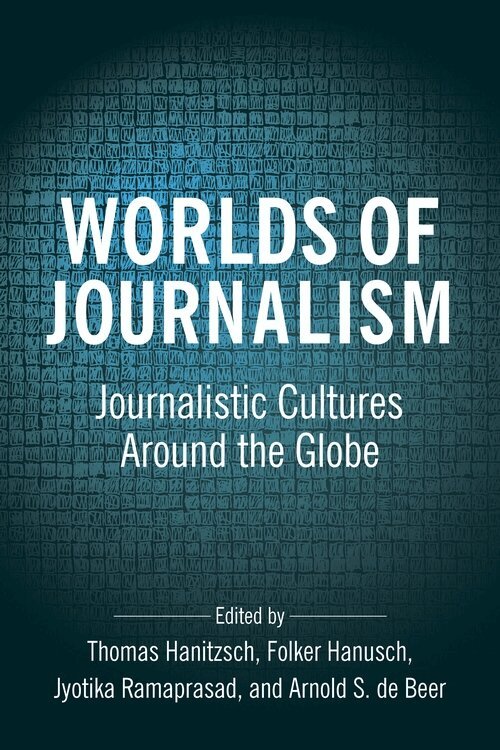
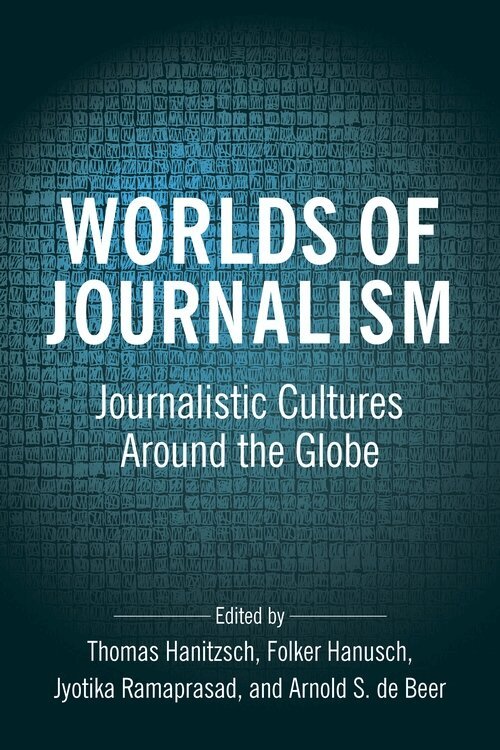
How do journalists around the world view their roles and responsibilities in society? Based on a landmark study that has collected data from more than 27,500 journalists in 67 countries, Worlds of Journalism offers a groundbreaking analysis of the different ways journalists perceive their duties, their relationship to society and government, and the nature and meaning of their work.Challenging assumptions of a universal definition or concept of journalism, the book maps a world populated by a rich diversity of journalistic cultures. Organized around a series of key questions on topics such as editorial autonomy, journalistic ethics, trust in social institutions, and changes in the profession, it details how the practice of journalism differs across the world in a range of political, social, and economic contexts. The book covers how journalism as an institution is created and re-created by journalists and how they experience their profession in very different ways, even as they retain a commitment to some basic, widely shared professional norms and practices. It concludes with a global classification of journalistic cultures that reflects the breadth of worldviews and orientations found in disparate countries and regions. Worlds of Journalism offers an ambitious, comparative global understanding of the state of journalism in a time when it is confronting a series of economic and political threats.
321 kr
Skickas inom 7-10 vardagar
How do journalists around the world view their roles and responsibilities in society? Based on a landmark study that has collected data from more than 27,500 journalists in 67 countries, Worlds of Journalism offers a groundbreaking analysis of the different ways journalists perceive their duties, their relationship to society and government, and the nature and meaning of their work.Challenging assumptions of a universal definition or concept of journalism, the book maps a world populated by a rich diversity of journalistic cultures. Organized around a series of key questions on topics such as editorial autonomy, journalistic ethics, trust in social institutions, and changes in the profession, it details how the practice of journalism differs across the world in a range of political, social, and economic contexts. The book covers how journalism as an institution is created and re-created by journalists and how they experience their profession in very different ways, even as they retain a commitment to some basic, widely shared professional norms and practices. It concludes with a global classification of journalistic cultures that reflects the breadth of worldviews and orientations found in disparate countries and regions. Worlds of Journalism offers an ambitious, comparative global understanding of the state of journalism in a time when it is confronting a series of economic and political threats.
3 565 kr
Kommande
Bringing together contributing authors across six continents, this volume addresses critical questions around conceptualization, theorization, and ethics related to media and journalism research and practice along borders and around the Majority World.In the twenty-first century, notions of borders, globalization/deglobalization, and transnationalism would not be possible without media and journalists/journalism and the research that centers them. Media, large and small, through the work of journalists, yet also through the activities of other types of media producers, such as filmmakers, social media influencers, activists and artists, contribute to the ways in which we understand or sometimes misunderstand the people and places around us and those in distant spaces and environments. The chapters map the spaces in which media and journalism is being redefined, reimagined, and reinvented around the world, and point to lessons learned as well as possibilities for ongoing collaboration. Authors reflect critically on how, by whom, and for whom, news media are created as well as their impacts locally, regionally, nationally, globally, and along various types of borders including geopolitical, cultural, and ideological.This book is an essential companion for advanced undergraduates, graduate students, scholars, journalists and general audience members who are interested in deepening their understanding of the complex media ecosystems in regions across the world.
2 103 kr
Skickas inom 10-15 vardagar
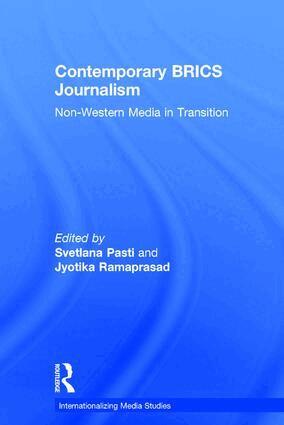
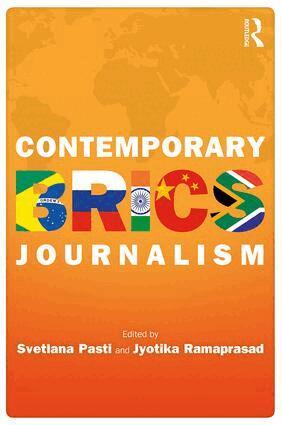
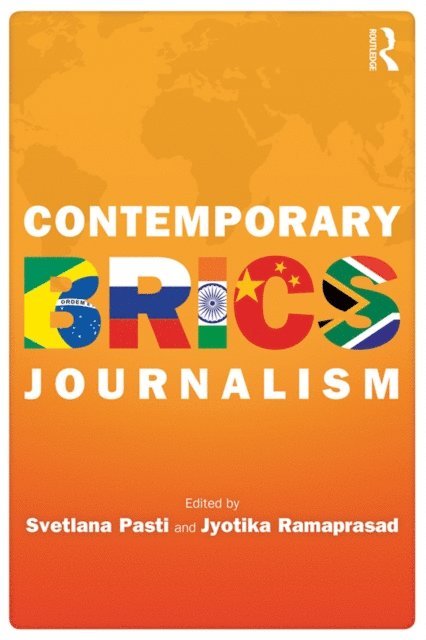
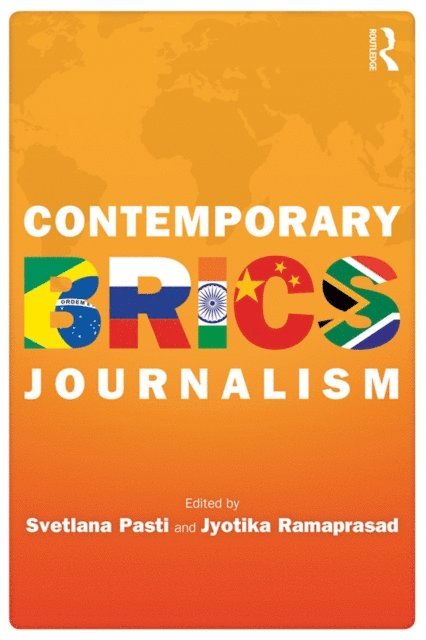
Contemporary BRICS Journalism: Non-Western Media in Transition is the first comparative study of professional journalists working in BRICS countries (Brazil, Russia, India, China, and South Africa). The book presents a range of insider perspectives, offering a valuable insight into the nature of journalism in these influential economies. Contributors to this volume have conducted in-depth interviews with more than 700 journalists, from mainstream and online media, between 2012 and 2015. They present and analyse their findings here, revealing how BRICS journalism is envisioned, experienced, and practised in the twenty-first century. Compelling evidence in the form of journalists’ narratives reveals the impact of digital culture on modern reporting and the evolving dynamic between new media technology and traditional journalistic practice. Insightful comparisons are made between BRICS countries, highlighting the similarities and differences between them. Topics covered include; professionalism, ethics and ideals, community journalism, technological developments in the newsroom and the reporting of protest movements. This book’s ambitious analysis of journalistic landscapes across these non-Western nations will significantly broaden the scope of study and research in the field of journalism for students and teachers of communication, journalism, and media studies.
629 kr
Skickas inom 10-15 vardagar
Contemporary BRICS Journalism: Non-Western Media in Transition is the first comparative study of professional journalists working in BRICS countries (Brazil, Russia, India, China, and South Africa). The book presents a range of insider perspectives, offering a valuable insight into the nature of journalism in these influential economies. Contributors to this volume have conducted in-depth interviews with more than 700 journalists, from mainstream and online media, between 2012 and 2015. They present and analyse their findings here, revealing how BRICS journalism is envisioned, experienced, and practised in the twenty-first century. Compelling evidence in the form of journalists’ narratives reveals the impact of digital culture on modern reporting and the evolving dynamic between new media technology and traditional journalistic practice. Insightful comparisons are made between BRICS countries, highlighting the similarities and differences between them. Topics covered include; professionalism, ethics and ideals, community journalism, technological developments in the newsroom and the reporting of protest movements. This book’s ambitious analysis of journalistic landscapes across these non-Western nations will significantly broaden the scope of study and research in the field of journalism for students and teachers of communication, journalism, and media studies.