K. E. Britton – författare
Visar alla böcker från författaren K. E. Britton. Handla med fri frakt och snabb leverans.
4 produkter
4 produkter
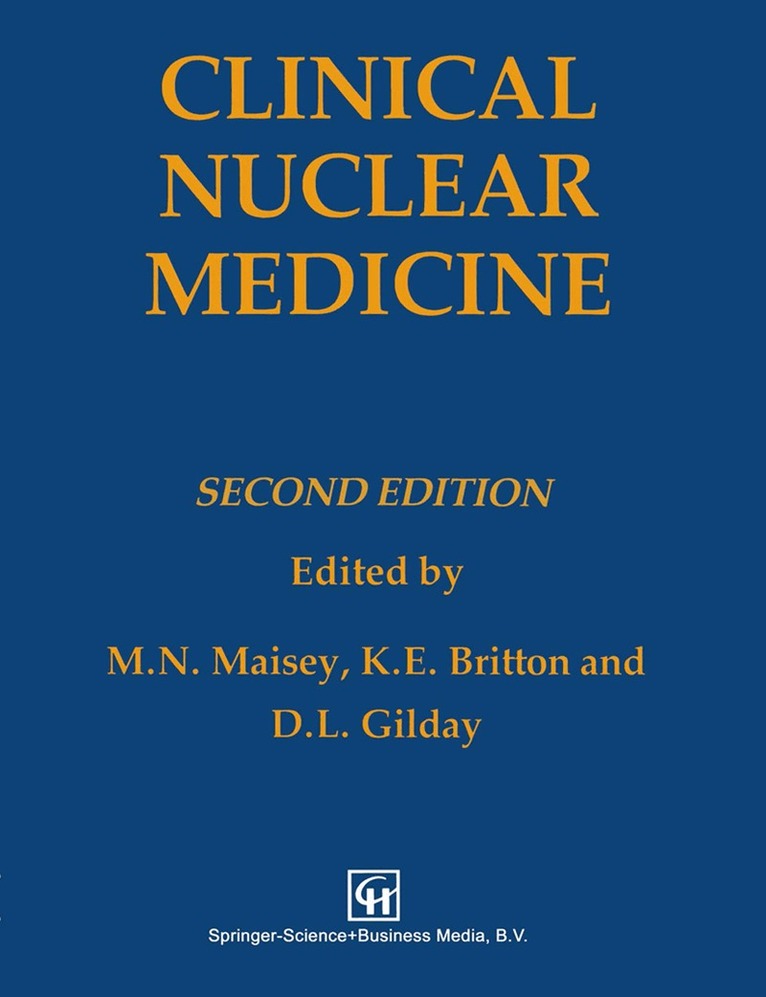
Häftad, Engelska, 1991
565 kr
Skickas inom 10-15 vardagar
Radionuclide tracers are now widely used in the diagnosis and treatment of disease. Nuclear medicine techniques are non-invasive with little or no associated morbidity. Such techniques enable the early detection of disease and measure fundamental rather than structural abnormalities in organ systems. It is generally recognized that the practice of nuclear medicine is best considered from a clinical viewpoint. This emphasizes the place of nuclear medicine in patient care and only presents scientific and technical details where necessary. Written by international specialists, the book includes chapters on the organ systems which are investigated by means of radionuclide procedures and gives details of specific protocols for all techniques which are described. Each chapter is developed from a consideration of the clinical problems to which the nuclear medicine techniques are applied. This new edition has been revised and updated, particularly in respect of new radiopharmaceuticals and imaging protocols and is illustrated. This book should be of interest to nuclear medicine clinicians in training, radiologists and clinicians with a special interest in nuclear medicine.
Häftad, Engelska, 1998
565 kr
Skickas inom 10-15 vardagar
Nuclear medicine is the bridge between a particular clinical problem and a relevant test using radionuclides. It began as a minor technical tool used in a few branches of medicine, notably endocrinology and nephrology. However, throughout the world it has now become established as a clinical discipline in its own right, with specific training programmes, special skills and a particular approach to patient management. Although the practising nuclear medicine physician must necessarily learn a great deal of basic science and technology, a sound medical training and a clinical approach to the subject remains of fundamental importance. It is for this reason that we have attempted in this book to approach the subject from a clinical standpoint, including where necessary relevant physiological material. There exist many excellent texts which cover the basic science and technology of nuclear medicine. We have, therefore, severely limited our coverage of these aspects of the subject to matters which we felt to be essential, particularly those which have been less well covered in other texts - for example, the contents of Chapter 21 on Quantitation by Royal and McNeil. Similarly, we have included at the end of some chapters descriptions of particular techniques where we and the authors felt that it would be helpful. In order to emphasize the clinical approach of this book we have inverted the traditional sequence of material in chapters, presenting the clinical problems first in each instance.
E-bok
PDF, Engelska, 2013714 kr
Läs direkt efter köp
Nuclear medicine is the bridge between a particular clinical problem and a relevant test using radionuclides. It began as a minor technical tool used in a few branches of medicine, notably endocrinology and nephrology. However, throughout the world it has now become established as a clinical discipline in its own right, with specific training programmes, special skills and a particular approach to patient management. Although the practising nuclear medicine physician must necessarily learn a great deal of basic science and technology, a sound medical training and a clinical approach to the subject remains of fundamental importance. It is for this reason that we have attempted in this book to approach the subject from a clinical standpoint, including where necessary relevant physiological material. There exist many excellent texts which cover the basic science and technology of nuclear medicine. We have, therefore, severely limited our coverage of these aspects of the subject to matters which we felt to be essential, particularly those which have been less well covered in other texts - for example, the contents of Chapter 21 on Quantitation by Royal and McNeil. Similarly, we have included at the end of some chapters descriptions of particular techniques where we and the authors felt that it would be helpful. In order to emphasize the clinical approach of this book we have inverted the traditional sequence of material in chapters, presenting the clinical problems first in each instance.
E-bok
PDF, Engelska, 2013708 kr
Läs direkt efter köp
Nuclear medicine is the bridge between a particular clinical problern and a relevant test using radionuclides. It began as a minor technical tool used in a few branches of medicine, notably endocrinology and nephrology. However, throughout the world it has now become established as a clinical discipline in its own right, with specific training programmes, special skills and a particular approach to patient management. Although the practising nuclear medicine physician must necessarily learn a great deal of basic science and technology, a sound medical training and a clinical approach to the subject remains of fundamental importance. It is for this reason that we have attempted in this book to approach the subject from a clinical standpoint, including where necessary relevant physiological material. There exist many excellent texts which cover the basic science and technology of nuclear medicine. We have, therefore, severely limited our coverage of these aspects of the subject to matters which we felt tobe essential, particularly those which have been less well covered in other texts- for example, the contents of Chapter 20 on Measurement by Royal and McNeill. Similarly, we have limited details of methodology to skeletal summaries of protocol (Appendix 1) and have included at the end of some chapters descriptions of particular techniques where we and the authors felt that it would be helpful.