K. Hutter - Böcker
Visar alla böcker från författaren K. Hutter. Handla med fri frakt och snabb leverans.
5 produkter
5 produkter
533 kr
Skickas inom 10-15 vardagar
1 059 kr
Skickas inom 10-15 vardagar
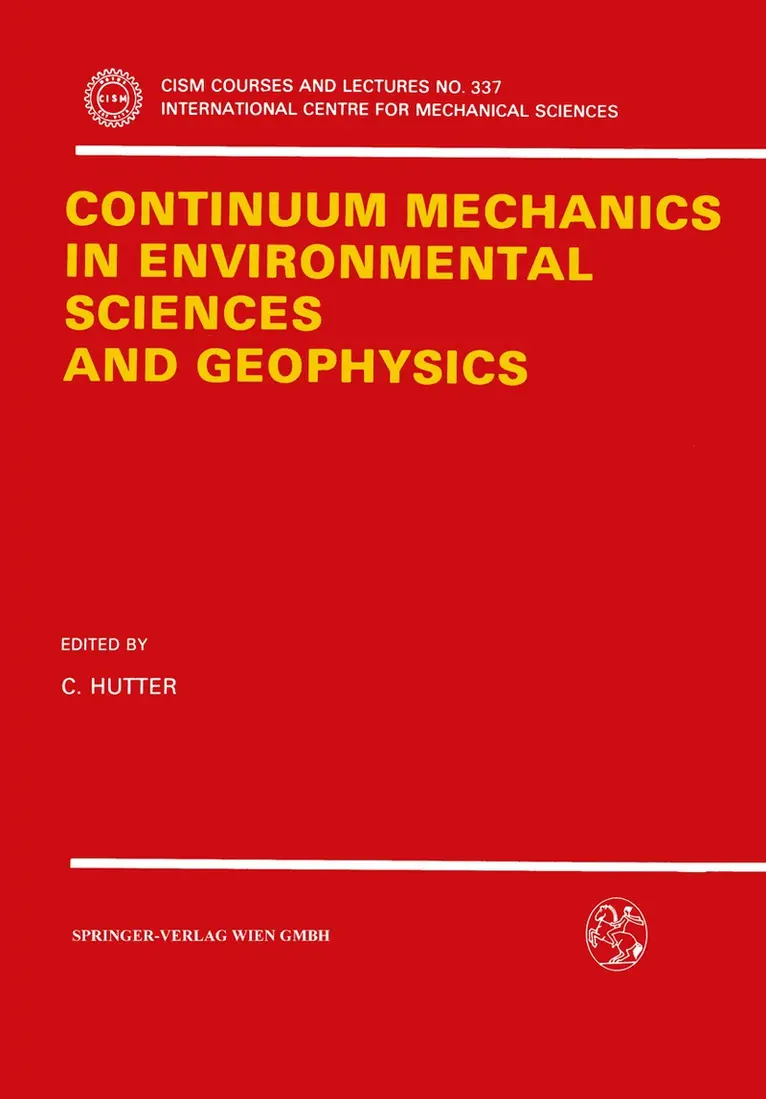
Modern continuum mechanics is the topic of this book. After its introduction it will be applied to a few typical systems arising in the environmental sciences and in geophysics. In large lake/ocean dynamics peculiar effects of the rotation of the Earth will be analyzed in linear/nonlinear processes of a homogenous and inhomogenous water body. Strong thermomechanical coupling paired with nonlinear rheology affects the flow of large ice sheets (such as Antarctica and Greenland) and ice shelves. Its response to the climatic forcing in an environmental of greenhouse warming may significantly affect the life of future generations. The mechanical behaviour of granular materials under quasistatic loadings requires non-classical mixture concepts and encounters generally complicated elastic-plastic type constitutive behaviour. Creeping flow of soils, consolidation processes and ground water flow are described by such theories. Rapid shearing flow of granular materials lead to constitutive relations for the stresses which incorporate rate independent behaviour of Mohr-Coulomb type together with dispersive stress contributions due to particle collisions.Rockfalls, sturzstroms, snow and ice avalanches, but also debris flow and sea ice drifting can be described with such formulations.
Field Matter Interactions in Thermoelastic Solids
A Unification of Existing Theories of Electro-Magneto-Mechanical Interactions
Häftad, Engelska, 1978
533 kr
Skickas inom 10-15 vardagar
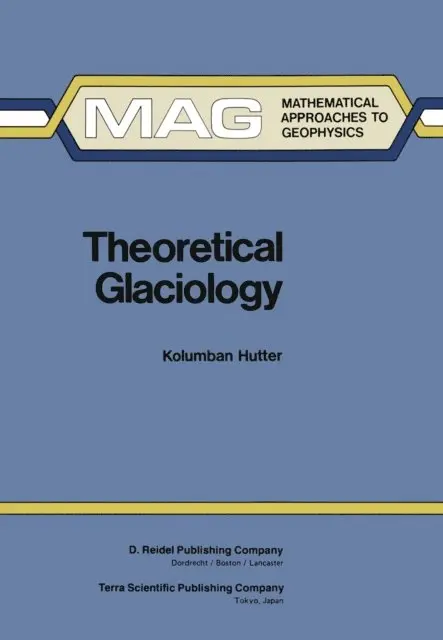
Theoretical Glaciology
Material Science of Ice and the Mechanics of Glaciers and Ice Sheets
Inbunden, Engelska, 1983
2 111 kr
Skickas inom 10-15 vardagar
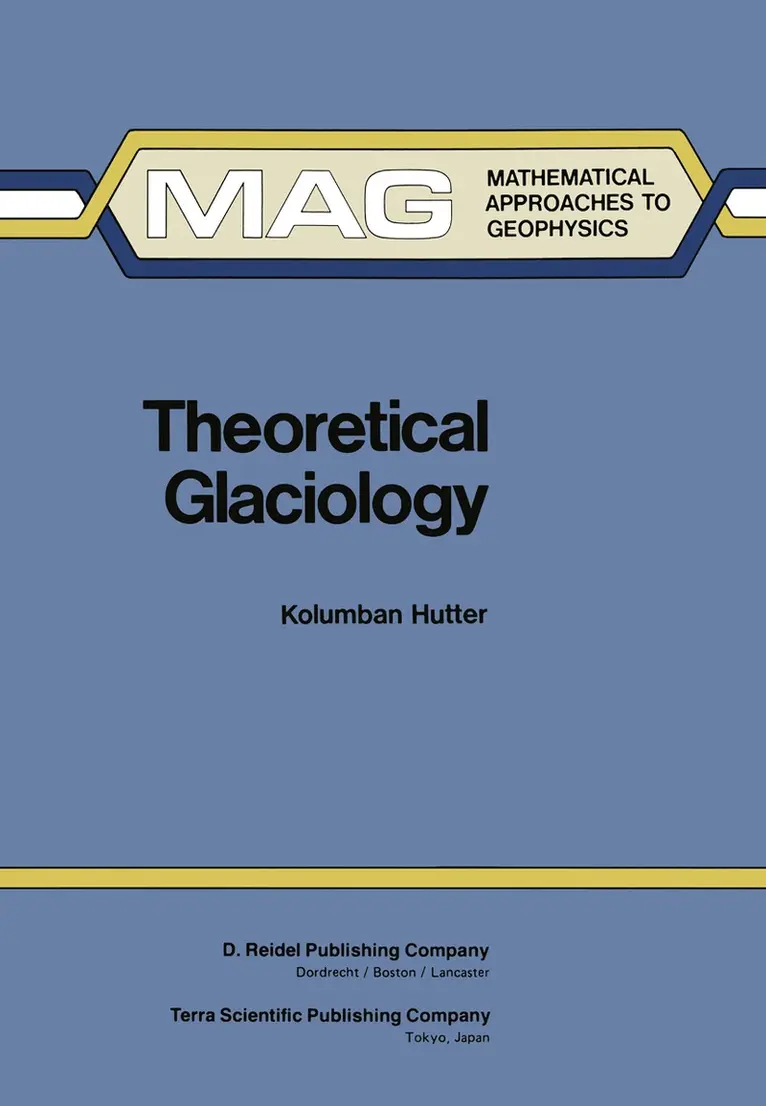
The purpose and scope of this book on theoretical glaciology is outlined in the Introduction. Its aim is to study the theoretical aspects of'ice mechanics' and the 'dynamics of ice masses in a geophysical environment. For the mature reader, the book can serve as an introduction to glaciology. How ever, this is not what I would regard as advisible. Glaciology is an inter disciplinary science in which many special scientific disciplines play their part, from descriptive geography to fairly abstract mathematics. Advance ment will evolve from a merger of two or more branches of scientific specialization. In the last 20 years, several researchers in different fields of glaciology have written books emphasizing the aspects of their specialities and I have listed some which are known to me at the end of the Introduction. When glancing through these books, one recognizes that the mathematical aspects of glaciology are generally glossed over and, to date, there seems to be nothing availablewhich concentrates on these. Therefore, I have written this book in an effort to close the gap and no apologies are offered for the mathematical emphasis. Rather, I believe that this neglect has, to a certain extent, aggra vated progress in the modelling of glaciology problems.
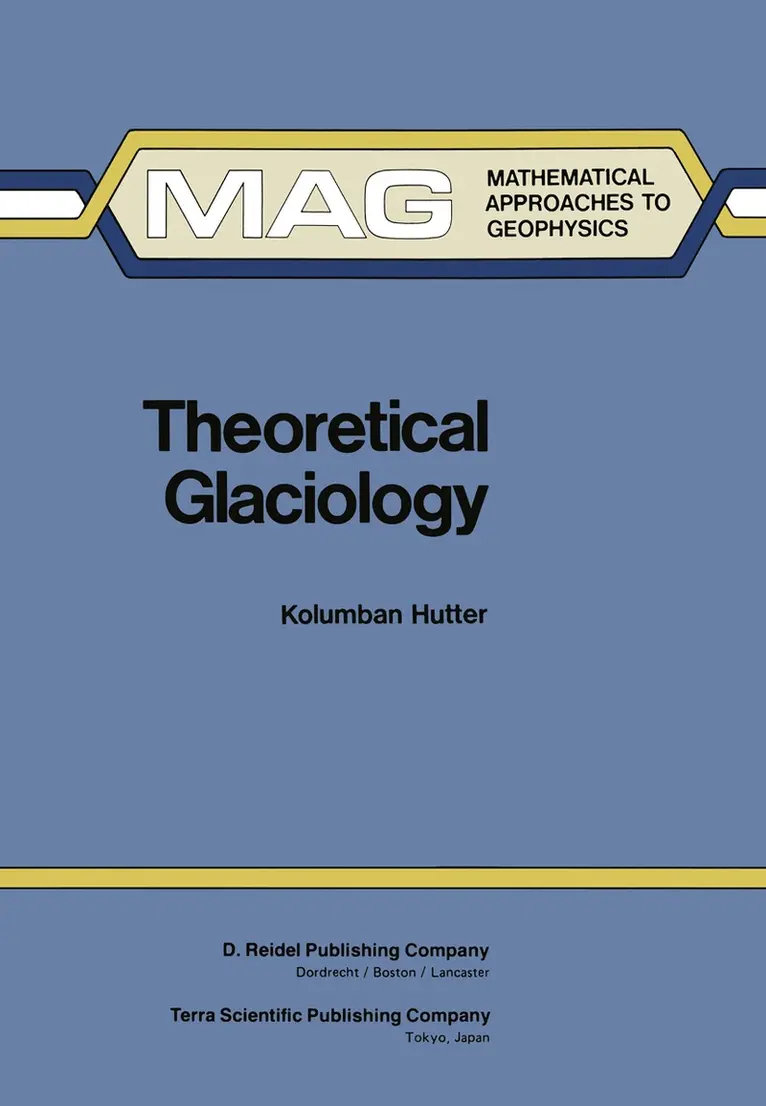
Theoretical Glaciology
Material Science of Ice and the Mechanics of Glaciers and Ice Sheets
Häftad, Engelska, 2012
2 111 kr
Skickas inom 10-15 vardagar
The purpose and scope of this book on theoretical glaciology is outlined in the Introduction. Its aim is to study the theoretical aspects of'ice mechanics' and the 'dynamics of ice masses in a geophysical environment. For the mature reader, the book can serve as an introduction to glaciology. How ever, this is not what I would regard as advisible. Glaciology is an inter disciplinary science in which many special scientific disciplines play their part, from descriptive geography to fairly abstract mathematics. Advance ment will evolve from a merger of two or more branches of scientific specialization. In the last 20 years, several researchers in different fields of glaciology have written books emphasizing the aspects of their specialities and I have listed some which are known to me at the end of the Introduction. When glancing through these books, one recognizes that the mathematical aspects of glaciology are generally glossed over and, to date, there seems to be nothing availablewhich concentrates on these. Therefore, I have written this book in an effort to close the gap and no apologies are offered for the mathematical emphasis. Rather, I believe that this neglect has, to a certain extent, aggra vated progress in the modelling of glaciology problems.