K. L. Mittal – författare
2 001 kr
Skickas inom 10-15 vardagar
2 160 kr
Skickas inom 10-15 vardagar
2 518 kr
Skickas inom 5-8 vardagar
2 498 kr
Skickas inom 11-20 vardagar
2 518 kr
Skickas inom 5-8 vardagar
2 748 kr
Läs direkt efter köp
An indispensable volume detailing the current and potential applications of atmospheric pressure plasma treatment by experts practicing in fields around the world
Polymers are used in a wide variety of industries to fabricate legions of products because of their many desirable traits. However, polymers in general (and polyolefins, in particular) are innately not very adhesionable because of the absence of polar or reactive groups on their surfaces and concomitant low surface energy. Surface treatment of polymers, however, is essential to impart reactive chemical groups on their surfaces to enhance their adhesion characteristic. Proper surface treatment can endow polymers with improved adhesion without affecting the bulk properties.
A plethora of techniques (ranging from wet to dry, simple to sophisticated, vacuum to non-vacuum) for polymer surface modification have been documented in the literature but the Atmospheric Pressure Plasma (APP) treatment has attracted much attention because it offers many advantages vis-a-vis other techniques, namely uniform treatment, continuous operation, no need for vacuum, simplicity, low cost, no environmental or disposal concern, and applicability to large area samples.
Although the emphasis in this book is on the utility of APP treatment for enhancement of polymer adhesion, APP is also applicable and effective to modulate many other surface properties of polymers: superhydrophilicity, superhydrophobicity, anti-fouling, anti-fogging, anti-icing, cell adhesion, biocompatibility, tribological behavior, etc.
The key features of Atmospheric Pressure Plasma Treatment of Polymers:
Address design and functions of various types of reactors Bring out current and potential applications of APP treatment Represent the cumulative wisdom of many key academic and industry researchers actively engaged in this key and enabling technology2 990 kr
Läs direkt efter köp
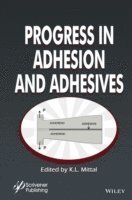
The book comprehensively charts a way for industry to employ adhesively bonded joints to make systems more efficient and cost-effective
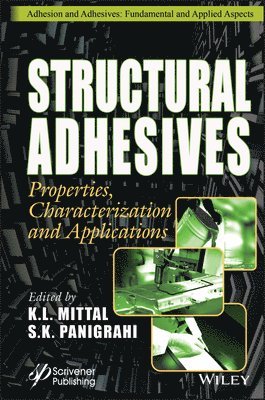
Adhesively bonded systems have found applications in a wide spectrum of industries (e.g., aerospace, electronics, construction, ship building, biomedical, etc.) for a variety of purposes. Emerging adhesive materials with improved mechanical properties have allowed adhesion strength approaching that of the bonded materials themselves. Due to advances in adhesive materials and the many potential merits that adhesive bonding offers, adhesive bonding has replaced other joining methods in many applications.
Containing nine articles written by world-renowned experts, the book deals with the advances in theoretical and computational modeling as well as the design and experimental aspects of adhesively bonded structural systems. Stress analysis and strength prediction of adhesively bonded structural systems, considering a range of material models under a variety of loading conditions, are discussed. Finite element modeling using macro-elements is elaborated on. Recent developments in modeling and experimental aspects of bonded systems with graded adhesive layers and dual adhesives are described. Simulation of progressive damage in bonded joints is addressed. A novel vibration-based approach to detect disbonding and delamination in composite joints is also discussed.
ReadershipThe book is central to a range of engineers including mechanical, reliability, construction and surface engineers as well as materials scientists who are engaged in the mechanics of structural adhesive joints. Industries that will use this book include aerospace, electronics, biomedical, automotive, ship building, and construction.
2 990 kr
Läs direkt efter köp
The book comprehensively charts a way for industry to employ adhesively bonded joints to make systems more efficient and cost-effective
Adhesively bonded systems have found applications in a wide spectrum of industries (e.g., aerospace, electronics, construction, ship building, biomedical, etc.) for a variety of purposes. Emerging adhesive materials with improved mechanical properties have allowed adhesion strength approaching that of the bonded materials themselves. Due to advances in adhesive materials and the many potential merits that adhesive bonding offers, adhesive bonding has replaced other joining methods in many applications.
Containing nine articles written by world-renowned experts, the book deals with the advances in theoretical and computational modeling as well as the design and experimental aspects of adhesively bonded structural systems. Stress analysis and strength prediction of adhesively bonded structural systems, considering a range of material models under a variety of loading conditions, are discussed. Finite element modeling using macro-elements is elaborated on. Recent developments in modeling and experimental aspects of bonded systems with graded adhesive layers and dual adhesives are described. Simulation of progressive damage in bonded joints is addressed. A novel vibration-based approach to detect disbonding and delamination in composite joints is also discussed.
ReadershipThe book is central to a range of engineers including mechanical, reliability, construction and surface engineers as well as materials scientists who are engaged in the mechanics of structural adhesive joints. Industries that will use this book include aerospace, electronics, biomedical, automotive, ship building, and construction.
2 885 kr
Läs direkt efter köp
This book represents the cumulative wisdom of a contingent of world-class (researchers engaged in the domain of wettability. In the last few years there has been tremendous interest in the "Lotus Leaf Effect" and in understanding its mechanism and how to replicate this effect for myriad applications. The topics of superhydrophobicity, omniphobicity and superhydrophilicity are of much contemporary interest and these are covered in depth in this book.
2 990 kr
Läs direkt efter köp
This book represents the cumulative wisdom of a contingent of world-class (researchers engaged in the domain of wettability. In the last few years there has been tremendous interest in the "Lotus Leaf Effect" and in understanding its mechanism and how to replicate this effect for myriad applications. The topics of superhydrophobicity, omniphobicity and superhydrophilicity are of much contemporary interest and these are covered in depth in this book.
2 768 kr
Läs direkt efter köp
2 768 kr
Läs direkt efter köp
2 344 kr
Skickas inom 11-20 vardagar
2 768 kr
Läs direkt efter köp
2 768 kr
Läs direkt efter köp
2 446 kr
Skickas inom 5-8 vardagar
2 768 kr
Läs direkt efter köp
2 671 kr
Läs direkt efter köp
3 164 kr
Läs direkt efter köp
This book is the second volume in the series "Contact Angle, Wettability and Adhesion." The premier volume was published in 2013.
Even a cursory glance at the literature show that in recent years the interest in understanding and controlling wetting behavior has grown exponentially. Currently, there is tremendous research activity in rendering surfaces superhydrophobic, superhydrophilic, superoleophobic, superoleophilic, omniphobic and omniphilic because of their applications in many technologically important fields. Also the durability or robustness of materials with such super" characteristics is extremely significant, as well as the utilization of "green" (biobased) materials to obtain such surfaces.
This book containing 19 articles reflects more recent developments in certain areas covered in its predecessor volume as well as it includes some topics which were not covered before. Concomitantly, this book provides a medium to keep abreast of the latest research activity and developments in the arena of contact angle, wettability and adhesion.
The topics discussed include: Understanding of wetting hysteresis; fabrication of superhydrophobic materials; plasma treatment to achieve superhydrophilic surfaces; highly liquid repellent textiles; modification of paper surfaces to control liquid wetting and adhesion; Cheerios effect and its control; engineering materials with superwettability; laser ablation to create micro/nano-patterned surfaces; liquid repellent amorphous carbon nanoparticle networks; mechanical durability of liquid repellent surfaces; wetting of solid walls and spontaneous capillary flow; relationship between roughness and oleophilicity; superhydrophobic and superoleophobic green materials; computational analysis of wetting on hydrophobic surfaces: application to self-cleaning mechanisms; bubble adhesion to superhydrophilic surfaces; surface free energy of superhydrophobic materials; and role of surface free energy in pharmaceutical tablet tensile strength.
3 164 kr
Läs direkt efter köp
This book is the second volume in the series "Contact Angle, Wettability and Adhesion." The premier volume was published in 2013.
Even a cursory glance at the literature show that in recent years the interest in understanding and controlling wetting behavior has grown exponentially. Currently, there is tremendous research activity in rendering surfaces superhydrophobic, superhydrophilic, superoleophobic, superoleophilic, omniphobic and omniphilic because of their applications in many technologically important fields. Also the durability or robustness of materials with such super" characteristics is extremely significant, as well as the utilization of "green" (biobased) materials to obtain such surfaces.
This book containing 19 articles reflects more recent developments in certain areas covered in its predecessor volume as well as it includes some topics which were not covered before. Concomitantly, this book provides a medium to keep abreast of the latest research activity and developments in the arena of contact angle, wettability and adhesion.
The topics discussed include: Understanding of wetting hysteresis; fabrication of superhydrophobic materials; plasma treatment to achieve superhydrophilic surfaces; highly liquid repellent textiles; modification of paper surfaces to control liquid wetting and adhesion; Cheerios effect and its control; engineering materials with superwettability; laser ablation to create micro/nano-patterned surfaces; liquid repellent amorphous carbon nanoparticle networks; mechanical durability of liquid repellent surfaces; wetting of solid walls and spontaneous capillary flow; relationship between roughness and oleophilicity; superhydrophobic and superoleophobic green materials; computational analysis of wetting on hydrophobic surfaces: application to self-cleaning mechanisms; bubble adhesion to superhydrophilic surfaces; surface free energy of superhydrophobic materials; and role of surface free energy in pharmaceutical tablet tensile strength.
2 826 kr
Skickas inom 5-8 vardagar
3 101 kr
Läs direkt efter köp
This book is based on the 13 review articles written by subject experts and published in 2014 in the Journal Reviews of Adhesion and Adhesives. The rationale for publication of this book is that currently the RAA has limited circulation, so this book provides broad exposure and dissemination of the concise, critical, illuminating, and thought-provoking review articles.
The subjects of the reviews fall into 4 general areas:
1. Polymer surface modification
2. Biomedical, pharmaceutical and dental fields
3. Adhesives and adhesive joints
4. General Adhesion Aspects
The topics covered include: Adhesion of condensed bodies at microscale; imparting adhesion property to silicone material; functionally graded adhesively bonded joints; synthetic adhesives for wood panels; adhesion theories in wood adhesive bonding; adhesion and surface issues in biocomposites and bionanocomposites; adhesion phenomena in pharmaceutical products and applications of AFM; cyanoacrylate adhesives in surgical applications; ways to generate monosort functionalized polyolefin surfaces; nano-enhanced adhesives; bonding dissimilar materials in dentistry; flame treatment of polymeric materials—relevance to adhesion; and mucoadhesive polymers for enhancing retention of ocular drug delivery.
3 259 kr
Läs direkt efter köp
This book is based on the 13 review articles written by subject experts and published in 2014 in the Journal Reviews of Adhesion and Adhesives. The rationale for publication of this book is that currently the RAA has limited circulation, so this book provides broad exposure and dissemination of the concise, critical, illuminating, and thought-provoking review articles.
The subjects of the reviews fall into 4 general areas:
1. Polymer surface modification
2. Biomedical, pharmaceutical and dental fields
3. Adhesives and adhesive joints
4. General Adhesion Aspects
The topics covered include: Adhesion of condensed bodies at microscale; imparting adhesion property to silicone material; functionally graded adhesively bonded joints; synthetic adhesives for wood panels; adhesion theories in wood adhesive bonding; adhesion and surface issues in biocomposites and bionanocomposites; adhesion phenomena in pharmaceutical products and applications of AFM; cyanoacrylate adhesives in surgical applications; ways to generate monosort functionalized polyolefin surfaces; nano-enhanced adhesives; bonding dissimilar materials in dentistry; flame treatment of polymeric materials—relevance to adhesion; and mucoadhesive polymers for enhancing retention of ocular drug delivery.
2 346 kr
Skickas inom 11-20 vardagar
2 631 kr
Skickas inom 5-8 vardagar
3 101 kr
Läs direkt efter köp
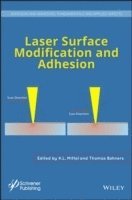
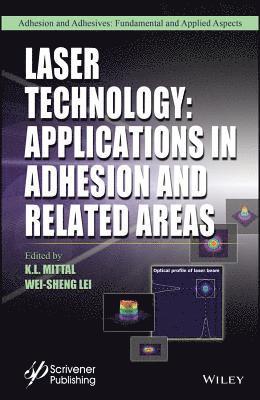
The acronym Laser is derived from Light Amplification by Stimulated Emission of Radiation. With the advent of the ruby laser in 1960, there has been tremendous research activity in developing novel, more versatile and more efficient laser sources or devices, as lasers applications are ubiquitous. Today, lasers are used in many areas of human endeavor and are routinely employed in a host of diverse fields: various branches of engineering, microelectronics, biomedical, medicine, dentistry, surgery, surface modification, to name just a few.
In this book (containing 10 chapters) we have focused on application of lasers in adhesion and related areas. The topics covered include:
Topographical modification of polymers and metals by laser ablation to create superhydrophobic surfaces. Non-ablative laser surface modification. Laser surface modification to enhance adhesion. Laser surface engineering of materials to modulate their wetting behavior. Laser surface modification in dentistry. Laser polymer welding. Laser based adhesion testing technique to measure thin film-substrate interface toughness. Laser surface removal of hard thin ceramic coatings. Laser removal of particles from surfaces. Laser induced thin film debonding for micro-device fabrication applications.3 101 kr
Läs direkt efter köp
The acronym Laser is derived from Light Amplification by Stimulated Emission of Radiation. With the advent of the ruby laser in 1960, there has been tremendous research activity in developing novel, more versatile and more efficient laser sources or devices, as lasers applications are ubiquitous. Today, lasers are used in many areas of human endeavor and are routinely employed in a host of diverse fields: various branches of engineering, microelectronics, biomedical, medicine, dentistry, surgery, surface modification, to name just a few.
In this book (containing 10 chapters) we have focused on application of lasers in adhesion and related areas. The topics covered include:
Topographical modification of polymers and metals by laser ablation to create superhydrophobic surfaces. Non-ablative laser surface modification. Laser surface modification to enhance adhesion. Laser surface engineering of materials to modulate their wetting behavior. Laser surface modification in dentistry. Laser polymer welding. Laser based adhesion testing technique to measure thin film-substrate interface toughness. Laser surface removal of hard thin ceramic coatings. Laser removal of particles from surfaces. Laser induced thin film debonding for micro-device fabrication applications.2 800 kr
Läs direkt efter köp
Significant research has been done in polymeric nanocomposites and progress has been made in understanding nanofiller-polymer interface and interphase and their relation to nanocomposite properties. However, the information is scattered in many different publication media. This is the first book that consolidates the current knowledge on understanding, characterization and tailoring interfacial interactions between nanofillers and polymers by bringing together leading researchers and experts in this field to present their cutting edge research.
Eleven chapters authored by senior subject specialists cover topics including:
Thermodynamic mechanisms governing nanofiller dispersion, engineering of interphase with nanofillers Role of interphase in governing the mechanical, electrical, thermal and other functional properties of nanocomposites, characterization and modelling of the interphase Effects of crystallization on the interface, chemical and physical techniques for surface modification of nanocellulose reinforcements Electro-micromechanical and nanoindentation techniques for interface evaluation, molecular dynamics (MD) simulations to quantify filler-matrix adhesion and nanocomposite mechanical properties.2 800 kr
Läs direkt efter köp
Significant research has been done in polymeric nanocomposites and progress has been made in understanding nanofiller-polymer interface and interphase and their relation to nanocomposite properties. However, the information is scattered in many different publication media. This is the first book that consolidates the current knowledge on understanding, characterization and tailoring interfacial interactions between nanofillers and polymers by bringing together leading researchers and experts in this field to present their cutting edge research.
Eleven chapters authored by senior subject specialists cover topics including:
Thermodynamic mechanisms governing nanofiller dispersion, engineering of interphase with nanofillers Role of interphase in governing the mechanical, electrical, thermal and other functional properties of nanocomposites, characterization and modelling of the interphase Effects of crystallization on the interface, chemical and physical techniques for surface modification of nanocellulose reinforcements Electro-micromechanical and nanoindentation techniques for interface evaluation, molecular dynamics (MD) simulations to quantify filler-matrix adhesion and nanocomposite mechanical properties.2 826 kr
Skickas inom 5-8 vardagar