K. MacHardy – författare
Visar alla böcker från författaren K. MacHardy. Handla med fri frakt och snabb leverans.
3 produkter
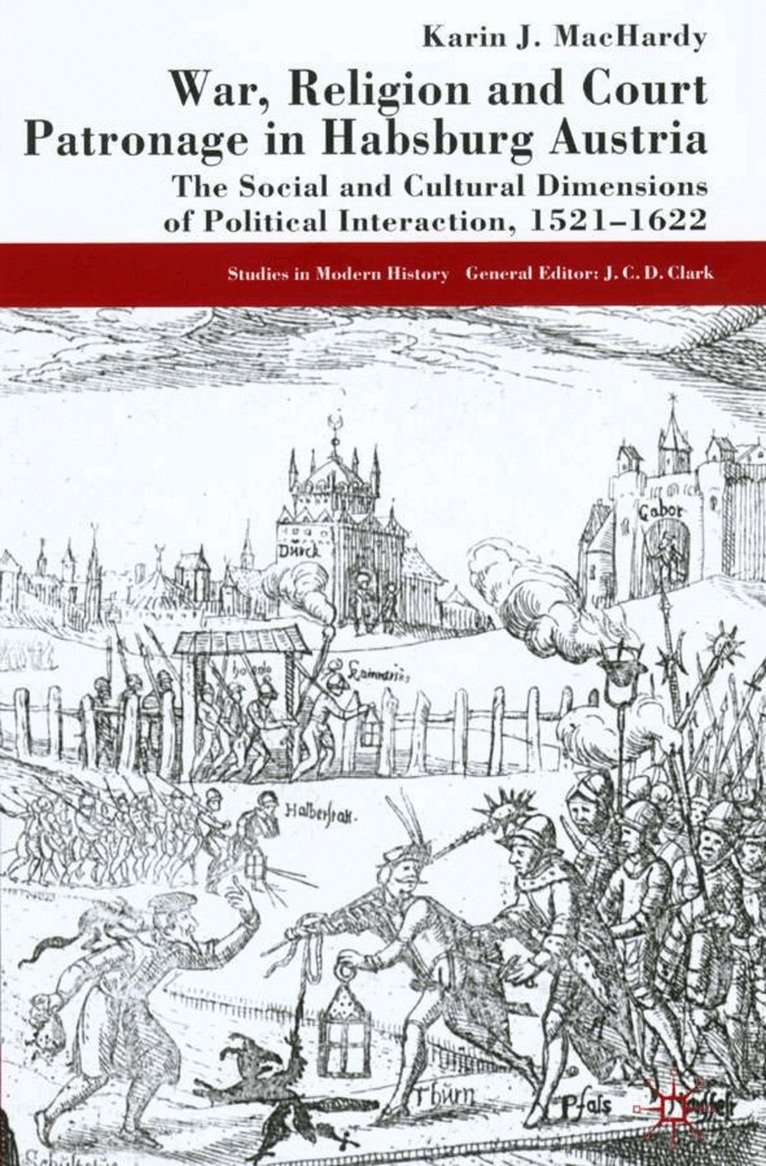
War, Religion and Court Patronage in Habsburg Austria
The Social and Cultural Dimensions of Political Interaction, 1521-1622
Av K. MacHardy
E-bok, 2016
803 kr
Lägg i varukorg
This case study of the causes of the Thirty Years'' War suggests an alternative framework to that of Absolutism, and views statebuilding as an interactive bargaining process that can engender challenges to political authority. It shows how selective court patronage changed the cultural habits of …
War, Religion and Court Patronage in Habsburg Austria
The Social and Cultural Dimensions of Political Interaction, 1521-1622
Av K. MacHardy
Inbunden, 2002
569 kr
Lägg i varukorg
This case study of the causes of the Thirty Years' War suggests an alternative framework to that of Absolutism, and views statebuilding as an interactive bargaining process that can engender challenges to political authority. It shows how selective court patronage changed the cultural habits of …
War, Religion and Court Patronage in Habsburg Austria
The Social and Cultural Dimensions of Political Interaction, 1521-1622
Av K. MacHardy
Häftad, 2003
569 kr
Lägg i varukorg
This case study of the causes of the Thirty Years' War suggests an alternative framework to that of Absolutism, and views statebuilding as an interactive bargaining process that can engender challenges to political authority. It shows how selective court patronage changed the cultural habits of …