Kaare Strøm - Böcker
Visar alla böcker från författaren Kaare Strøm. Handla med fri frakt och snabb leverans.
4 produkter
4 produkter
547 kr
Skickas inom 7-10 vardagar
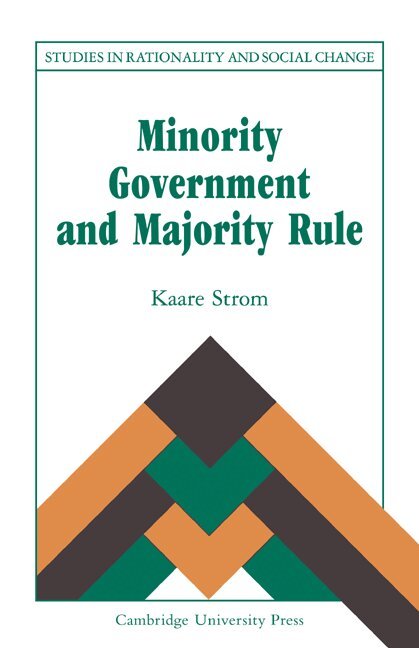
Minority governments in parliamentary democracies are conventionally considered to be unstable and ineffective aberrations from the principle of majority rule. Through analysis of over 350 postwar governments, the author shows that minority governments are neither exceptional nor unstable but in fact a common feature of parliamentary democracies and frequently perform as well as, or better than, majority coalitions. Using the Italian and Norwegian governments as case studies, he suggests that minority governments are particularly likely to form when parties anticipate competitive elections and when opposition parties are able to influence legislative decisions. As an attempt to document and explain a very common form of government in parliamentary democracies, this book will contribute significantly to the understanding of the importance of electoral competition in democratic politics.
1 508 kr
Skickas inom 7-10 vardagar
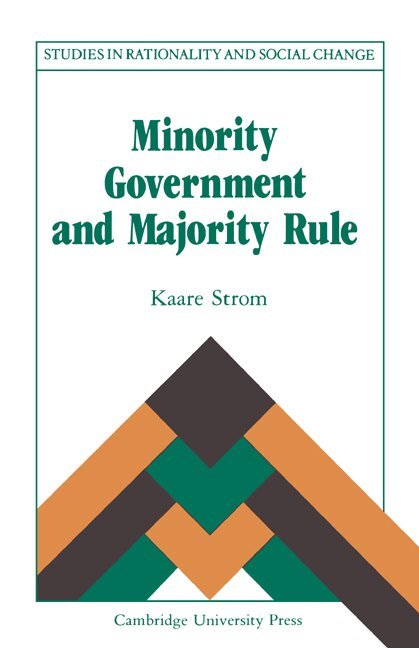
Minority governments in parliamentary democracies are conventionally considered to be unstable and ineffective aberrations from the principle of majority rule. Through analysis of over 350 postwar governments, the author shows that minority governments are neither exceptional nor unstable but in fact a common feature of parliamentary democracies and frequently perform as well as, or better than, majority coalitions. Using the Italian and Norwegian governments as case studies, he suggests that minority governments are particularly likely to form when parties anticipate competitive elections and when opposition parties are able to influence legislative decisions. As an attempt to document and explain a very common form of government in parliamentary democracies, this book will contribute significantly to the understanding of the importance of electoral competition in democratic politics.
Policy, Office, or Votes?
How Political Parties in Western Europe Make Hard Decisions
Inbunden, Engelska, 1999
1 034 kr
Skickas inom 7-10 vardagar
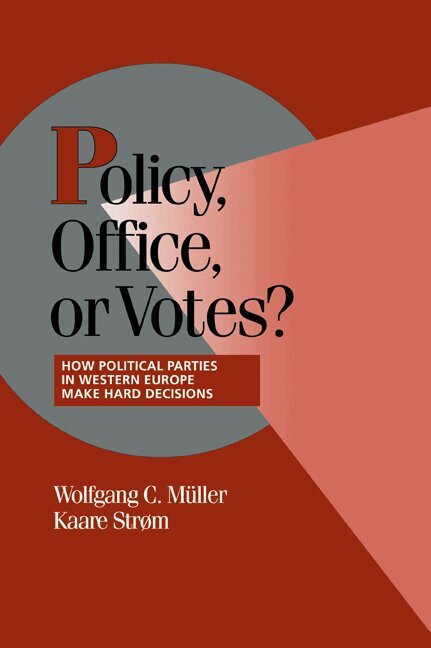
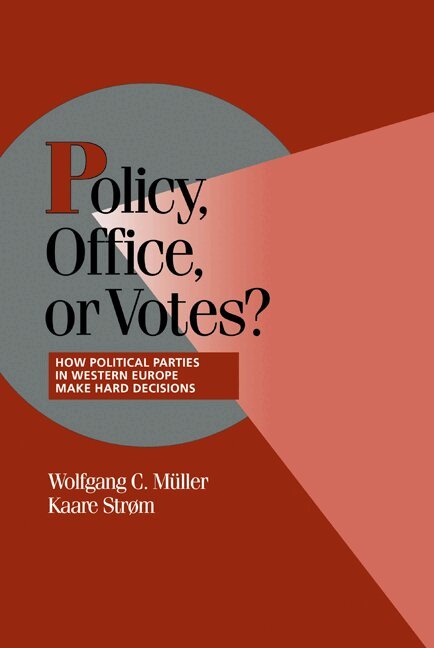
Leaders of political parties often have to choose between conflicting objectives, such as influence on policy, control of the government, and support among the voters. This book examines the behaviour of political parties in situations where they experience conflict between two or more important objectives. The volume contains a theoretical introduction and case studies of party leaders in Germany, Italy, France and Spain as well as six smaller European democracies. Each case focuses on the behaviour of one of several parties in situations of goal conflict, such as the 'historic compromise' in Italy, the 1982 Wende in West Germany, the making of the new Swedish constitution in the 1970s, and the termination of the Austrian 'black-red' grand coalition. In their conclusions, the editors discuss how such leadership decisions can be understood and examine the causes of different choices among party leaders.
Policy, Office, or Votes?
How Political Parties in Western Europe Make Hard Decisions
Häftad, Engelska, 1999
360 kr
Skickas inom 7-10 vardagar
Leaders of political parties often have to choose between conflicting objectives, such as influence on policy, control of the government, and support among the voters. This book examines the behaviour of political parties in situations where they experience conflict between two or more important objectives. The volume contains a theoretical introduction and case studies of party leaders in Germany, Italy, France and Spain as well as six smaller European democracies. Each case focuses on the behaviour of one of several parties in situations of goal conflict, such as the 'historic compromise' in Italy, the 1982 Wende in West Germany, the making of the new Swedish constitution in the 1970s, and the termination of the Austrian 'black-red' grand coalition. In their conclusions, the editors discuss how such leadership decisions can be understood and examine the causes of different choices among party leaders.