Kaethe Weingarten - Böcker
Visar alla böcker från författaren Kaethe Weingarten. Handla med fri frakt och snabb leverans.
4 produkter
4 produkter
1 957 kr
Skickas inom 10-15 vardagar
Although feminist family therapy has been gaining recognition and followers in recent years, little is known about the variety of experiences, philosophies, and private learnings of feminist practitioners. Reflections on Feminist Family Therapy Training utilizes first-person accounts, theory, and commentary to explore the challenges feminist teachers and practitioners face and the aspects of their practice that are seldom considered.Readers of Reflections on Feminist Family Therapy Training acquire effective teaching strategies and a sensitivity to the intersection of cultural diversity and feminism. Students are introduced to several contextual factors that shape personal and professional experiences, as well as techniques that address predictable patterns of behavior and attitudes toward feminist family therapy in a variety of settings. The book presents innovative ideas and strategies from experienced trainers for tolerating, working with, and resolving gaps between theory and practice and for confronting hostility or tension within specific institutional contexts.Aimed at building bridges between teachers and practitioners of family therapy from a feminist perspective, Reflections on Feminist Family Therapy Training explores and helps you answer the following questions:What similarities and differences exist between American and European feminist family therapists? What special challenges does the feminist therapist face in a conventional training institute? Does a feminist or liberal context attend adequately to the needs of the multicultural student body? How does a trainer’s national standing or tenure status promote or harm her freedom to practice openly in a specifically feminist way? What new directions and opportunities exist for feminist family therapists?Reflections on Feminist Family Therapy Training looks at the difficulties women practitioners face in convincing family therapy to recognize the significance of gender as a variable factor. In doing so, it offers specific classroom applications and general approaches to the feminist task of getting unheard and repressed voices acknowledged. Finally, the book outlines future directions for expanding and improving feminist-informed training and for giving it a more central and integrated position in the curricula.
704 kr
Skickas inom 10-15 vardagar
Although feminist family therapy has been gaining recognition and followers in recent years, little is known about the variety of experiences, philosophies, and private learnings of feminist practitioners. Reflections on Feminist Family Therapy Training utilizes first-person accounts, theory, and commentary to explore the challenges feminist teachers and practitioners face and the aspects of their practice that are seldom considered.Readers of Reflections on Feminist Family Therapy Training acquire effective teaching strategies and a sensitivity to the intersection of cultural diversity and feminism. Students are introduced to several contextual factors that shape personal and professional experiences, as well as techniques that address predictable patterns of behavior and attitudes toward feminist family therapy in a variety of settings. The book presents innovative ideas and strategies from experienced trainers for tolerating, working with, and resolving gaps between theory and practice and for confronting hostility or tension within specific institutional contexts.Aimed at building bridges between teachers and practitioners of family therapy from a feminist perspective, Reflections on Feminist Family Therapy Training explores and helps you answer the following questions:What similarities and differences exist between American and European feminist family therapists? What special challenges does the feminist therapist face in a conventional training institute? Does a feminist or liberal context attend adequately to the needs of the multicultural student body? How does a trainer’s national standing or tenure status promote or harm her freedom to practice openly in a specifically feminist way? What new directions and opportunities exist for feminist family therapists?Reflections on Feminist Family Therapy Training looks at the difficulties women practitioners face in convincing family therapy to recognize the significance of gender as a variable factor. In doing so, it offers specific classroom applications and general approaches to the feminist task of getting unheard and repressed voices acknowledged. Finally, the book outlines future directions for expanding and improving feminist-informed training and for giving it a more central and integrated position in the curricula.
519 kr
Skickas inom 10-15 vardagar
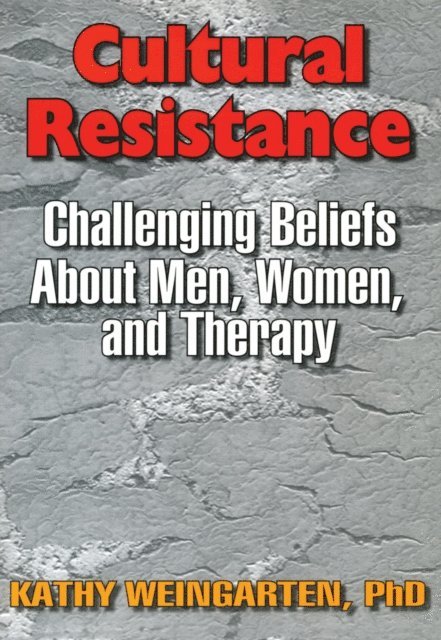
In everyday life--in relationships, in various institutions, in texts--cultural premises influence and sometimes limit individuals’thoughts, actions, and ideas. Cultural Resistance: Challenging Beliefs About Men, Women, and Therapy analyzes cultural constraints and encourages therapists, individuals, and communities to practice cultural resistance on a daily basis, allowing for the realization of diverse and suppressed knowledges. Cultural Resistance shows general patterns by which some ideas in a culture become accepted and others are marginalized. It proposes ways individuals and communities can resist the hold of limiting ideas on their lives. In the postmodern tradition, Editor Kathy Weingarten brings together authors who ask and offer answers to the question, “What is not present in our thinking?” Each chapter invites therapists to extend their thinking about the scope of their work. Topics covered include:challenging cultural beliefs about mothers transforming masculine identities lesbian and gay parents a narrative approach to anorexia/bulimia perspectives on the Black woman and sexual trauma, focusing on Thomas v. Hill opening therapy to conversations with a personal god new conversations on controversial issuesThe chapters in Cultural Resistance first describe cultural premises that constrain the lives of women, men, and/or therapists and then develop an approach to resisting these constraints. A response follows each chapter in an effort to promote discourse, extend meanings, and encourage learning between professionals.Cultural Resistance yields new perspectives on the nature of social change and the relationships between individuals and culture. It offers valuable insights to family therapists, psychiatrists, psychologists, and social workers who want to broaden their thinking and approach. It gives therapists a fresh, new way of thinking about themselves, others, and their conversations through applications which may be professional, personal, or both.
1 118 kr
Tillfälligt slut
In everyday life--in relationships, in various institutions, in texts--cultural premises influence and sometimes limit individuals’thoughts, actions, and ideas. Cultural Resistance: Challenging Beliefs About Men, Women, and Therapy analyzes cultural constraints and encourages therapists, individuals, and communities to practice cultural resistance on a daily basis, allowing for the realization of diverse and suppressed knowledges. Cultural Resistance shows general patterns by which some ideas in a culture become accepted and others are marginalized. It proposes ways individuals and communities can resist the hold of limiting ideas on their lives. In the postmodern tradition, Editor Kathy Weingarten brings together authors who ask and offer answers to the question, “What is not present in our thinking?” Each chapter invites therapists to extend their thinking about the scope of their work. Topics covered include:challenging cultural beliefs about mothers transforming masculine identities lesbian and gay parents a narrative approach to anorexia/bulimia perspectives on the Black woman and sexual trauma, focusing on Thomas v. Hill opening therapy to conversations with a personal god new conversations on controversial issuesThe chapters in Cultural Resistance first describe cultural premises that constrain the lives of women, men, and/or therapists and then develop an approach to resisting these constraints. A response follows each chapter in an effort to promote discourse, extend meanings, and encourage learning between professionals.Cultural Resistance yields new perspectives on the nature of social change and the relationships between individuals and culture. It offers valuable insights to family therapists, psychiatrists, psychologists, and social workers who want to broaden their thinking and approach. It gives therapists a fresh, new way of thinking about themselves, others, and their conversations through applications which may be professional, personal, or both.