Kai Horsthemke - Böcker
Visar alla böcker från författaren Kai Horsthemke. Handla med fri frakt och snabb leverans.
9 produkter
9 produkter
2 104 kr
Skickas inom 10-15 vardagar
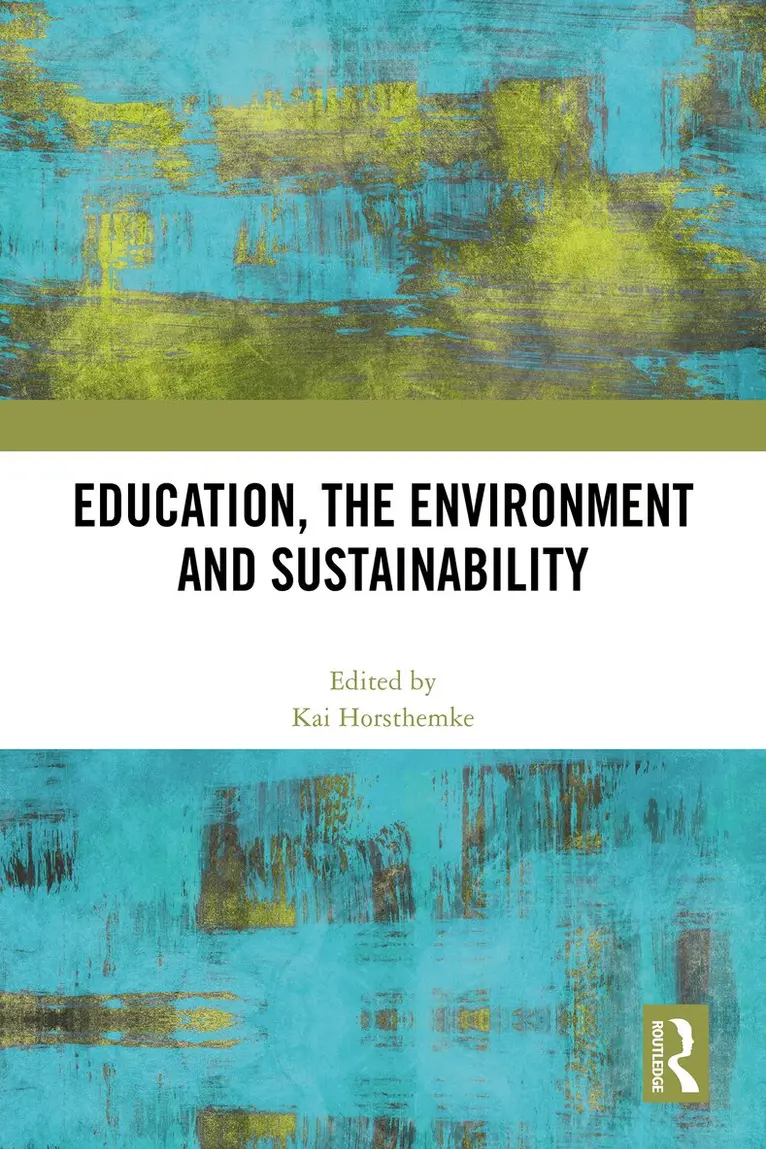
This book tackles questions about the metaphysical and ethical foundations of our concern for our planet, and about educational and pedagogical implications. It pursues answers to urgent questions such as: should educational policy and practice be informed by a concern for nature and the environment for our (human) purposes? Or should we teach and learn for the natural environment in and for itself? Chapters in this volume contribute towards the unmasking and undoing of the various kinds of denialism and pernicious relativism (cultural, moral and epistemological) that have held us in their grip and that continue to thwart attempts to establish a sane and morally sustainable set of relationships between us, human beings, and other animals and the animate and inanimate environment.Education, the Environment and Sustainability provides educators and interested laypersons with tools for critical reflection and interrogation of their own and others’ assumptions, preconceptions, and practices affecting nature and the environment. This volume was originally published as a special issue of Ethics and Education.
616 kr
Skickas inom 10-15 vardagar
This book tackles questions about the metaphysical and ethical foundations of our concern for our planet, and about educational and pedagogical implications. It pursues answers to urgent questions such as: should educational policy and practice be informed by a concern for nature and the environment for our (human) purposes? Or should we teach and learn for the natural environment in and for itself? Chapters in this volume contribute towards the unmasking and undoing of the various kinds of denialism and pernicious relativism (cultural, moral and epistemological) that have held us in their grip and that continue to thwart attempts to establish a sane and morally sustainable set of relationships between us, human beings, and other animals and the animate and inanimate environment.Education, the Environment and Sustainability provides educators and interested laypersons with tools for critical reflection and interrogation of their own and others’ assumptions, preconceptions, and practices affecting nature and the environment. This volume was originally published as a special issue of Ethics and Education.
851 kr
Skickas inom 10-15 vardagar
The claim is frequently made on behalf of African moral beliefs and practices that they do not objectify and exploit nature and natural existents like Western ethics does. This book investigates whether this is correct and what kind of status is reserved for other-than-human animals in African ethics.
1 142 kr
Skickas inom 10-15 vardagar
If death is the cessation of life, then, as a concept, it draws its meaning from the preceding life. While death and dying are inextricably connected, dying is still a part of life—unlike death. The Meaning of Death: A Philosophical Investigation analyzes death and dying, the biotechnical quest for immortality, the afterlife, and the rationality of self-chosen death. Assuming eternal life will one day become possible, Kai Horsthemke argues that immortality is not obviously desirable, and that. even if the right to life in principle includes the right to eternal life, it must also include the right to self-determined dying and death. Although there is no creationist basis for existence and the finality of death remains a universal, inevitable prospect, this need not undermine confidence in the personal and transpersonal value of human activities. Life is valuable not only because of its uniqueness and unrepeatability, but also because it is finite. The meaning of death is essentially that it gives meaning to life.
1 240 kr
Skickas inom 10-15 vardagar
Although the manifestation of what is taken to be indigenous knowledge could presumably be traced back roughly to the origins of humankind, the idea of indigenous knowledge is a fairly recent phenomenon. It has arguably gained conceptual and discursive currency only over the past half century, with a veritable slew of conferences, workshops, special journal editions, and anthologies devoted to the topic. Yet, there has been no treatise that offers a comprehensive, critical examination of this notion. Accounts of indigenous knowledge usually focus on explanations of “indigenous,” “local,” “traditional,” “African” and the like – but to date not a single defense of indigenous knowledge has bothered to explain the particular understanding of “knowledge” the authors are working with. Indigenous Knowledge: Philosophical and Educational Considerations’s critique of the idea of indigenous knowledge should in no way be understood as an endorsement of the evils of colonial conquest and (ongoing) exploitation, oppression, and subjugation. Nor should it be taken as an indication of a failure on the part of the Kai Horsthemke to sympathize with the struggle of indigenous peoples the world over for a dignified and sustainable way of life, for personal and communal space, and for self-determination. The aim of the book is to provide especially “indigenous” educators with theoretical tools for critical reflection and interrogation of their own and others’ preconceptions, assumptions, and epistemic practices and customs.
422 kr
Skickas inom 10-15 vardagar
Although the manifestation of what is taken to be indigenous knowledge could presumably be traced back roughly to the origins of humankind, the idea of indigenous knowledge is a fairly recent phenomenon. It has arguably gained conceptual and discursive currency only over the past half century, with a veritable slew of conferences, workshops, special journal editions, and anthologies devoted to the topic. Yet, there has been no treatise that offers a comprehensive, critical examination of this notion. Accounts of indigenous knowledge usually focus on explanations of “indigenous,” “local,” “traditional,” “African” and the like – but to date not a single defense of indigenous knowledge has bothered to explain the particular understanding of “knowledge” the authors are working with. Indigenous Knowledge: Philosophical and Educational Considerations’s critique of the idea of indigenous knowledge should in no way be understood as an endorsement of the evils of colonial conquest and (ongoing) exploitation, oppression, and subjugation. Nor should it be taken as an indication of a failure on the part of the Kai Horsthemke to sympathize with the struggle of indigenous peoples the world over for a dignified and sustainable way of life, for personal and communal space, and for self-determination. The aim of the book is to provide especially “indigenous” educators with theoretical tools for critical reflection and interrogation of their own and others’ preconceptions, assumptions, and epistemic practices and customs.
851 kr
Skickas inom 10-15 vardagar
It examines key trends in this regard, including environmental education, humane education, posthumanist education, ecopedagogy, critical animal pedagogy, critical animal studies, animal standpoint theory, and vegan education.
1 167 kr
Skickas inom 10-15 vardagar
It examines key trends in this regard, including environmental education, humane education, posthumanist education, ecopedagogy, critical animal pedagogy, critical animal studies, animal standpoint theory, and vegan education.
196 kr
Skickas inom 3-6 vardagar