Kakuro Amasaka – författare
Visar alla böcker från författaren Kakuro Amasaka. Handla med fri frakt och snabb leverans.
11 produkter
11 produkter
E-bok
Engelska, 20141 316 kr
Läs direkt efter köp
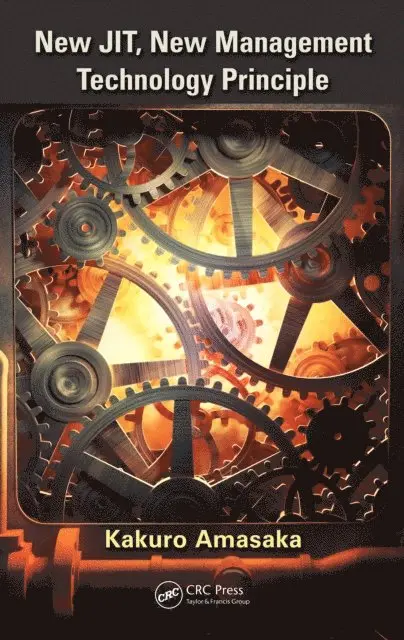
New JIT, New Management Technology Principle contains the previously published, updated, and new works of renowned scientist, scholar, and consultant Kakuro Amasaka. This book details the Just-in-Time (JIT) quality management strategy, exploring the cutting edge of a new management technology principle that surpasses what traditional JIT has accomplished. The new JIT principle contains hardware and software systems, and next-generation technical principles for transforming management technology into management strategy. This comprehensive work covers traditional JIT, innovation and evolution, the full new JIT and its applications, along with case studies. It is clearly impossible to lead the next generation by merely maintaining the two Toyota management technology principles, Toyota Production System and Total Quality Management. To overcome this issue, it is essential to renovate not only TPS, which is the core principle of the production process, but also establish core principles for marketing, design and development, production, and other departments. This book reassesses the way management technology was carried out in the manufacturing industry and establishes new JIT. This next-generation management technology model is the JIT system for not only manufacturing, but also for customer relations, sales and marketing, product planning, research and development (R&D), product design, production engineering, logistics, procurement, and administration and management for enhancing business process innovation and introduction of new concepts and procedures.The book focuses on the theory and application of strategic management technology through the application of new JIT, then demonstrates its effectiveness in a case study based on an advanced car manufacturer. Using this new model, you can realize manufacturing that places top priority on customers with a good Quality, Cost, and Delivery (QCD) in a rapidly changing technical environment, and allows you to create uniform quality for the global market.
E-bok
PDF, Engelska, 20141 316 kr
Läs direkt efter köp
New JIT, New Management Technology Principle contains the previously published, updated, and new works of renowned scientist, scholar, and consultant Kakuro Amasaka. This book details the Just-in-Time (JIT) quality management strategy, exploring the cutting edge of a new management technology principle that surpasses what traditional JIT has accomp
Inbunden, Engelska, 2024
4 764 kr
Skickas inom 5-8 vardagar
Häftad, Engelska, 2024
4 257 kr
Skickas inom 5-8 vardagar
Inbunden, Engelska, 2022
2 641 kr
Skickas inom 5-8 vardagar
Häftad, Engelska, 2022
2 166 kr
Skickas inom 5-8 vardagar
Inbunden, Engelska, 2004
1 123 kr
Skickas inom 10-15 vardagar
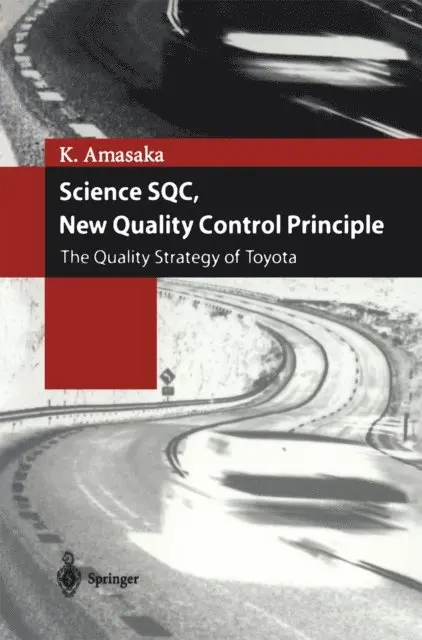
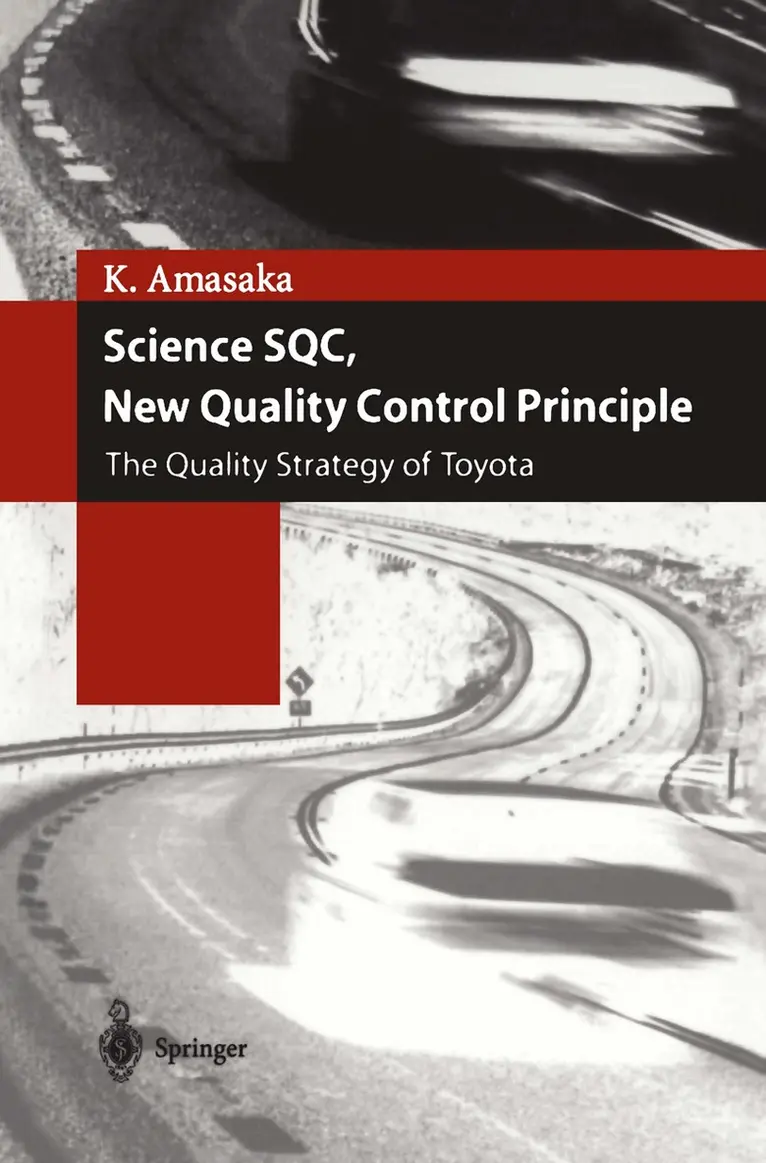
As is represented by the world's top-level Japanese automotive manufacturers, Japanese manufacturers have been climbing to winning positions in global businesses. The driving force of their success includes responsiveness to diversifying market needs and elevating quality requirements, clarification of development concepts that facilitate new technology, application of technology to product planning and design, advanced production control systems that elaborately utilize state-of-the-art manufacturing technologies, and flexible, efficient production. Many Japanese manufacturers succeeded in fulfilling these factors mainly because they utilize Japanese-style Lean Production Systems or the so-called Toyota Production System (TPS) and Japanese-style, scientific quality management approaches such as Statistical Quality Control (SQC) and Total Quality Management (TQM) in order to improve their corporate management technology. As severe competition among manufacturers intensify both in Japan and overseas, action against quality problems that remarkably diminish customer satisfaction, and customer-first quality management, is becoming important. Scientific quality control methods that aim to optimize production processes for building in quality were undermined by the past expansion of quantity-oriented manufacturing through automation with massive and heavy equipment.
E-bok
PDF, Engelska, 20121 459 kr
Läs direkt efter köp
As is represented by the world''s top-level Japanese automotive manufacturers, Japanese manufacturers have been climbing to winning positions in global businesses. The driving force of their success includes responsiveness to diversifying market needs and elevating quality requirements, clarification of development concepts that facilitate new technology, application of technology to product planning and design, advanced production control systems that elaborately utilize state-of-the-art manufacturing technologies, and flexible, efficient production. Many Japanese manufacturers succeeded in fulfilling these factors mainly because they utilize Japanese-style Lean Production Systems or the so-called Toyota Production System (TPS) and Japanese-style, scientific quality management approaches such as Statistical Quality Control (SQC) and Total Quality Management (TQM) in order to improve their corporate management technology. As severe competition among manufacturers intensify both in Japan and overseas, action against quality problems that remarkably diminish customer satisfaction, and customer-first quality management, is becoming important. Scientific quality control methods that aim to optimize production processes for building in quality were undermined by the past expansion of quantity-oriented manufacturing through automation with massive and heavy equipment.
Häftad, Engelska, 2012
1 235 kr
Skickas inom 10-15 vardagar
As is represented by the world's top-level Japanese automotive manufacturers, Japanese manufacturers have been climbing to winning positions in global businesses. The driving force of their success includes responsiveness to diversifying market needs and elevating quality requirements, clarification of development concepts that facilitate new technology, application of technology to product planning and design, advanced production control systems that elaborately utilize state-of-the-art manufacturing technologies, and flexible, efficient production. Many Japanese manufacturers succeeded in fulfilling these factors mainly because they utilize Japanese-style Lean Production Systems or the so-called Toyota Production System (TPS) and Japanese-style, scientific quality management approaches such as Statistical Quality Control (SQC) and Total Quality Management (TQM) in order to improve their corporate management technology. As severe competition among manufacturers intensify both in Japan and overseas, action against quality problems that remarkably diminish customer satisfaction, and customer-first quality management, is becoming important. Scientific quality control methods that aim to optimize production processes for building in quality were undermined by the past expansion of quantity-oriented manufacturing through automation with massive and heavy equipment.
Häftad, Engelska, 2025
1 366 kr
Skickas inom 5-8 vardagar
Inbunden, Engelska, 2014
878 kr
Tillfälligt slut
New JIT, New Management Technology Principle contains the previously published, updated, and new works of renowned scientist, scholar, and consultant Kakuro Amasaka. This book details the Just-in-Time (JIT) quality management strategy, exploring the cutting edge of a new management technology principle that surpasses what traditional JIT has accomplished. The new JIT principle contains hardware and software systems, and next-generation technical principles for transforming management technology into management strategy. This comprehensive work covers traditional JIT, innovation and evolution, the full new JIT and its applications, along with case studies. It is clearly impossible to lead the next generation by merely maintaining the two Toyota management technology principles, Toyota Production System and Total Quality Management. To overcome this issue, it is essential to renovate not only TPS, which is the core principle of the production process, but also establish core principles for marketing, design and development, production, and other departments. This book reassesses the way management technology was carried out in the manufacturing industry and establishes new JIT. This next-generation management technology model is the JIT system for not only manufacturing, but also for customer relations, sales and marketing, product planning, research and development (R&D), product design, production engineering, logistics, procurement, and administration and management for enhancing business process innovation and introduction of new concepts and procedures.The book focuses on the theory and application of strategic management technology through the application of new JIT, then demonstrates its effectiveness in a case study based on an advanced car manufacturer. Using this new model, you can realize manufacturing that places top priority on customers with a good Quality, Cost, and Delivery (QCD) in a rapidly changing technical environment, and allows you to create uniform quality for the global market.