350 kr
Skickas inom 10-15 vardagar
350 kr
Skickas inom 10-15 vardagar
3 981 kr
Läs direkt efter köp
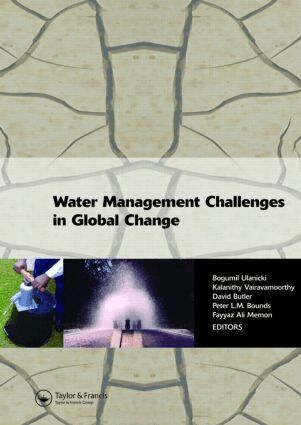
Water Management Challenges in Global Change contains the proceedings of the 9th Computing and Control for the Water Industry (CCWI2007) and the Sustainable Urban Water Management (SUWM2007) conferences. The rationale behind these conferences is to improve the management of urban water systems through the development of computerbased methods. Issues such as economic globalisation, climate changes and water shortages call for a new approach to water systems management, which addresses the relevant technical, social and economic aspects. This collection represents the views of academic and industrial experts from a number of countries, who provide technical solutions to current water management problems and present a vision for addressing the global questions. The themes underlying many of the contributions include energy and material savings, water savings and the integration of different aspects of water management.
The papers are grouped into three themes covering water distribution systems, sustainable urban water management and modelling of wastewater treatmentplants.
The water distribution topics cover asset and information management, planning, monitoring and control, hydraulic modelling of steady state and transients, water quality and treatment, demand and leakage management, optimisation, design and decision support systems, as well as reliability and security of water distribution systems. The sustainable urban water management topics include urban drainage systems, water reuse, social aspects of water management and also selected facets of water resources and irrigation. Computer control of wastewater treatment plants has been seen as less advanced than that of clean water systems. To address this imbalance, this book presents a number of modelling techniques developed specifically for these plants.
Water Management Challenges in Global Change will prove to be invaluable to water and environmental engineering researchers and academics; managers, engineers and planners; and postgraduate students.
3 981 kr
Läs direkt efter köp
Water Management Challenges in Global Change contains the proceedings of the 9th Computing and Control for the Water Industry (CCWI2007) and the Sustainable Urban Water Management (SUWM2007) conferences. The rationale behind these conferences is to improve the management of urban water systems through the development of computerbased methods. Issues such as economic globalisation, climate changes and water shortages call for a new approach to water systems management, which addresses the relevant technical, social and economic aspects. This collection represents the views of academic and industrial experts from a number of countries, who provide technical solutions to current water management problems and present a vision for addressing the global questions. The themes underlying many of the contributions include energy and material savings, water savings and the integration of different aspects of water management.
The papers are grouped into three themes covering water distribution systems, sustainable urban water management and modelling of wastewater treatmentplants.
The water distribution topics cover asset and information management, planning, monitoring and control, hydraulic modelling of steady state and transients, water quality and treatment, demand and leakage management, optimisation, design and decision support systems, as well as reliability and security of water distribution systems. The sustainable urban water management topics include urban drainage systems, water reuse, social aspects of water management and also selected facets of water resources and irrigation. Computer control of wastewater treatment plants has been seen as less advanced than that of clean water systems. To address this imbalance, this book presents a number of modelling techniques developed specifically for these plants.
Water Management Challenges in Global Change will prove to be invaluable to water and environmental engineering researchers and academics; managers, engineers and planners; and postgraduate students.
373 kr
Skickas inom 5-8 vardagar
This book has been written specifically for practitioners involved in the operation, maintenance and management of piped water distribution systems in urban areas of developing countries. These practitioners include engineers, planners, managers, and water professionals involved in the monitoring, control and rehabilitation of water distribution networks.
The book explains in detail how to evaluate the risk of deterioration of the water distribution network of a water supply system. It begins with the conceptualization of risk evaluation and its three different components (hazard, vulnerability and risk). The book further elaborates on each of these three components, explains the methodologies used to estimate the components, and presents the background to the mathematical models. Finally, the book explains how these components are integrated to form a GIS-based decision support system for risk evaluation. The book is designed to help practitioners understand the concept of risk evaluation and supports the manual of the IRA-WDS software, a GIS-based decision support system for risk evaluation.
350 kr
Skickas inom 10-15 vardagar
3 981 kr
Läs direkt efter köp
Water Management Challenges in Global Change contains the proceedings of the 9th Computing and Control for the Water Industry (CCWI2007) and the Sustainable Urban Water Management (SUWM2007) conferences. The rationale behind these conferences is to improve the management of urban water systems through the development of computerbased methods. Issues such as economic globalisation, climate changes and water shortages call for a new approach to water systems management, which addresses the relevant technical, social and economic aspects. This collection represents the views of academic and industrial experts from a number of countries, who provide technical solutions to current water management problems and present a vision for addressing the global questions. The themes underlying many of the contributions include energy and material savings, water savings and the integration of different aspects of water management.
The papers are grouped into three themes covering water distribution systems, sustainable urban water management and modelling of wastewater treatmentplants.
The water distribution topics cover asset and information management, planning, monitoring and control, hydraulic modelling of steady state and transients, water quality and treatment, demand and leakage management, optimisation, design and decision support systems, as well as reliability and security of water distribution systems. The sustainable urban water management topics include urban drainage systems, water reuse, social aspects of water management and also selected facets of water resources and irrigation. Computer control of wastewater treatment plants has been seen as less advanced than that of clean water systems. To address this imbalance, this book presents a number of modelling techniques developed specifically for these plants.
Water Management Challenges in Global Change will prove to be invaluable to water and environmental engineering researchers and academics; managers, engineers and planners; and postgraduate students.
3 981 kr
Läs direkt efter köp
Water Management Challenges in Global Change contains the proceedings of the 9th Computing and Control for the Water Industry (CCWI2007) and the Sustainable Urban Water Management (SUWM2007) conferences. The rationale behind these conferences is to improve the management of urban water systems through the development of computerbased methods. Issues such as economic globalisation, climate changes and water shortages call for a new approach to water systems management, which addresses the relevant technical, social and economic aspects. This collection represents the views of academic and industrial experts from a number of countries, who provide technical solutions to current water management problems and present a vision for addressing the global questions. The themes underlying many of the contributions include energy and material savings, water savings and the integration of different aspects of water management.
The papers are grouped into three themes covering water distribution systems, sustainable urban water management and modelling of wastewater treatmentplants.
The water distribution topics cover asset and information management, planning, monitoring and control, hydraulic modelling of steady state and transients, water quality and treatment, demand and leakage management, optimisation, design and decision support systems, as well as reliability and security of water distribution systems. The sustainable urban water management topics include urban drainage systems, water reuse, social aspects of water management and also selected facets of water resources and irrigation. Computer control of wastewater treatment plants has been seen as less advanced than that of clean water systems. To address this imbalance, this book presents a number of modelling techniques developed specifically for these plants.
Water Management Challenges in Global Change will prove to be invaluable to water and environmental engineering researchers and academics; managers, engineers and planners; and postgraduate students.
373 kr
Skickas inom 5-8 vardagar
This book has been written specifically for practitioners involved in the operation, maintenance and management of piped water distribution systems in urban areas of developing countries. These practitioners include engineers, planners, managers, and water professionals involved in the monitoring, control and rehabilitation of water distribution networks.
The book explains in detail how to evaluate the risk of deterioration of the water distribution network of a water supply system. It begins with the conceptualization of risk evaluation and its three different components (hazard, vulnerability and risk). The book further elaborates on each of these three components, explains the methodologies used to estimate the components, and presents the background to the mathematical models. Finally, the book explains how these components are integrated to form a GIS-based decision support system for risk evaluation. The book is designed to help practitioners understand the concept of risk evaluation and supports the manual of the IRA-WDS software, a GIS-based decision support system for risk evaluation.