Kalyana Veluvolu – författare
Visar alla böcker från författaren . Handla med fri frakt och snabb leverans.
4 produkter
4 produkter
E-bok
PDF, Engelska, 2020415 kr
Läs direkt efter köp
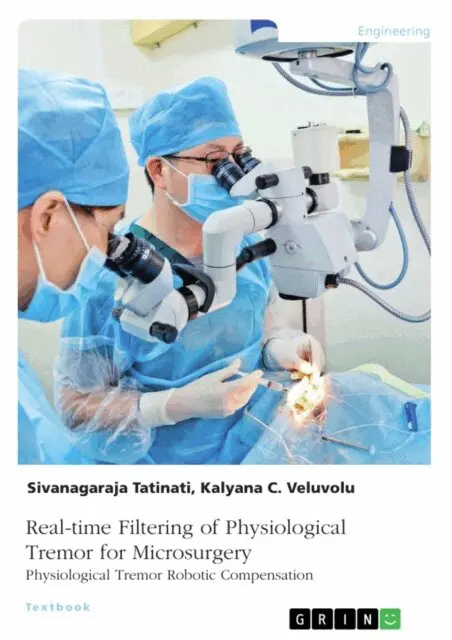
Document from the year 2020 in the subject Engineering - Robotics, grade: 2, , course: PhD, language: English, abstract: The work conducted in this dissertation focuses on issues that are related to the accurate and real-time separation of physiological tremor components from the sensed motion. This dissertation mainly focused on developing new algorithms and techniques for accurate modeling and prediction of physiological tremor components ( the filtering and modeling system) for the hand-held instruments. The methods developed in the course of this dissertation were validated with the physiological tremor database collected from micro-surgeons and novice subjects. Further, the methods were experimentally validated with the bench tests conducted on hand-held instrument, iTrem. Precision, robustness, dexterity, and intelligence are the design indices for current generation surgical robotics. In microsurgeries, physiological tremor an intrinsic hand motion with amplitude of 100 m is a major impediment for surgeons to perform delicate and fine motor tasks in sub-millimeter space. To augment the required precision and dexterity into normal microsurgical workflow by compensating the tremor in real-time, hand-held robotic instruments are developed. The working principle of a typical handheld instrument involves subsequent execution of three steps 1) sensing its own motion with inertial sensors, 2) filtering the involuntary motion from the sensed motion, and 3) actuate the surgical end-effectors (instrument tip) based on the filtered involuntary motions to compensate the tremor motion. Generally, digital filters are employed to filter out the noise components and subsequently extract the tremor motion from the whole motion. As a result, a time-varying and unknown delay in the range of 20 to 200ms (depends on the variant of the filter) is introduced into the tremor compensation proceedings, which in turn, adversely affects the tremor compensation performance. Ideally, zero phase lag between the actual tremor and extracted tremor motion is essential for hand-held instruments. This motivates development of new and innovative signal processing solutions, which can enhance the performance of hand-held instruments, in practice. We believe the key to achieve this goal is to go beyond the paradigm of conventional linear modelling techniques, which is limited to least squares solutions. This book proposes several solutions to overcome the existing issues and propose new solutions based on machine learning techniques for correction of phase delay.
E-bok
PDF, Engelska, 2020415 kr
Läs direkt efter köp
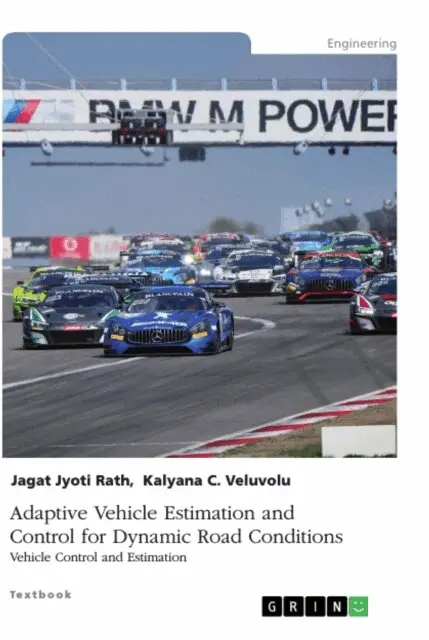
Document from the year 2020 in the subject Engineering - Automotive Engineering, grade: 2, , language: English, abstract: Global chassis controller (GCC) design for autonomous vehicles relies on the information of the environmental factors, weather conditions, vehicle dynamics, actuation bandwidth, among others. Typically, various sensors and actuators are employed to provide such information. Challenges such as cost of sensors, actuator complexity and constraints, fail-safe operations, control authority allocation, and adaptability to a wide range of driving scenarios such as acceleration/ deceleration at set speed, double lane change, and driving on a circular path among others persist for design of such GCC architectures. Specifically for longitudinal-vertical vehicle controllers tuned to achieve safety and comfort objectives, the performance is significantly affected by the precise knowledge of road conditions i.e., tire friction and road elevation in the presence of nonlinearities such as aerodynamic drag, rolling resistance, spring and damper nonlinearities. For the longitudinal vehicle motion, tire-road friction conditions, aerodynamic forces, engine friction, and rolling nonlinearities critically affect the design of safety controllers such as traction control or active cruise control. Similarly, for vertical vehicle motion control using active suspension, the random road roughness and road defects, spring and damper nonlinearities, hydraulic actuator nonlinearities, and multi-objective design criteria, make design of controller a challenging task. With that motivation, the use cost effective virtual sensors to detect such external inputs and subsequent output feedback control solutions for the longitudinal-vertical autonomous vehicle motion is proposed in this book. The focus lies on adaptability of designed controllers and estimators to road friction conditions such as road conditions such as asphalt, snow, ice and the road elevation based on various rough roads and road defects.
E-bok
PDF, Engelska, 2020197 kr
Läs direkt efter köp
Document from the year 2020 in the subject Medicine - Biomedical Engineering, grade: 2.0, , language: English, abstract: Functional mapping of the nervous system helps to identify the activity in the human brain during certain tasks. The difference between the two conditions helps you to understand the electrode nodes that cause a particular change in the neural state. Therefore, in this book, we will witness the functional difference between healthy people, Alzheimer's (AD) patients, multiple cognitive disorder (MCI) patients, and dementia patients. This gives the insight into the pair of electrodes that cause the progression of the disease from MCI to AD to dementia. This will help us in designing the biomarker in the future.
E-bok
PDF, Engelska, 2022527 kr
Läs direkt efter köp
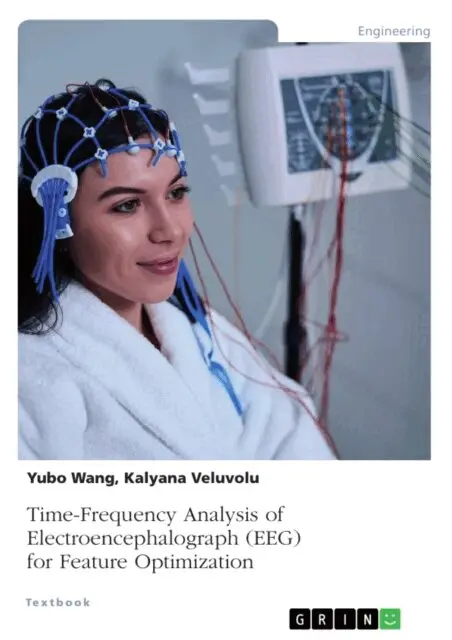
Document from the year 2017 in the subject Medicine - Biomedical Engineering, grade: 3.0, , language: English, abstract: Electroencephalograph (EEG) has been widely used for BCI applications due to its non-invasiveness, ease of implementation, and cost-efficiency. The collected EEG signal is non-stationary and has task-related information buried in the frequency and temporal domains. In this book, we focused on developing time-frequency decomposition methods for improving the feature extraction module in BCI systems. The obtained features are then optimized by identifying subject-specific reactive band and employing evolutionary algorithm-based methods for optimizing the obtained features, improving the BCI systems' performance. A signal model named as band-limited multiple Fourier linear combiner (BMFLC) is employed to model the non-stationarity in the EEG signal for feature extraction. The non-stationary amplitude oscillation is presented as adaptive weights in the model and estimated with various adaptive filters such as least-mean square (LMS), Kalman filter (KF), or Kalman Smoother (KS). The estimated coefficients serve as features for classification. Our results suggest that the BMFLC-LMS, BMFLC-KF, and BMFLC-KS are all sufficient in modeling EEG signal in the band with average estimation accuracies of 93%, 99%, and 98%, respectively. We modelled motion-induced EEG signal in frequency domain. We found that most subjects present a subject- specific reactive band during motion tasks. We then constructed features for a classifier that used only the frequency information in the subject-specific reactive band. As a result, the classification accuracy of the BCI system is improved compared to the system which uses the complete band information. Features obtained from multiple EEG channels need to be optimized to enhance the performance of the BCI systems. Essentially, two problems need to be resolved: 1) volume conduction; 2) dimensionality. The volume conduction can be mitigated if spatial filter is employed, and the dimension of the feature vector can be reduced if a feature selection procedure is adopted. An evolutionary algorithm (EA) based approach was developed to estimate spatial filter and reduce feature dimension simultaneously. We show that the BMFLC-KF combined with the evolutionary al- algorithm has the highest classification accuracy compared to other BMFLC-KF based approaches and is superior to the traditionally employed band-power methods.