Kamala Wickramasinghe – författare
Visar alla böcker från författaren Kamala Wickramasinghe. Handla med fri frakt och snabb leverans.
7 produkter
7 produkter
Häftad, Engelska, 2025
432 kr
Skickas inom 5-8 vardagar
E-bok
Engelska, 201985 kr
Läs direkt efter köp
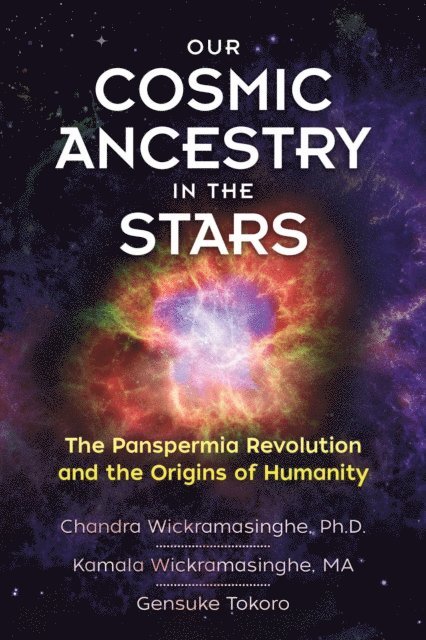
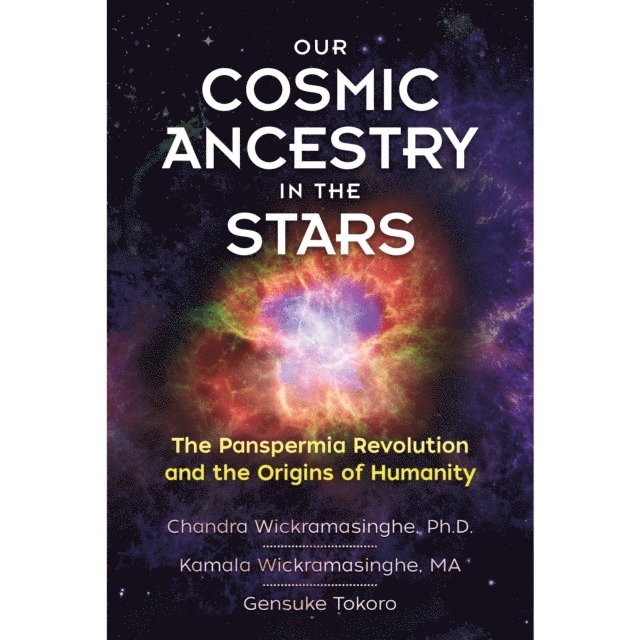
An exploration of how acceptance of panspermia will soon change history • Offers extensive scientific proof of panspermia--that life arose on Earth via comets and that evolution is seeded by viruses arriving via comets and interstellar dust • Explores the major philosophical, psychological, cultural, religious, and environmental ramifications of the acceptance of this new scientific worldview Mainstream consensus is that life arose on Earth spontaneously out of “primordial soup.” Yet this theory, as well as the Darwinian “survival of the fittest” concept as it relates to major steps in evolution, has no scientific basis or proof. Where, then, did life come from? As the authors show, with conclusive scientific evidence, life came from space--a concept known as “panspermia.” We humans, and all other life on Earth, evolved over millennia in response to viruses that arrived via comets, and we continue to do so. Exploring the philosophical, psychological, cultural, and environmental ramifications of the acceptance of panspermia, the authors show how the shift will be on par with the Copernican Revolution--when it was finally accepted that the Earth was not the center of the Universe. Explaining the origins of the panspermia theory in the work of the late Sir Fred Hoyle, the authors reveal the vast body of evidence that has accumulated over the past 4 decades in favor of the cosmic origins of life, including viral inserts found in DNA that have shaped our human genome over millions of years. They show how the tiniest of viruses, microscopic animals (tardigrades), and even seeds have been found to be natural cosmonauts. The authors also show how space-borne viruses play a crucial role in the positive evolution of life and that our entire existence on this planet is contingent on the continuing ingress of cosmic viruses. Revealing how panspermia offers answers to some of humanity’s longstanding questions about the origins of life, the authors discuss the impact this shift in understanding will have on our relationship with the Earth and on culture, history, and religion. And perhaps the most dramatic ramification of all is that acceptance of panspermia means acceptance that Earth is not unique--that other life-filled planets exist and intelligent life is common in the Universe. Not only did we come from space, but we are not alone.
Ljudbok
Engelska, 2020241 kr
Lyssna direkt efter köp
An exploration of how acceptance of panspermia will soon change history • Offers extensive scientific proof of panspermia--that life arose on Earth via comets and that evolution is seeded by viruses arriving via comets and interstellar dust • Explores the major philosophical, psychological, cultural, religious, and environmental ramifications of the acceptance of this new scientific worldview Mainstream consensus is that life arose on Earth spontaneously out of “primordial soup.” Yet this theory, as well as the Darwinian “survival of the fittest” concept as it relates to major steps in evolution, has no scientific basis or proof. Where, then, did life come from? As the authors show, with conclusive scientific evidence, life came from space--a concept known as “panspermia.” We humans, and all other life on Earth, evolved over millennia in response to viruses that arrived via comets, and we continue to do so. Exploring the philosophical, psychological, cultural, and environmental ramifications of the acceptance of panspermia, the authors show how the shift will be on par with the Copernican Revolution--when it was finally accepted that the Earth was not the center of the Universe. Explaining the origins of the panspermia theory in the work of the late Sir Fred Hoyle, the authors reveal the vast body of evidence that has accumulated over the past 4 decades in favor of the cosmic origins of life, including viral inserts found in DNA that have shaped our human genome over millions of years. They show how the tiniest of viruses, microscopic animals (tardigrades), and even seeds have been found to be natural cosmonauts. The authors also show how space-borne viruses play a crucial role in the positive evolution of life and that our entire existence on this planet is contingent on the continuing ingress of cosmic viruses. Revealing how panspermia offers answers to some of humanity’s longstanding questions about the origins of life, the authors discuss the impact this shift in understanding will have on our relationship with the Earth and on culture, history, and religion. And perhaps the most dramatic ramification of all is that acceptance of panspermia means acceptance that Earth is not unique--that other life-filled planets exist and intelligent life is common in the Universe. Not only did we come from space, but we are not alone.
Häftad, Engelska, 2013
554 kr
Skickas inom 5-8 vardagar
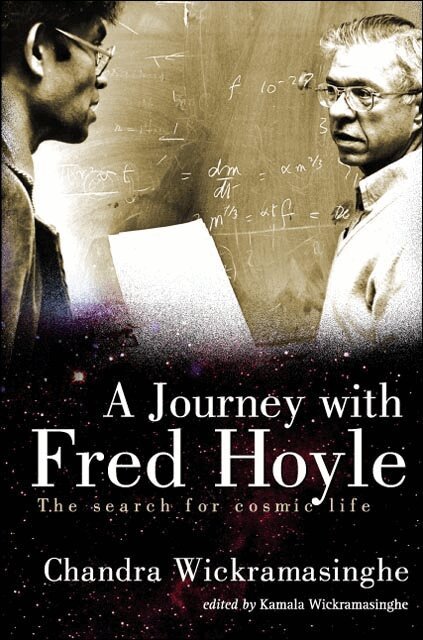
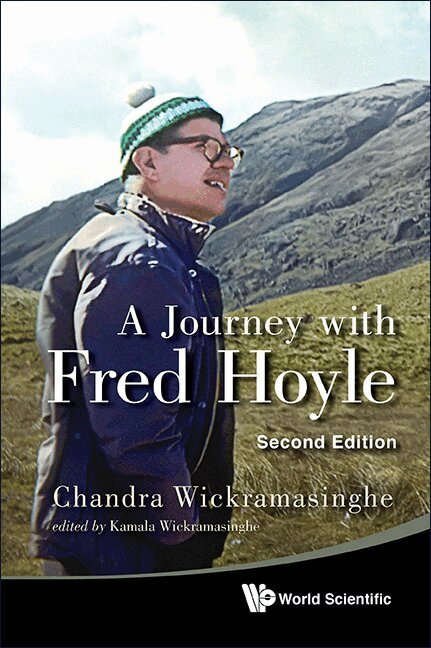
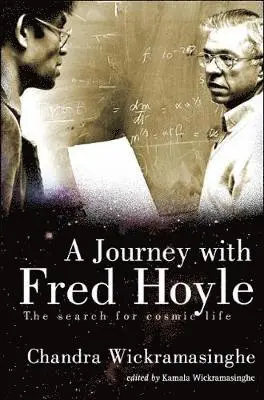
This is the story of the author's unique scientific journey with one of the most remarkable men of 20th century science. The journey begins in Sri Lanka, the author's native country, with his childhood acquaintance with Fred Hoyle's writings. The action then moves to Cambridge, where the famous Hoyle-Wickramasinghe collaborations begin. A research programme which was started in 1962 on the carbonaceous nature of interstellar dust leads, over the next two decades, to developments that are continued in both Cambridge and Cardiff. These developments prompt Hoyle and the author to postulate the organic theory of cosmic dust (which is now generally accepted), and then to challenge one of the most cherished paradigms of contemporary science — the theory that life originated on Earth in a warm primordial soup.This new edition examines the many scientific developments that have transpired since the first edition was published. The discovery of bacteria in the upper reaches of the atmosphere, biological signatures in meteorites, spectroscopy of high-z galaxies and more all mesh with many of the ideas that had their origin in the first edition. Pushing into the future, the updated text examines the many experiments and probes currently operating or planned that will shed more light on the theory of planetary panspermia. A Journey with Fred Hoyle is an intriguing book that delineates the progress of a collaboration spanning 40 years, through a sequence of personal reflections, anecdotes and reminiscences.
Inbunden, Engelska, 2015
870 kr
Skickas inom 5-8 vardagar
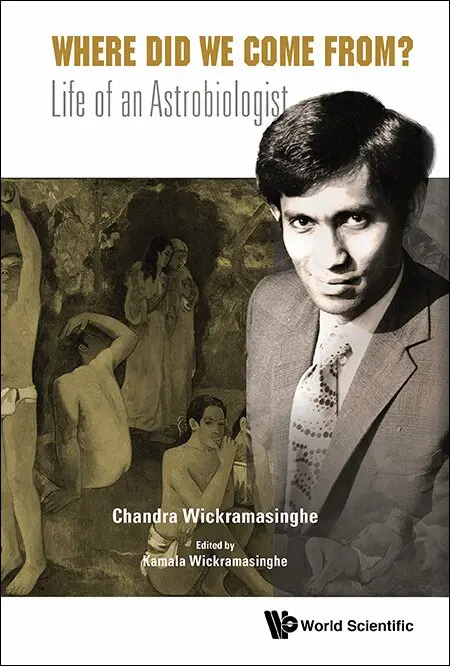
The life story of this book spans many stages of the life and scientific career of one of the foremost astrophysicists/astrobiologists of our times. Starting from his boyhood days, the book describes the author's scientific work over the past 50 years, the ground-breaking discoveries he had made, the controversies generated in the scientific community, and the gradual acceptance of his discoveries. Written in lucid non-technical language it captures the essence of the author's research at Cambridge, his lifelong collaborations with the legendary astronomer of the 20th century, Sir Fred Hoyle, the birth of the subject of astrobiology which they arguably "invented" in 1980, and his continuing ground-breaking research carried out while he was a Professor at Cardiff and later at Buckingham. The book traces the various influences that guided the author through his career, including that of his father who was a Cambridge Wrangler, and the profound influence of Buddhism in his early life.The author has published over 25 books and close to 300 scientific papers in peer-reviewed journals, over 60 of which were in the journal Nature.
Häftad, Engelska, 2015
442 kr
Skickas inom 5-8 vardagar
The life story of this book spans many stages of the life and scientific career of one of the foremost astrophysicists/astrobiologists of our times. Starting from his boyhood days, the book describes the author's scientific work over the past 50 years, the ground-breaking discoveries he had made, the controversies generated in the scientific community, and the gradual acceptance of his discoveries. Written in lucid non-technical language it captures the essence of the author's research at Cambridge, his lifelong collaborations with the legendary astronomer of the 20th century, Sir Fred Hoyle, the birth of the subject of astrobiology which they arguably "invented" in 1980, and his continuing ground-breaking research carried out while he was a Professor at Cardiff and later at Buckingham. The book traces the various influences that guided the author through his career, including that of his father who was a Cambridge Wrangler, and the profound influence of Buddhism in his early life.The author has published over 25 books and close to 300 scientific papers in peer-reviewed journals, over 60 of which were in the journal Nature.
Häftad, Engelska, 2025
1 086 kr
Skickas inom 5-8 vardagar