Karan S. Surana – författare
Visar alla böcker från författaren Karan S. Surana. Handla med fri frakt och snabb leverans.
14 produkter
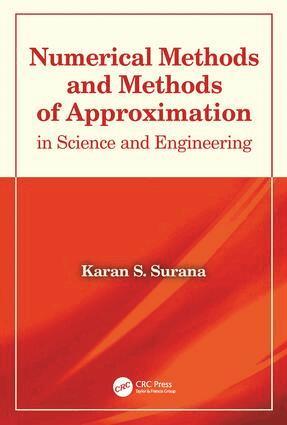
Numerical Methods and Methods of Approximation in Science and Engineering
Inbunden, 2018
2513 kr
Lägg i varukorg
Numerical Methods and Methods of Approximation in Science and Engineering prepares students and other readers for advanced studies involving applied numerical and computational analysis. Focused on building a sound theoretical foundation, it uses a clear and simple approach backed by numerous …
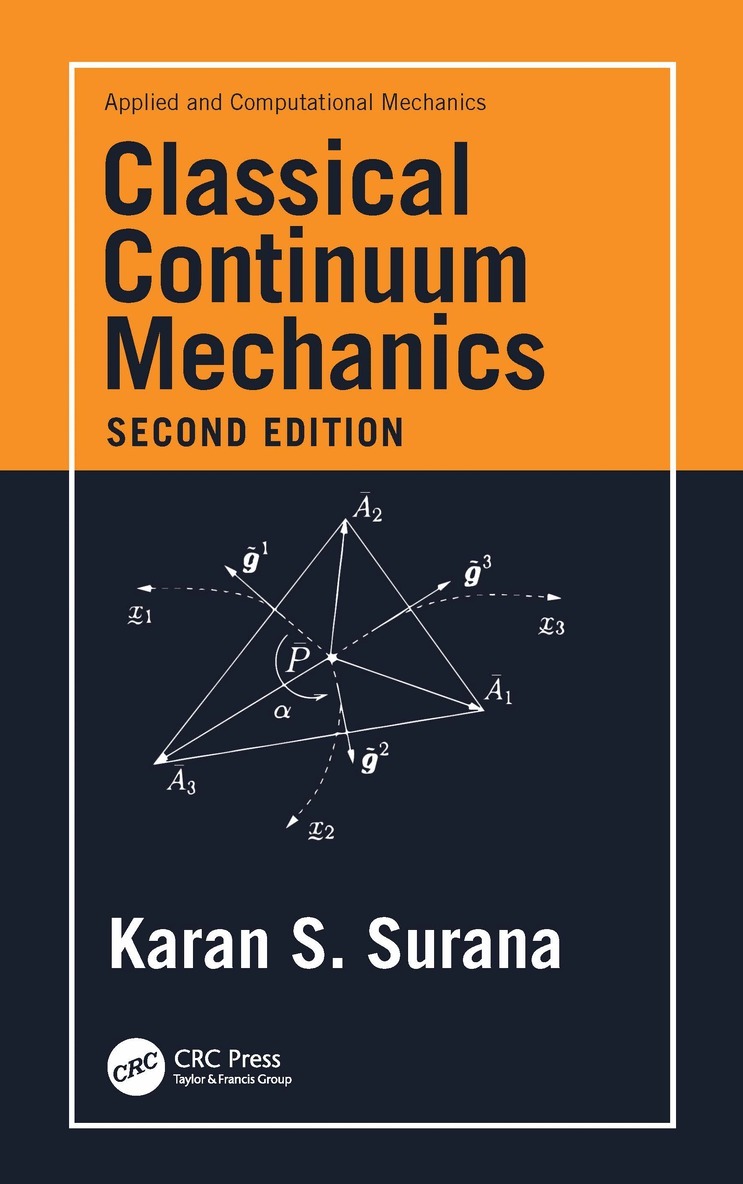
Classical Continuum Mechanics
Inbunden, 2022
2134 kr
Lägg i varukorg
This book provides physical and mathematical foundation as well as complete derivation of the mathematical descriptions and constitutive theories for deformation of solid and fluent continua, both compressible and incompressible with clear distinction between Lagrangian and Eulerian descriptions as …
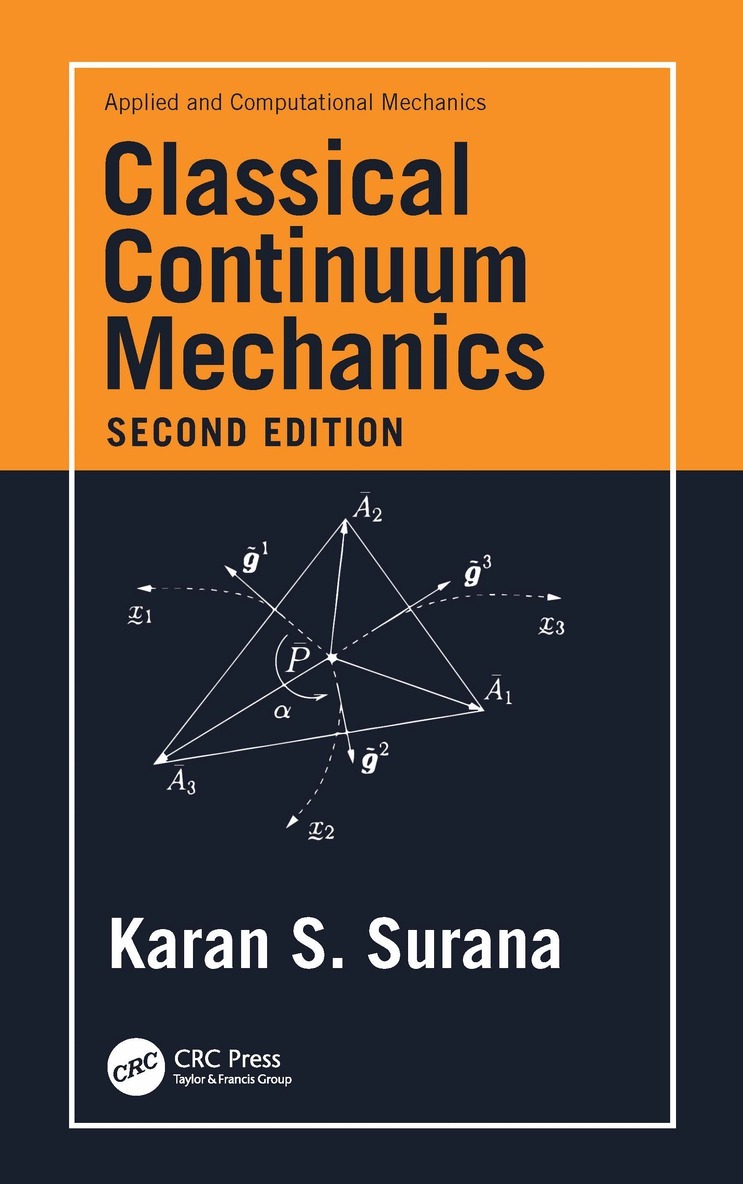
Classical Continuum Mechanics
Häftad, 2024
750 kr
Lägg i varukorg
This book provides physical and mathematical foundation as well as complete derivation of the mathematical descriptions and constitutive theories for deformation of solid and fluent continua, both compressible and incompressible with clear distinction between Lagrangian and Eulerian descriptions as …
Numerical Methods and Methods of Approximation in Science and Engineering
E-bok, 2018
2914 kr
Lägg i varukorg
Numerical Methods and Methods of Approximation in Science and Engineering prepares students and other readers for advanced studies involving applied numerical and computational analysis. Focused on building a sound theoretical foundation, it uses a clear and simple approach backed by numerous …
Numerical Methods and Methods of Approximation in Science and Engineering
E-bok, 2018
2978 kr
Lägg i varukorg
Numerical Methods and Methods of Approximation in Science and Engineering prepares students and other readers for advanced studies involving applied numerical and computational analysis. Focused on building a sound theoretical foundation, it uses a clear and simple approach backed by numerous …
Classical Continuum Mechanics
E-bok, 2022
883 kr
Lägg i varukorg
This book provides physical and mathematical foundation as well as complete derivation of the mathematical descriptions and constitutive theories for deformation of solid and fluent continua, both compressible and incompressible with clear distinction between Lagrangian and Eulerian descriptions as …
Classical Continuum Mechanics
E-bok, 2022
864 kr
Lägg i varukorg
This book provides physical and mathematical foundation as well as complete derivation of the mathematical descriptions and constitutive theories for deformation of solid and fluent continua, both compressible and incompressible with clear distinction between Lagrangian and Eulerian descriptions as …
Microcontinuum Theories
Av Karan S. Surana, Sri Sai C. Mathi
Inbunden, 2026
1504 kr
Kommande
Microcontinuum Theories presents a comprehensive treatment of this field for materials whose deformation physics cannot be adequately described by classical continuum mechanics. It addresses materials containing microconstituents, such as primitive lattice structures, liquid crystals with bar or …
Finite Element Method for Initial Value Problems
Mathematics and Computations
Av Karan S. Surana, J. N. Reddy
Inbunden, 2017
3439 kr
Lägg i varukorg
Unlike most finite element books that cover time dependent processes (IVPs) in a cursory manner, The Finite Element Method for Initial Value Problems: Mathematics and Computations focuses on the mathematical details as well as applications of space-time coupled and space-time decoupled finite …
Finite Element Method for Initial Value Problems
Mathematics and Computations
Av J. N. Reddy, Karan S. Surana
E-bok, 2017
3723 kr
Lägg i varukorg
Unlike most finite element books that cover time dependent processes (IVPs) in a cursory manner, The Finite Element Method for Initial Value Problems: Mathematics and Computations focuses on the mathematical details as well as applications of space-time coupled and space-time decoupled finite …
Finite Element Method for Initial Value Problems
Mathematics and Computations
Av J. N. Reddy, Karan S. Surana
E-bok, 2017
3723 kr
Lägg i varukorg
Unlike most finite element books that cover time dependent processes (IVPs) in a cursory manner, The Finite Element Method for Initial Value Problems: Mathematics and Computations focuses on the mathematical details as well as applications of space-time coupled and space-time decoupled finite …
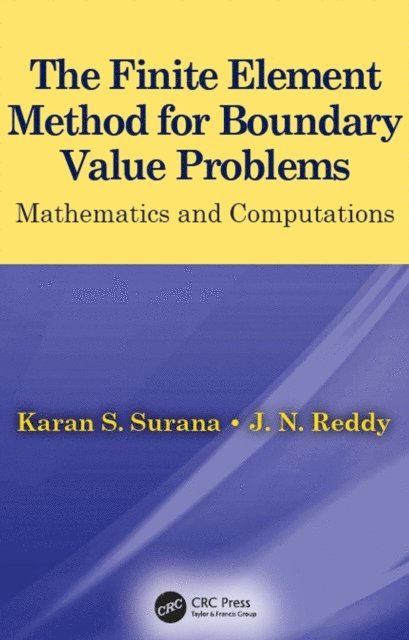
Finite Element Method for Boundary Value Problems
Mathematics and Computations
Av Karan S. Surana, J. N. Reddy
Inbunden, 2016
3074 kr
Lägg i varukorg
Written by two well-respected experts in the field, The Finite Element Method for Boundary Value Problems: Mathematics and Computations bridges the gap between applied mathematics and application-oriented computational studies using FEM. Mathematically rigorous, the FEM is presented as a method of …
Finite Element Method for Boundary Value Problems
Mathematics and Computations
Av J. N. Reddy, Karan S. Surana
E-bok, 2016
3636 kr
Lägg i varukorg
Written by two well-respected experts in the field, The Finite Element Method for Boundary Value Problems: Mathematics and Computations bridges the gap between applied mathematics and application-oriented computational studies using FEM. Mathematically rigorous, the FEM is presented as a method of …
Finite Element Method for Boundary Value Problems
Mathematics and Computations
Av J. N. Reddy, Karan S. Surana
E-bok, 2016
3636 kr
Lägg i varukorg
Written by two well-respected experts in the field, The Finite Element Method for Boundary Value Problems: Mathematics and Computations bridges the gap between applied mathematics and application-oriented computational studies using FEM. Mathematically rigorous, the FEM is presented as a method of …