Karen Bogenschneider – författare
2 348 kr
Skickas inom 10-15 vardagar
810 kr
Skickas inom 10-15 vardagar
942 kr
Läs direkt efter köp
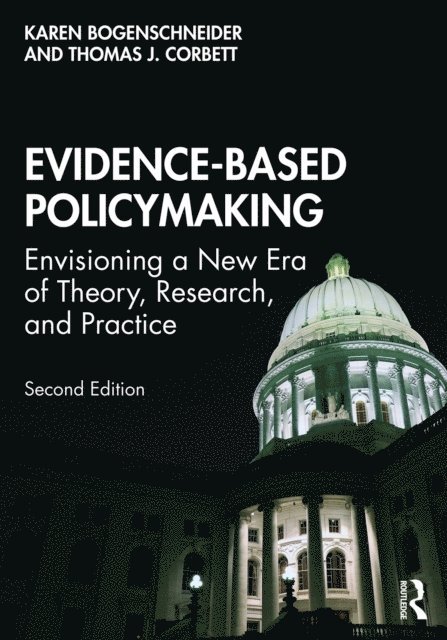
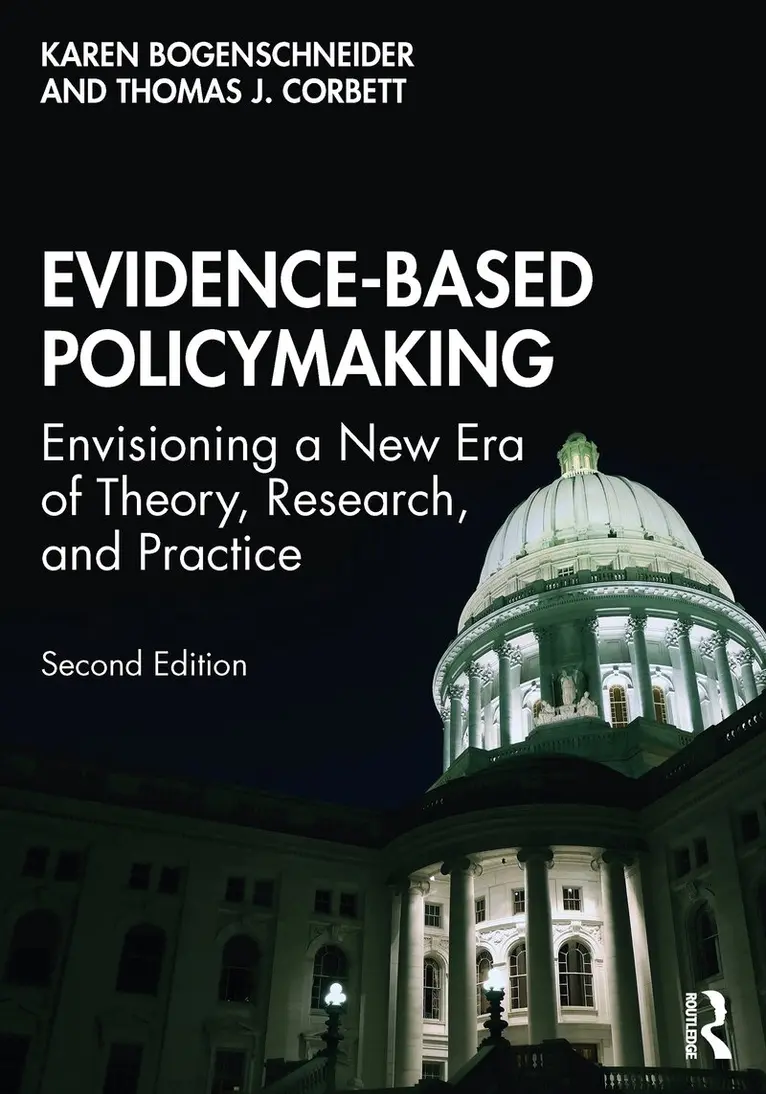
New thinking is needed on the age-old conundrum of how to connect research and policymaking. Why does a disconnect exist between the research community, which is producing thousands of studies relevant to public policy, and the policy community, which is making thousands of decisions that would benefit from research evidence? The second edition updates community dissonance theory and provides an even stronger, more substantiated story of why research is underutilized in policymaking, and what it will take to connect researchers and policymakers. This book offers a fresh look into what policymakers and the policy process are like, as told by policymakers themselves and the researchers who study and work with them.
New to the second edition:
• The point of view of policymakers is infused throughout this book based on a remarkable new study of 225 state legislators with an extraordinarily high response rate in this hard-to-access population.
• A new theory holds promise for guiding the study and practice of evidence-based policy by building on how policymakers say research contributes to policymaking.
• A new chapter features pioneering researchers who have effectively influenced public policy by engaging policymakers in ways rewarding to both.
• A new chapter proposes how an engaged university could provide culturally competent training to create a new type of scholar and scholarship.
This review of state-of-the-art research on evidence-based policy is a benefit to readers who find it hard to keep abreast of a field that spans the disciplines of business, economics, education, family sciences, health services, political science, psychology, public administration, social work, sociology, and so forth.
For those who study evidence-based policy, the book provides the basics of producing policy relevant research by introducing researchers to policymakers and the policy process. Strategies are provided for identifying research questions that are relevant to the societal problems that confront and confound policymakers. Researchers will have at their fingertips a breath-taking overview of classic and cutting-edge studies on the multi-disciplinary field of evidence-based policy.
For instructors, the book is written in a language and style that students find engaging. A topic that many students find mundane becomes germane when they read stories of what policymakers are like, and when they learn of researcher’s tribulations and triumphs as they work to build evidence-based policy. To point students to the most important ideas, the key concepts are highlighted in text boxes.
For those who desire to engage policymakers, a new chapter summarizes the breakthroughs of several researchers who have been successful at driving policy change. The book provides 12 innovative best practices drawn from the science and practice of engaging policymakers, including insights from some of the best and brightest researchers and science communicators. The book also takes on the daunting task of evaluating the effectiveness of efforts to engage policymakers around research. A theory of change identifies seven key elements that are fundamental to increasing policymaker’s use of research along with evaluation protocols and preliminary evidence on each element.
989 kr
Läs direkt efter köp
New thinking is needed on the age-old conundrum of how to connect research and policymaking. Why does a disconnect exist between the research community, which is producing thousands of studies relevant to public policy, and the policy community, which is making thousands of decisions that would benefit from research evidence? The second edition updates community dissonance theory and provides an even stronger, more substantiated story of why research is underutilized in policymaking, and what it will take to connect researchers and policymakers. This book offers a fresh look into what policymakers and the policy process are like, as told by policymakers themselves and the researchers who study and work with them.
New to the second edition:
• The point of view of policymakers is infused throughout this book based on a remarkable new study of 225 state legislators with an extraordinarily high response rate in this hard-to-access population.
• A new theory holds promise for guiding the study and practice of evidence-based policy by building on how policymakers say research contributes to policymaking.
• A new chapter features pioneering researchers who have effectively influenced public policy by engaging policymakers in ways rewarding to both.
• A new chapter proposes how an engaged university could provide culturally competent training to create a new type of scholar and scholarship.
This review of state-of-the-art research on evidence-based policy is a benefit to readers who find it hard to keep abreast of a field that spans the disciplines of business, economics, education, family sciences, health services, political science, psychology, public administration, social work, sociology, and so forth.
For those who study evidence-based policy, the book provides the basics of producing policy relevant research by introducing researchers to policymakers and the policy process. Strategies are provided for identifying research questions that are relevant to the societal problems that confront and confound policymakers. Researchers will have at their fingertips a breath-taking overview of classic and cutting-edge studies on the multi-disciplinary field of evidence-based policy.
For instructors, the book is written in a language and style that students find engaging. A topic that many students find mundane becomes germane when they read stories of what policymakers are like, and when they learn of researcher’s tribulations and triumphs as they work to build evidence-based policy. To point students to the most important ideas, the key concepts are highlighted in text boxes.
For those who desire to engage policymakers, a new chapter summarizes the breakthroughs of several researchers who have been successful at driving policy change. The book provides 12 innovative best practices drawn from the science and practice of engaging policymakers, including insights from some of the best and brightest researchers and science communicators. The book also takes on the daunting task of evaluating the effectiveness of efforts to engage policymakers around research. A theory of change identifies seven key elements that are fundamental to increasing policymaker’s use of research along with evaluation protocols and preliminary evidence on each element.
1 459 kr
Läs direkt efter köp
This new edition captures the evolving, post-pandemic landscape of family policy—the transformational changes that have occurred within contemporary families and the social, economic, and racial/ethnic disparities that have grown across families. The book draws on policies from around the globe to make an evidence-based case for family policy and its contributions to families and to society. Bogenschneider tackles a significant challenge of our times—the polarization of politics—including why it occurs and how professionals can bridge the divide.
Beyond the basics, the book provides best practices for turning analysis into action by drawing on cutting-edge research and a point of view often overlooked in policy books—the voice of policymakers themselves. Imbued with hope yet fundamentally realistic, Bogenschneider applies a relationship-based and strikingly nonpartisan approach for those who want to make a positive difference for families, whether they engage local policymakers in towns, cities and counties; state/national lawmakers; or decision-makers in businesses, nonprofits and philanthropy.
Accompanied by updated, web-based teaching materials and a family impact toolkit, this is core reading for undergraduate and/or graduate courses in family or social policy taught in human development and family studies, psychology, counseling, social work, sociology, public policy, political science, and education. It is also essential reading for professionals and policymakers interested in pursuing better public policy for families in all their diversity across the lifespan.
1 459 kr
Läs direkt efter köp
This new edition captures the evolving, post-pandemic landscape of family policy—the transformational changes that have occurred within contemporary families and the social, economic, and racial/ethnic disparities that have grown across families. The book draws on policies from around the globe to make an evidence-based case for family policy and its contributions to families and to society. Bogenschneider tackles a significant challenge of our times—the polarization of politics—including why it occurs and how professionals can bridge the divide.
Beyond the basics, the book provides best practices for turning analysis into action by drawing on cutting-edge research and a point of view often overlooked in policy books—the voice of policymakers themselves. Imbued with hope yet fundamentally realistic, Bogenschneider applies a relationship-based and strikingly nonpartisan approach for those who want to make a positive difference for families, whether they engage local policymakers in towns, cities and counties; state/national lawmakers; or decision-makers in businesses, nonprofits and philanthropy.
Accompanied by updated, web-based teaching materials and a family impact toolkit, this is core reading for undergraduate and/or graduate courses in family or social policy taught in human development and family studies, psychology, counseling, social work, sociology, public policy, political science, and education. It is also essential reading for professionals and policymakers interested in pursuing better public policy for families in all their diversity across the lifespan.
1 225 kr
Skickas inom 10-15 vardagar
2 178 kr
Skickas inom 10-15 vardagar
2 852 kr
Tillfälligt slut
932 kr
Tillfälligt slut
1 638 kr
Tillfälligt slut
308 kr
Tillfälligt slut