Karen E. Spierling – författare
Visar alla böcker från författaren . Handla med fri frakt och snabb leverans.
7 produkter
7 produkter
Inbunden, Engelska, 2005
2 773 kr
Skickas inom 3-6 vardagar
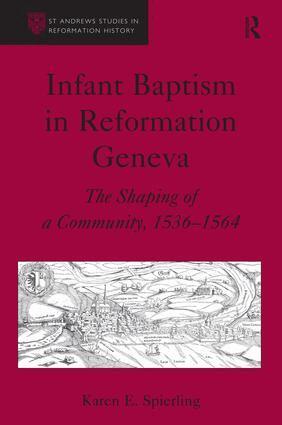
This book examines the beliefs, practices and arguments surrounding the ritual of infant baptism and the raising of children in Geneva during the period of John Calvin's tenure as leader of the Reformed Church, 1536-1564. It focuses particularly on the years from 1541 onward, after Calvin's return to Geneva and the formation of the Consistory. The work is based on sources housed primarily in the Genevan State Archives, including the registers of the Consistory and the City Council. While the time period of the study may be limited, the approach is broad, encompassing issues of theology, church ritual and practices, the histories of family and children, and the power struggles involved in transforming not simply a church institution but the entire community surrounding it. The overarching argument presented is that the ordinances and practices surrounding baptism present a framework for relations among child, parents, godparents, church and city. The design of the baptismal ceremony, including liturgy, participants and location, provided a blueprint of the reformers' vision of a well ordered community. To comprehend fully the development and spread of Calvinism, it is necessary to understand the context of its origins and how the ideas of Calvin and his Reformed colleagues were received in Geneva before they were disseminated throughout Europe and the world. In a broad sense this project explores the tensions among church leaders, city authorities, parents, relatives and neighbours regarding the upbringing of children in Reformed Geneva. More specifically, it studies the practice of infant baptism as manifested in the baptism ceremony in Geneva, the ongoing practices of Catholic baptism in neighbouring areas, and the similarities and tensions between these two rituals.
Inbunden, Engelska, 2008
2 329 kr
Skickas inom 10-15 vardagar
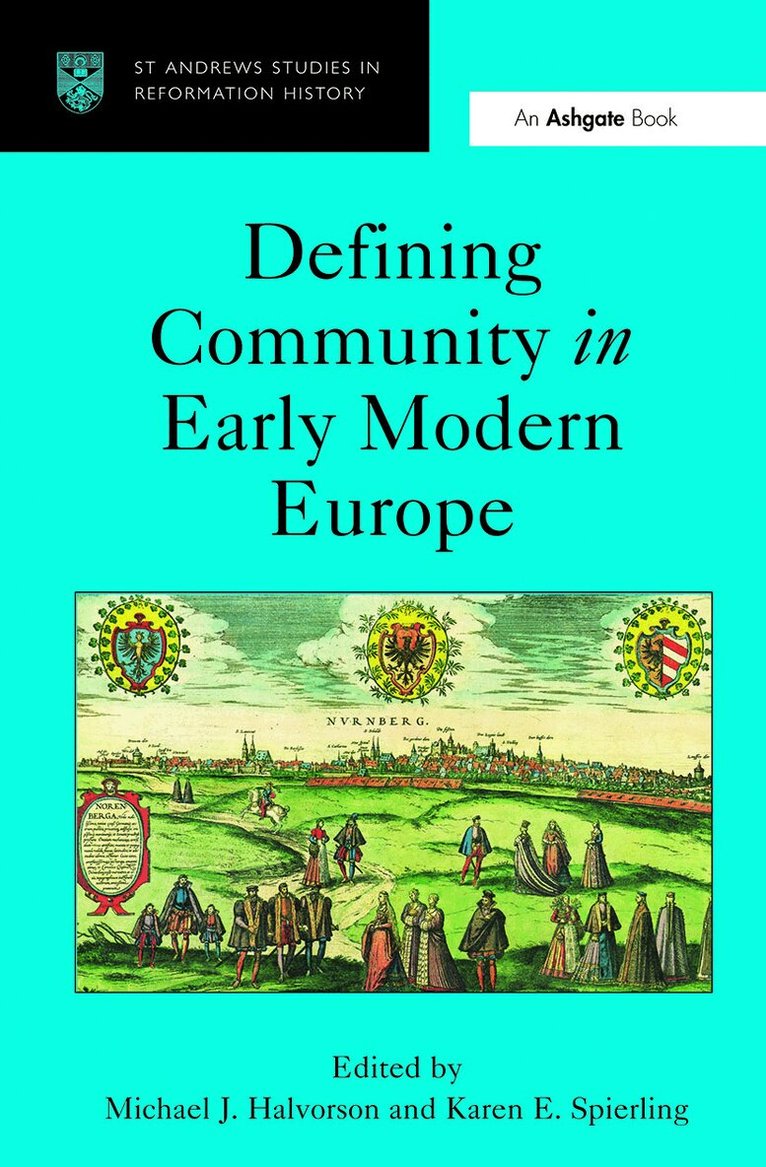
Numerous historical studies use the term "community'" to express or comment on social relationships within geographic, religious, political, social, or literary settings, yet this volume is the first systematic attempt to collect together important examples of this varied work in order to draw comparisons and conclusions about the definition of community across early modern Europe. Offering a variety of historical and theoretical approaches, the sixteen original essays in this collection survey major regions of Western Europe, including France, Geneva, the German Lands, Italy and the Spanish Empire, the Netherlands, England, and Scotland. Complementing the regional diversity is a broad spectrum of religious confessions: Roman Catholic communities in France, Italy, and Germany; Reformed churches in France, Geneva, and Scotland; Lutheran communities in Germany; Mennonites in Germany and the Netherlands; English Anglicans; Jews in Germany, Italy, and the Netherlands; and Muslim converts returning to Christian England. This volume illuminates the variety of ways in which communities were defined and operated across early modern Europe: as imposed by community leaders or negotiated across society; as defined by belief, behavior, and memory; as marked by rigid boundaries and conflict or by flexibility and change; as shaped by art, ritual, charity, or devotional practices; and as characterized by the contending or overlapping boundaries of family, religion, and politics. Taken together, these chapters demonstrate the complex and changeable nature of community in an era more often characterized as a time of stark certainties and inflexibility. As a result, the volume contributes a vital resource to the ongoing efforts of scholars to understand the creation and perpetuation of communities and the significance of community definition for early modern Europeans.
E-bok
Engelska, 2017797 kr
Läs direkt efter köp
This book examines the beliefs, practices and arguments surrounding the ritual of infant baptism and the raising of children in Geneva during the period of John Calvin''s tenure as leader of the Reformed Church, 1536-1564. It focuses particularly on the years from 1541 onward, after Calvin''s return to Geneva and the formation of the Consistory. The work is based on sources housed primarily in the Genevan State Archives, including the registers of the Consistory and the City Council. While the time period of the study may be limited, the approach is broad, encompassing issues of theology, church ritual and practices, the histories of family and children, and the power struggles involved in transforming not simply a church institution but the entire community surrounding it. The overarching argument presented is that the ordinances and practices surrounding baptism present a framework for relations among child, parents, godparents, church and city. The design of the baptismal ceremony, including liturgy, participants and location, provided a blueprint of the reformers'' vision of a well ordered community. To comprehend fully the development and spread of Calvinism, it is necessary to understand the context of its origins and how the ideas of Calvin and his Reformed colleagues were received in Geneva before they were disseminated throughout Europe and the world. In a broad sense this project explores the tensions among church leaders, city authorities, parents, relatives and neighbours regarding the upbringing of children in Reformed Geneva. More specifically, it studies the practice of infant baptism as manifested in the baptism ceremony in Geneva, the ongoing practices of Catholic baptism in neighbouring areas, and the similarities and tensions between these two rituals.
E-bok
PDF, Engelska, 2017797 kr
Läs direkt efter köp
This book examines the beliefs, practices and arguments surrounding the ritual of infant baptism and the raising of children in Geneva during the period of John Calvin''s tenure as leader of the Reformed Church, 1536-1564. It focuses particularly on the years from 1541 onward, after Calvin''s return to Geneva and the formation of the Consistory. The work is based on sources housed primarily in the Genevan State Archives, including the registers of the Consistory and the City Council. While the time period of the study may be limited, the approach is broad, encompassing issues of theology, church ritual and practices, the histories of family and children, and the power struggles involved in transforming not simply a church institution but the entire community surrounding it. The overarching argument presented is that the ordinances and practices surrounding baptism present a framework for relations among child, parents, godparents, church and city. The design of the baptismal ceremony, including liturgy, participants and location, provided a blueprint of the reformers'' vision of a well ordered community. To comprehend fully the development and spread of Calvinism, it is necessary to understand the context of its origins and how the ideas of Calvin and his Reformed colleagues were received in Geneva before they were disseminated throughout Europe and the world. In a broad sense this project explores the tensions among church leaders, city authorities, parents, relatives and neighbours regarding the upbringing of children in Reformed Geneva. More specifically, it studies the practice of infant baptism as manifested in the baptism ceremony in Geneva, the ongoing practices of Catholic baptism in neighbouring areas, and the similarities and tensions between these two rituals.
E-bok
Engelska, 2016774 kr
Läs direkt efter köp
Numerous historical studies use the term "community''" to express or comment on social relationships within geographic, religious, political, social, or literary settings, yet this volume is the first systematic attempt to collect together important examples of this varied work in order to draw comparisons and conclusions about the definition of community across early modern Europe. Offering a variety of historical and theoretical approaches, the sixteen original essays in this collection survey major regions of Western Europe, including France, Geneva, the German Lands, Italy and the Spanish Empire, the Netherlands, England, and Scotland. Complementing the regional diversity is a broad spectrum of religious confessions: Roman Catholic communities in France, Italy, and Germany; Reformed churches in France, Geneva, and Scotland; Lutheran communities in Germany; Mennonites in Germany and the Netherlands; English Anglicans; Jews in Germany, Italy, and the Netherlands; and Muslim converts returning to Christian England. This volume illuminates the variety of ways in which communities were defined and operated across early modern Europe: as imposed by community leaders or negotiated across society; as defined by belief, behavior, and memory; as marked by rigid boundaries and conflict or by flexibility and change; as shaped by art, ritual, charity, or devotional practices; and as characterized by the contending or overlapping boundaries of family, religion, and politics. Taken together, these chapters demonstrate the complex and changeable nature of community in an era more often characterized as a time of stark certainties and inflexibility. As a result, the volume contributes a vital resource to the ongoing efforts of scholars to understand the creation and perpetuation of communities and the significance of community definition for early modern Europeans.
E-bok
PDF, Engelska, 2016774 kr
Läs direkt efter köp
Numerous historical studies use the term "community''" to express or comment on social relationships within geographic, religious, political, social, or literary settings, yet this volume is the first systematic attempt to collect together important examples of this varied work in order to draw comparisons and conclusions about the definition of community across early modern Europe. Offering a variety of historical and theoretical approaches, the sixteen original essays in this collection survey major regions of Western Europe, including France, Geneva, the German Lands, Italy and the Spanish Empire, the Netherlands, England, and Scotland. Complementing the regional diversity is a broad spectrum of religious confessions: Roman Catholic communities in France, Italy, and Germany; Reformed churches in France, Geneva, and Scotland; Lutheran communities in Germany; Mennonites in Germany and the Netherlands; English Anglicans; Jews in Germany, Italy, and the Netherlands; and Muslim converts returning to Christian England. This volume illuminates the variety of ways in which communities were defined and operated across early modern Europe: as imposed by community leaders or negotiated across society; as defined by belief, behavior, and memory; as marked by rigid boundaries and conflict or by flexibility and change; as shaped by art, ritual, charity, or devotional practices; and as characterized by the contending or overlapping boundaries of family, religion, and politics. Taken together, these chapters demonstrate the complex and changeable nature of community in an era more often characterized as a time of stark certainties and inflexibility. As a result, the volume contributes a vital resource to the ongoing efforts of scholars to understand the creation and perpetuation of communities and the significance of community definition for early modern Europeans.
E-bok
PDF, Engelska, 20151 026 kr
Läs direkt efter köp
The Protestant Reformation has long had the reputation as being a movement of "the Book", led by reformers like John Calvin who were "men of the Book". The essays in this volume reveal many of the underlying complexities of these terms. Building on research and scholarly discussions of recent decades, these authors delve into a variety of topics related to John Calvin and the printed word, ranging from the physical changes in printed texts in the first decades of the Reformation to Calvin''s thinking about the relationship of two books – the Bible and his own Institutes – to Christian doctrine. Calvin remains a towering figure in the Protestant Reformation, whose theology and religious views are still often cast as rigid and unchanging. These essays emphasize, in contrast, the evolutions and transitions that were fundamental to Calvin''s own participation in the Reformation and to the ways that his leadership influenced developments in Reformed Christianity in the following centuries. The contributors, international experts on the history of Calvin and Reformed Protestantantism and on Calvin''s theology, bring a wide variety of historical and theological approaches to bear on the question of Calvin''s relationship to the printed word. Taken all together, these essays will push specialists and general readers to rethink standard assumptions about Calvin''s influence on Reformed Christianity and, in particular, about the interplay among theology, Reformed discipline, religious education efforts, and the printed word in early modern Europe.