Karen Elizabeth Bishop – författare
Visar alla böcker från författaren Karen Elizabeth Bishop. Handla med fri frakt och snabb leverans.
5 produkter
5 produkter
Häftad, Engelska, 2019
828 kr
Skickas inom 10-15 vardagar
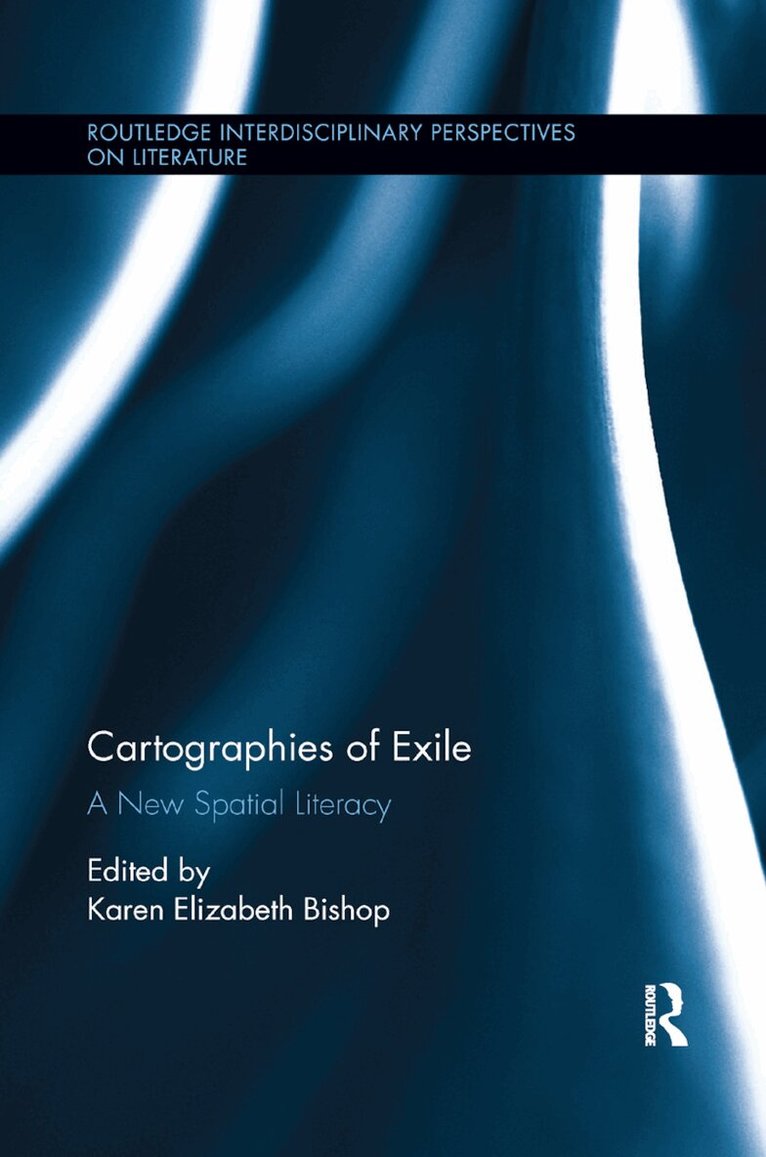
This book proposes a fundamental relationship between exile and mapping. It seeks to understand the cartographic imperative inherent in the exilic condition, the exilic impulses fundamental to mapping, and the varied forms of description proper to both. The vital intimacy of the relationship between exile and mapping compels a new spatial literacy that requires the cultivation of localized, dynamic reading practices attuned to the complexities of understanding space as text and texts as spatial artifacts. The collection asks: what kinds of maps do exiles make? How are they conceived, drawn, read? Are they private maps or can they be shaped collectively? What is their relationship to memory and history? How do maps provide for new ways of imagining the fractured experience of exile and offer up both new strategies for reading displacement and new displaced reading strategies? Where does exilic mapping fit into a history of cartography, particularly within the twentieth-century spatial turn? The original work that makes up this interdisciplinary collection presents a varied look at cartographic strategies employed in writing, art, and film from the pre-Contact Americas to the Renaissance to late postmodernism; the effects of exile, in its many manifestations, on cartographic textual systems, ways of seeing, and forms of reading; the challenges of traversing and mapping unstable landscapes and restrictive social and political networks; and the felicities and difficulties of both giving into the map and attempting to escape the map that provides for exile in the first place. Cartographies of Exile will be of interest to students and scholars working in literary and cultural studies; gender, sexuality, and race studies; anthropology; art history and architecture; film, performance, visual studies; and the fine arts.
Inbunden, Engelska, 2016
2 769 kr
Skickas inom 10-15 vardagar
This book proposes a fundamental relationship between exile and mapping. It seeks to understand the cartographic imperative inherent in the exilic condition, the exilic impulses fundamental to mapping, and the varied forms of description proper to both. The vital intimacy of the relationship between exile and mapping compels a new spatial literacy that requires the cultivation of localized, dynamic reading practices attuned to the complexities of understanding space as text and texts as spatial artifacts. The collection asks: what kinds of maps do exiles make? How are they conceived, drawn, read? Are they private maps or can they be shaped collectively? What is their relationship to memory and history? How do maps provide for new ways of imagining the fractured experience of exile and offer up both new strategies for reading displacement and new displaced reading strategies? Where does exilic mapping fit into a history of cartography, particularly within the twentieth-century spatial turn? The original work that makes up this interdisciplinary collection presents a varied look at cartographic strategies employed in writing, art, and film from the pre-Contact Americas to the Renaissance to late postmodernism; the effects of exile, in its many manifestations, on cartographic textual systems, ways of seeing, and forms of reading; the challenges of traversing and mapping unstable landscapes and restrictive social and political networks; and the felicities and difficulties of both giving into the map and attempting to escape the map that provides for exile in the first place. Cartographies of Exile will be of interest to students and scholars working in literary and cultural studies; gender, sexuality, and race studies; anthropology; art history and architecture; film, performance, visual studies; and the fine arts.
Inbunden, Engelska, 2020
1 386 kr
Skickas inom 5-8 vardagar
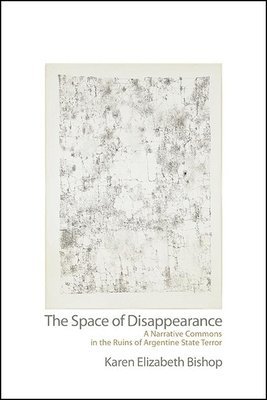
Examines the evolution of disappearance as a formal narrative and epistemological phenomenon in late twentieth-century Argentine fiction.More than thirty thousand people were forcibly disappeared during the military dictatorship that governed Argentina from 1976 to 1983, leaving behind a cultural landscape fractured by absence, denial, impunity, and gaps in knowledge. This book is about how these absences assume narrative form in late twentieth-century Argentine fiction and the formal strategies and structures authors have crafted to respond to the country's use of systematic disappearance as a mechanism of state terror. In incisive close readings of texts by Rodolfo Walsh, Julio Cortázar, and Tomás Eloy Martínez, Karen Elizabeth Bishop explores how techniques of dissimulation, doubling, displacement, suspension, and embodiment come to serve both epistemological and ethical functions, grounding new forms of historical knowledge and a new narrative commons whose work continues into the twenty-first century. Their writing, Bishop argues, recalibrates our understanding of the rich and increasingly urgent reciprocities between fiction, history, and the demands of human rights. In the end, The Space of Disappearance asks us to reexamine in fiction what we think we cannot see; there, at the limits of the literary, disappearance appears as a vital agent of resistance, storytelling, and world-building.
Häftad, Engelska, 2021
504 kr
Skickas inom 5-8 vardagar
Examines the evolution of disappearance as a formal narrative and epistemological phenomenon in late twentieth-century Argentine fiction.More than thirty thousand people were forcibly disappeared during the military dictatorship that governed Argentina from 1976 to 1983, leaving behind a cultural landscape fractured by absence, denial, impunity, and gaps in knowledge. This book is about how these absences assume narrative form in late twentieth-century Argentine fiction and the formal strategies and structures authors have crafted to respond to the country's use of systematic disappearance as a mechanism of state terror. In incisive close readings of texts by Rodolfo Walsh, Julio Cortázar, and Tomás Eloy Martínez, Karen Elizabeth Bishop explores how techniques of dissimulation, doubling, displacement, suspension, and embodiment come to serve both epistemological and ethical functions, grounding new forms of historical knowledge and a new narrative commons whose work continues into the twenty-first century. Their writing, Bishop argues, recalibrates our understanding of the rich and increasingly urgent reciprocities between fiction, history, and the demands of human rights. In the end, The Space of Disappearance asks us to reexamine in fiction what we think we cannot see; there, at the limits of the literary, disappearance appears as a vital agent of resistance, storytelling, and world-building.
Häftad, Engelska, 2021
234 kr
Skickas inom 5-8 vardagar