Karen Fog Olwig – författare
2 182 kr
Skickas inom 10-15 vardagar
2 182 kr
Skickas inom 10-15 vardagar
681 kr
Skickas inom 10-15 vardagar
2 112 kr
Skickas inom 10-15 vardagar
2 182 kr
Skickas inom 10-15 vardagar
709 kr
Skickas inom 10-15 vardagar
2 252 kr
Skickas inom 10-15 vardagar
715 kr
Skickas inom 10-15 vardagar
961 kr
Skickas inom 10-15 vardagar
277 kr
Skickas inom 10-15 vardagar
374 kr
Skickas inom 5-8 vardagar
534 kr
Läs direkt efter köp
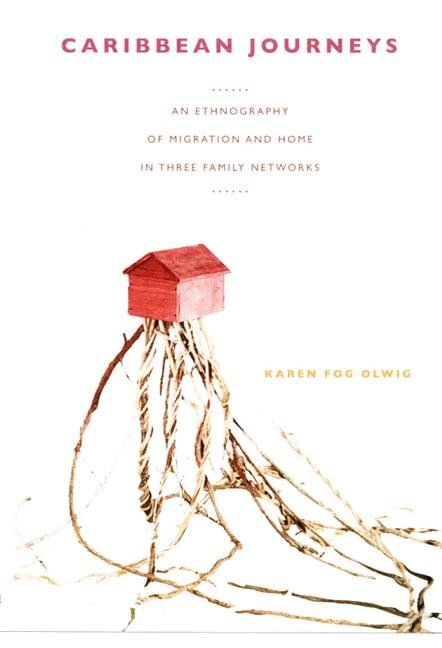
The migratory journeys of the families in this study began more than sixty years ago, when individuals in the three families left home in a British colonial town in Jamaica, a French Creole rural community in Dominica, and an African-Caribbean village of small farmers on Nevis. Olwig follows the three family networks forward in time, interviewing family members living under highly varied social and economic circumstances in locations ranging from California to Barbados, Nova Scotia to Florida, and New Jersey to England. Through her conversations with several generations of these far-flung families, she gives insight into each family’s educational, occupational, and socioeconomic trajectories. Olwig contends that terms such as “Caribbean diaspora” wrongly assume a culturally homogeneous homeland. As she demonstrates in Caribbean Journeys, anthropologists who want a nuanced understanding of how migrants and their descendants perceive their origins and identities must focus on interpersonal relations and intimate spheres as well as on collectivities and public expressions of belonging.
746 kr
Läs direkt efter köp
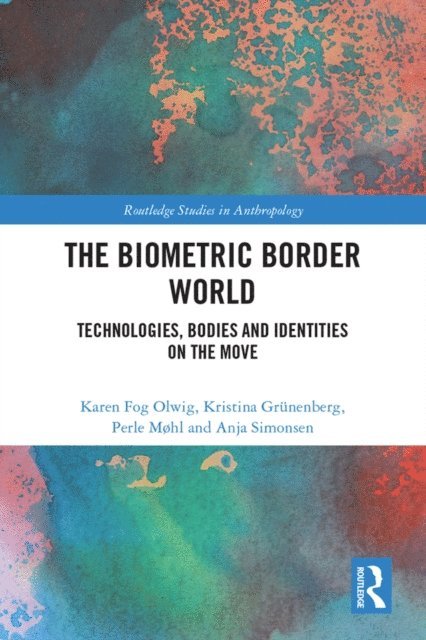
Since the 1990s, biometric border control has attained key importance throughout Europe. Employing digital images of, for example, fingerprints, DNA, bones, faces or irises, biometric technologies use bodies to identify, categorize and regulate individuals’ cross-border movements.
Based on innovative collaborative fieldwork, this book examines how biometrics are developed, put to use and negotiated in key European border sites. It analyses the disparate ways in which the technologies are applied, perceived and experienced by border control agents and others managing the cross-border flow of people, by scientists and developers engaged in making the technologies, and by migrants and non-government organizations attempting to manoeuvre in the complicated and often-unpredictable systems of technological control.
Biometric technologies are promoted by national and supranational authorities and industry as scientifically exact and neutral methods of identification and verification, and as an infallible solution to security threats. The ethnographic case studies in this volume demonstrate, however, that the technologies are, in fact, characterized by considerable ambiguity and uncertainty and subject to substantial subjective interpretation, translation and brokering with different implications for migrants, border guards, researchers and other actors engaged in the border world.
746 kr
Läs direkt efter köp
Since the 1990s, biometric border control has attained key importance throughout Europe. Employing digital images of, for example, fingerprints, DNA, bones, faces or irises, biometric technologies use bodies to identify, categorize and regulate individuals’ cross-border movements.
Based on innovative collaborative fieldwork, this book examines how biometrics are developed, put to use and negotiated in key European border sites. It analyses the disparate ways in which the technologies are applied, perceived and experienced by border control agents and others managing the cross-border flow of people, by scientists and developers engaged in making the technologies, and by migrants and non-government organizations attempting to manoeuvre in the complicated and often-unpredictable systems of technological control.
Biometric technologies are promoted by national and supranational authorities and industry as scientifically exact and neutral methods of identification and verification, and as an infallible solution to security threats. The ethnographic case studies in this volume demonstrate, however, that the technologies are, in fact, characterized by considerable ambiguity and uncertainty and subject to substantial subjective interpretation, translation and brokering with different implications for migrants, border guards, researchers and other actors engaged in the border world.
651 kr
Skickas inom 10-15 vardagar
1 266 kr
Skickas inom 7-10 vardagar
746 kr
Läs direkt efter köp
746 kr
Läs direkt efter köp
786 kr
Läs direkt efter köp
Culture has been subject to critical debate in anthropology during the past decade and this is related to a shift in emphasis from the bounded local culture to transnational cultural flows. At the same time that cultural mobility is being emphasized, the people studied by anthropologists are recasting culture as a place of belonging as they construct local identities within global fields of relations.So far, much of the analysis of the role of place in culture has been carried out at a level of theoretical debate. Siting Culture argues that it is only through rich ethnographic studies that anthropologists may explore the significance of place in the global space of relations which mould the lives of people throughout the world. By examining the concept of culture through case studies from Europe, Africa, Oceania, Latin America and the Caribbean it probes the methodological and theoretical implications of the divergent scholarly and popular concepts of culture.
779 kr
Läs direkt efter köp
Culture has been subject to critical debate in anthropology during the past decade and this is related to a shift in emphasis from the bounded local culture to transnational cultural flows. At the same time that cultural mobility is being emphasized, the people studied by anthropologists are recasting culture as a place of belonging as they construct local identities within global fields of relations.So far, much of the analysis of the role of place in culture has been carried out at a level of theoretical debate. Siting Culture argues that it is only through rich ethnographic studies that anthropologists may explore the significance of place in the global space of relations which mould the lives of people throughout the world. By examining the concept of culture through case studies from Europe, Africa, Oceania, Latin America and the Caribbean it probes the methodological and theoretical implications of the divergent scholarly and popular concepts of culture.
811 kr
Läs direkt efter köp
Children''s Places examines the ways in which children and adults, from their different vantage-points in society, negotiate the ''proper place'' of children in both social and spatial terms. It looks at some of the recognised constructions of children, including perspectives from cultures that do not distinguish children as a distinct category of people, as well as examining contexts for them, from schools and kindergartens to inner cities and war-zones. The result is a much-needed insight into the notions of inclusion and exclusion, the placement and displacement of children within generational ranks and orders, and the kinds of places that children construct for themselves. Based on in-depth ethnographic research from Europe, Asia, Africa, North America, Australia and New Zealand.
811 kr
Läs direkt efter köp
Children''s Places examines the ways in which children and adults, from their different vantage-points in society, negotiate the ''proper place'' of children in both social and spatial terms. It looks at some of the recognised constructions of children, including perspectives from cultures that do not distinguish children as a distinct category of people, as well as examining contexts for them, from schools and kindergartens to inner cities and war-zones. The result is a much-needed insight into the notions of inclusion and exclusion, the placement and displacement of children within generational ranks and orders, and the kinds of places that children construct for themselves. Based on in-depth ethnographic research from Europe, Asia, Africa, North America, Australia and New Zealand.
1 113 kr
Läs direkt efter köp
1 103 kr
Läs direkt efter köp
795 kr
Läs direkt efter köp
Migration, Family and the Welfare State explores understandings and practices of integration in the Scandinavian welfare societies of Denmark, Norway and Sweden through a comprehensive range of detailed ethnographic studies. Chapters examine discourses, policies and programs of integration in the three receiving societies, studying how these are experienced by migrant and refugee families as they seek to realize the hopes and ambitions for a better life that led them to leave their country of origin. The three Scandinavian countries have had parallel histories as welfare societies receiving increasing numbers of migrants and refugees after World War II, and yet they have reacted in dissimilar ways to the presence of foreigners, with Denmark developing tough immigration policies and nationalist integration requirements, Sweden asserting itself as a relatively open country with an official multicultural policy, and Norway taking a middle position. The book analyses the impact of these differences and similarities on immigrants, refugees and their descendants across three intersecting themes: integration as a welfare state project; integration as political discourse and practice; and integration as immigrants’ and refugees’ quest for improvement and belonging.
This book was originally published as a special issue of the Journal of Ethnic and Migration Studies.
795 kr
Läs direkt efter köp
Migration, Family and the Welfare State explores understandings and practices of integration in the Scandinavian welfare societies of Denmark, Norway and Sweden through a comprehensive range of detailed ethnographic studies. Chapters examine discourses, policies and programs of integration in the three receiving societies, studying how these are experienced by migrant and refugee families as they seek to realize the hopes and ambitions for a better life that led them to leave their country of origin. The three Scandinavian countries have had parallel histories as welfare societies receiving increasing numbers of migrants and refugees after World War II, and yet they have reacted in dissimilar ways to the presence of foreigners, with Denmark developing tough immigration policies and nationalist integration requirements, Sweden asserting itself as a relatively open country with an official multicultural policy, and Norway taking a middle position. The book analyses the impact of these differences and similarities on immigrants, refugees and their descendants across three intersecting themes: integration as a welfare state project; integration as political discourse and practice; and integration as immigrants’ and refugees’ quest for improvement and belonging.
This book was originally published as a special issue of the Journal of Ethnic and Migration Studies.
2 241 kr
Skickas inom 10-15 vardagar
448 kr
Skickas inom 7-10 vardagar
693 kr
Skickas inom 10-15 vardagar