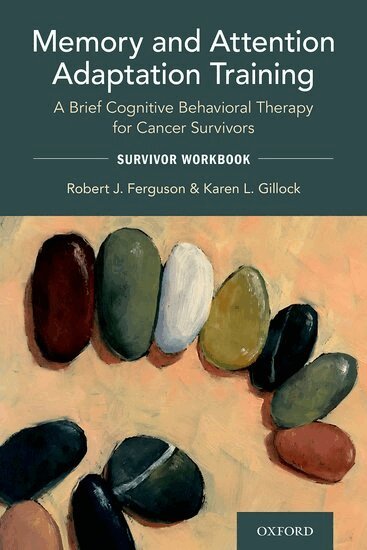
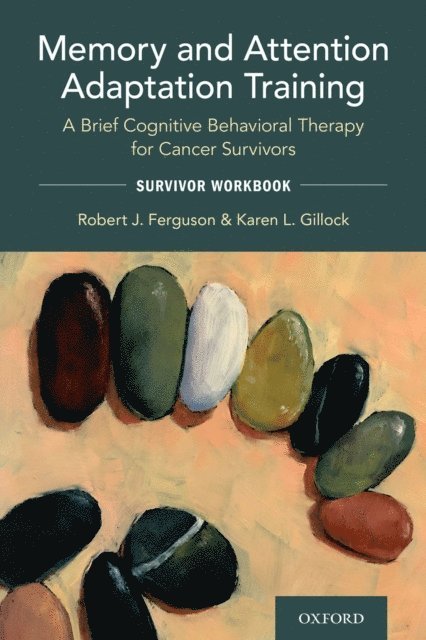
Cancer-related cognitive impairment (CRCI) may affect nearly half of all cancer survivors and can persist for years after completing cancer treatment. Memory and Attention Adaptation Training (MAAT) is a cognitive-behavioral therapy offering evidence-based, nonpharmacological treatment of this common survivorship condition. Organized into a session-by-session Clinician Manual and related Survivor Workbook, MAAT is conducted in 8 treatment visits and has been demonstrated effective when delivered through telehealth technology, so survivors can readily fit MAAT into their busy lives. The Survivor Workbook starts with a brief overview of what is understood about CRCI, common problems, and how MAAT helps. The introduction is followed by the 8 visits summarized in concise chapters that allow for easy review after the therapy visit. Thus, survivors with memory problems have a reliable source to turn to so that content of visits is not forgotten. Each visit consists of homework exercises with easy to follow forms.
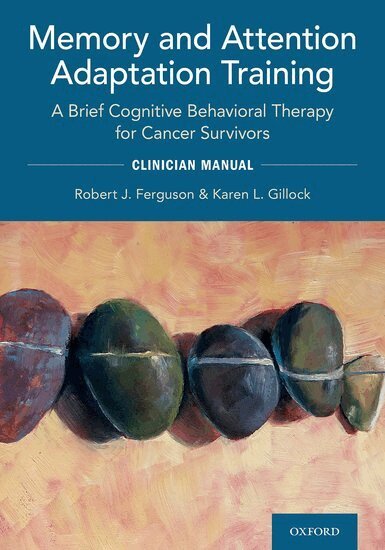
Cancer-related cognitive impairment (CRCI) may affect nearly half of all cancer survivors and can persist for years after completing cancer treatment. Memory and Attention Adaptation Training (MAAT) is a cognitive-behavioral therapy offering evidence-based, nonpharmacological treatment of this common survivorship condition. Organized into a session-by-session Clinician Manual and related Survivor Workbook, MAAT is conducted in eight treatment visits and has been demonstrated effective when delivered through telehealth technology, so survivors can readily fit MAAT into their busy lives. The MAAT Clinician Manual provides a clearly written summary of the scientific literature on CRCI and detailed guidance for each visit, including an agenda outline, in-depth discussion, and accompanying fidelity checklist in the appendix. Designed to be used in conjunction with the Survivor Workbook, the Clinician Manual also includes the full text of the workbook in a separate appendix, giving clinicians convenient one-volume access to the complete material.