Karen Mui-Teng Quek – författare
Visar alla böcker från författaren Karen Mui-Teng Quek. Handla med fri frakt och snabb leverans.
4 produkter
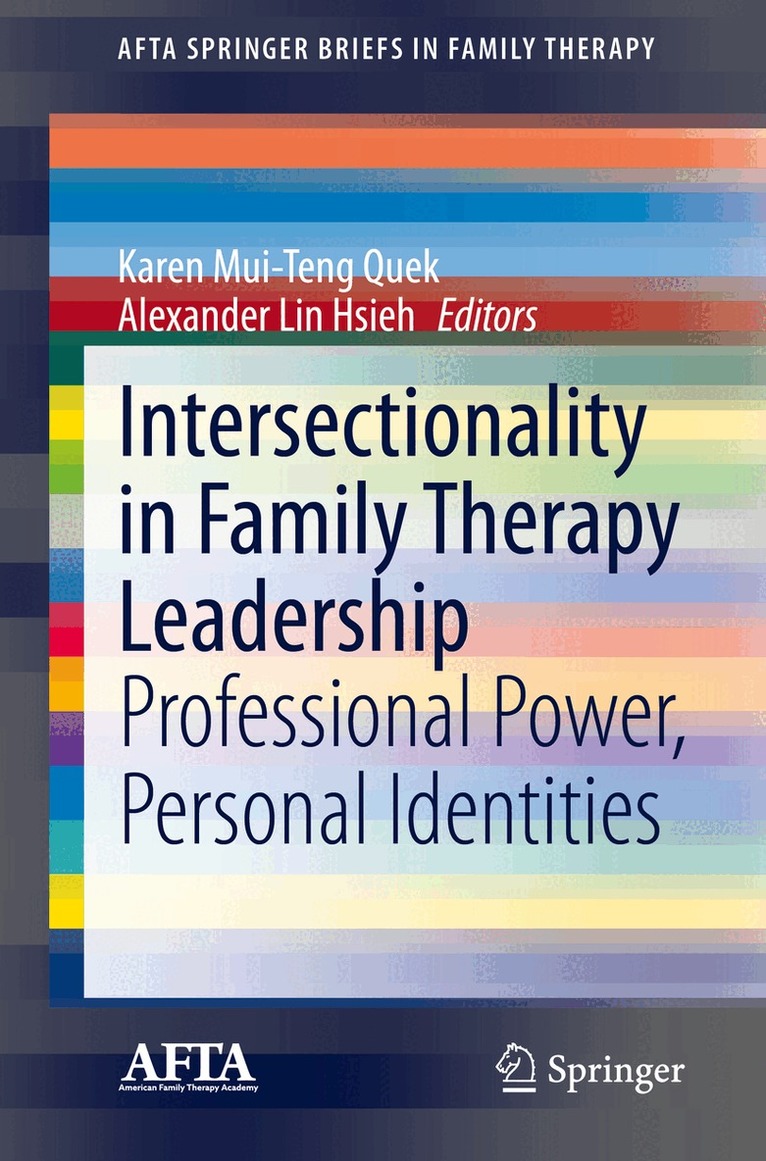
Intersectionality in Family Therapy Leadership
Professional Power, Personal Identities
Av Karen Mui-Teng Quek, Alexander Lin Hsieh
Häftad, 2021
568 kr
Lägg i varukorg
This brief examines the ways in which sociocultural characteristics and contexts intersect to create varying dimensions of social advantage and inequality that, in turn, affect and organize professional relationships in educational and therapeutic settings. It explores how inherently hierarchical …
Intersectionality in Family Therapy Leadership
Professional Power, Personal Identities
Av Alexander Lin Hsieh, Karen Mui-Teng Quek
E-bok, 2021
755 kr
Lägg i varukorg
This brief examines the ways in which sociocultural characteristics and contexts intersect to create varying dimensions of social advantage and inequality that, in turn, affect and organize professional relationships in educational and therapeutic settings. It explores how inherently hierarchical …
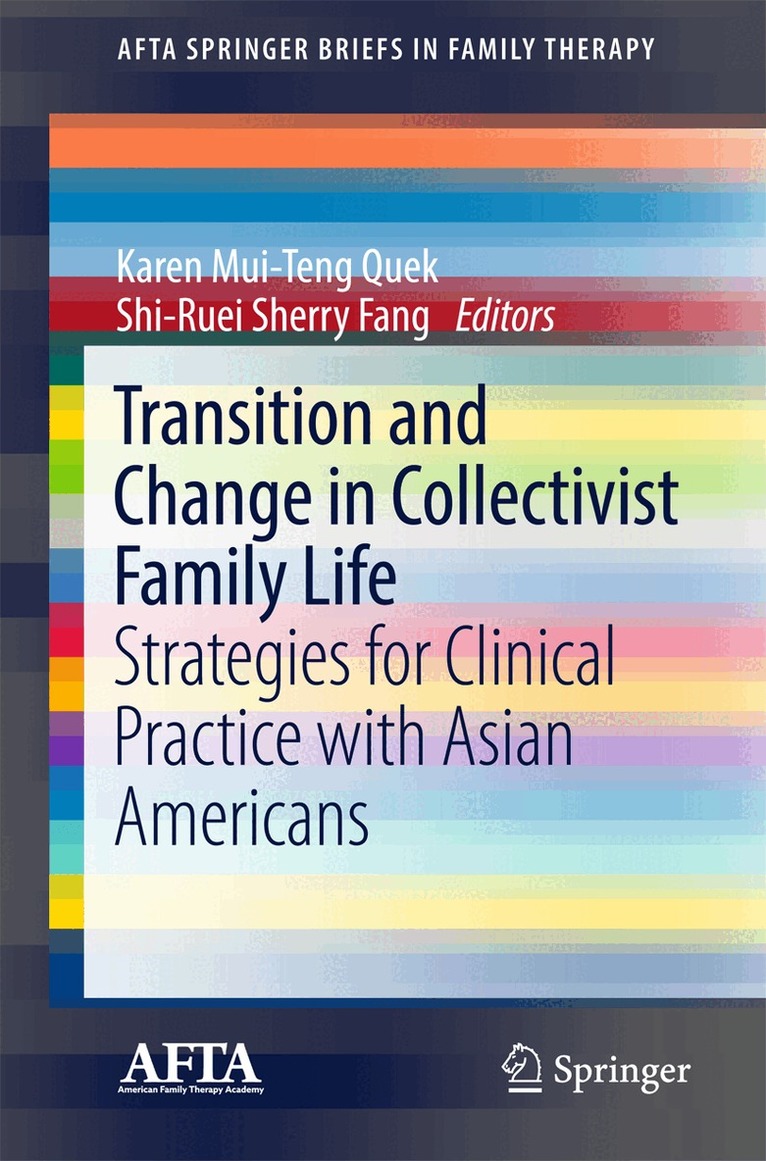
Transition and Change in Collectivist Family Life
Strategies for Clinical Practice with Asian Americans
Av Karen Mui-Teng Quek, Shi-Ruei Sherry Fang
Häftad, 2017
568 kr
Lägg i varukorg
This research-to-practice volume grounds clinicians in a robust, culturally-informed framework for conducting effective therapy with Asian-American couples, families, and individuals. Family, cultural, social, and spiritual dynamics are explored across ethnicities, generations, relationships, and …
Transition and Change in Collectivist Family Life
Strategies for Clinical Practice with Asian Americans
Av Shi-Ruei Sherry Fang, Karen Mui-Teng Quek
E-bok, 2017
755 kr
Lägg i varukorg
This research-to-practice volume grounds clinicians in a robust, culturally-informed framework for conducting effective therapy with Asian-American couples, families, and individuals. Family, cultural, social, and spiritual dynamics are explored across ethnicities, generations, relationships, and …