Karen Ordahl Kupperman - Böcker
Visar alla böcker från författaren Karen Ordahl Kupperman. Handla med fri frakt och snabb leverans.
15 produkter
15 produkter
1 325 kr
Skickas inom 5-8 vardagar
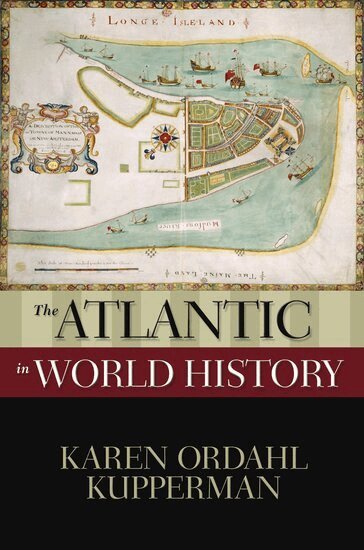
As the Atlantic Ocean was transformed from a terrifying barrier into a highway uniting four continents, the lives of people all around the ocean were transformed. After 1492 merchants and political leaders around the Atlantic refocused their attention from trade highways in their interiors to the coasts. Those who emigrated, willingly or unwillingly, had their lives changed completely, but many others became involved in new trades and industries that necessitated consolidation of populations. American gold and silver contributed to the emergence of nation-states. New foods enriched diets all over the world. American foods such as fish, cassava, maize, tomatoes, beans, and cacao fed burgeoning populations. Sugar grown around the Atlantic transformed tastes everywhere. Tobacco was the first great consumer craze. Furs provided the raw material for fashionable broad hats. Chains of commodity exchange linked the Atlantic to the Pacific; they also linked Americans to the Mediterranean and the goods of the Middle East. Creation of Atlantic economies required organization of labor and trade on a scale previously unknown. Generations of Europeans who signed up for servitude for a number of years in order to pay their passage over were gradually supplanted by enslaved Africans, millions of whom were imported into slavery. Wars, fueled by the need for ever more slaves, spread throughout West and Central Africa. The African end of the slave trade produced powerful rulers and great confederations in Africa. Consolidation of displaced tribal groups and remnants of populations depleted by epidemic disease led to the emergence of the Six Nations of the Iroquois League in northern North America, and the Creeks, Cherokees, and others in the south. Those who made a choice to travel across the Atlantic did so for economic advancement, but many also were influenced by religious concerns. Conflict between Roman Catholics and Protestants in Europe, and the power of political leaders to force conformity, caused many to feel that their right to worship was under threat. They were willing to accept servitude to make emigration possible, in order to protect their religious lives. Attempting to create and control vast networks of settlement and trade enhanced the rise of nation-states in Europe and contributed to the growth of national identities. The wars of independence in the late eighteenth and nineteenth centuries changed the nature of relationships, but did not end them. Abolitionism serves as a vivid example of the collision of religious, philosophical, and economic realities and the ways in which the Atlantic context posed new possibilities and new answers.
278 kr
Skickas inom 5-8 vardagar
As the Atlantic Ocean was transformed from a terrifying barrier into a highway uniting four continents, the lives of people all around the ocean were transformed. After 1492 merchants and political leaders around the Atlantic refocused their attention from trade highways in their interiors to the coasts. Those who emigrated, willingly or unwillingly, had their lives changed completely, but many others became involved in new trades and industries that necessitated consolidation of populations. American gold and silver contributed to the emergence of nation-states. New foods enriched diets all over the world. American foods such as fish, cassava, maize, tomatoes, beans, and cacao fed burgeoning populations. Sugar grown around the Atlantic transformed tastes everywhere. Tobacco was the first great consumer craze. Furs provided the raw material for fashionable broad hats. Chains of commodity exchange linked the Atlantic to the Pacific; they also linked Americans to the Mediterranean and the goods of the Middle East. Creation of Atlantic economies required organization of labor and trade on a scale previously unknown. Generations of Europeans who signed up for servitude for a number of years in order to pay their passage over were gradually supplanted by enslaved Africans, millions of whom were imported into slavery. Wars, fueled by the need for ever more slaves, spread throughout West and Central Africa. The African end of the slave trade produced powerful rulers and great confederations in Africa. Consolidation of displaced tribal groups and remnants of populations depleted by epidemic disease led to the emergence of the Six Nations of the Iroquois League in northern North America, and the Creeks, Cherokees, and others in the south. Those who made a choice to travel across the Atlantic did so for economic advancement, but many also were influenced by religious concerns. Conflict between Roman Catholics and Protestants in Europe, and the power of political leaders to force conformity, caused many to feel that their right to worship was under threat. They were willing to accept servitude to make emigration possible, in order to protect their religious lives. Attempting to create and control vast networks of settlement and trade enhanced the rise of nation-states in Europe and contributed to the growth of national identities. The wars of independence in the late eighteenth and nineteenth centuries changed the nature of relationships, but did not end them. Abolitionism serves as a vivid example of the collision of religious, philosophical, and economic realities and the ways in which the Atlantic context posed new possibilities and new answers.
1 485 kr
Skickas inom 7-10 vardagar
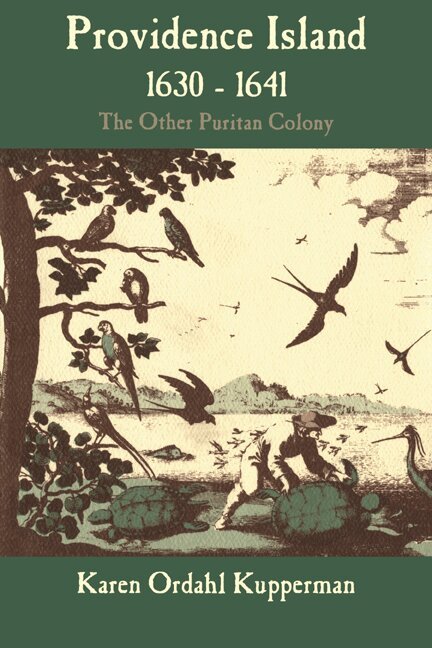
Providence Island was founded in 1630 at the same time as Massachusetts Bay by English puritans who thought an island off the coast of Nicaragua was far more promising than the cold, rocky shores of New England. Although they expected theirs to become a model godly society, the settlement never succeeded in building the kind of united and orderly community that the New Englanders created. In fact, they began large-scale use of slaves, and plunged into the privateering that invited the colony's extinction by the Spanish in 1641. As a well-planned and well-financed failure, Providence Island offers historians a standard by which to judge other colonies. By examining the failure of Providence Island, the author illuminates the common characteristics in all the successful English settlements, the key institutions without which men and women would not emigrate and a colony's economy could not thrive. This study of Providence Island reveals the remarkable similarities in many basic institutions among the early colonial regions.
422 kr
Skickas inom 7-10 vardagar
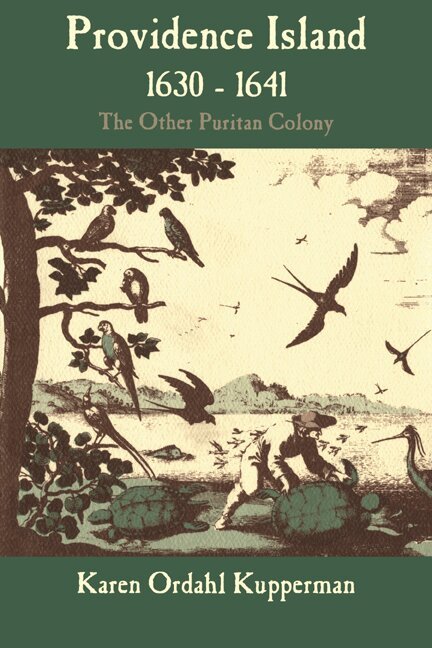
Providence Island was founded in 1630 at the same time as Massachusetts Bay by English puritans who thought an island off the coast of Nicaragua was far more promising than the cold, rocky shores of New England. Although they expected theirs to become a model godly society, the settlement never succeeded in building the kind of united and orderly community that the New Englanders created. In fact, they began large-scale use of slaves, and plunged into the privateering that invited the colony's extinction by the Spanish in 1641. As a well-planned and well-financed failure, Providence Island offers historians a standard by which to judge other colonies. By examining the failure of Providence Island, the author illuminates the common characteristics in all the successful English settlements, the key institutions without which men and women would not emigrate and a colony's economy could not thrive. This study of Providence Island reveals the remarkable similarities in many basic institutions among the early colonial regions.
305 kr
Skickas inom 10-15 vardagar
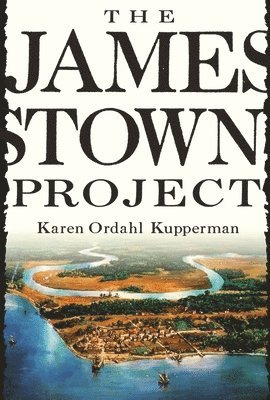
Listen to a short interview with Karen Ordahl KuppermanHost: Chris Gondek | Producer: Heron & CraneCaptain John Smith's 1607 voyage to Jamestown was not his first trip abroad. He had traveled throughout Europe, been sold as a war captive in Turkey, escaped, and returned to England in time to join the Virginia Company's colonizing project. In Jamestown migrants, merchants, and soldiers who had also sailed to the distant shores of the Ottoman Empire, Africa, and Ireland in search of new beginnings encountered Indians who already possessed broad understanding of Europeans. Experience of foreign environments and cultures had sharpened survival instincts on all sides and aroused challenging questions about human nature and its potential for transformation. It is against this enlarged temporal and geographic background that Jamestown dramatically emerges in Karen Kupperman's breathtaking study. Reconfiguring the national myth of Jamestown's failure, she shows how the settlement's distinctly messy first decade actually represents a period of ferment in which individuals were learning how to make a colony work. Despite the settlers' dependence on the Chesapeake Algonquians and strained relations with their London backers, they forged a tenacious colony that survived where others had failed. Indeed, the structures and practices that evolved through trial and error in Virginia would become the model for all successful English colonies, including Plymouth.Capturing England's intoxication with a wider world through ballads, plays, and paintings, and the stark reality of Jamestown--for Indians and Europeans alike--through the words of its inhabitants as well as archeological and environmental evidence, Kupperman re-creates these formative years with astonishing detail.
269 kr
Skickas inom 10-15 vardagar
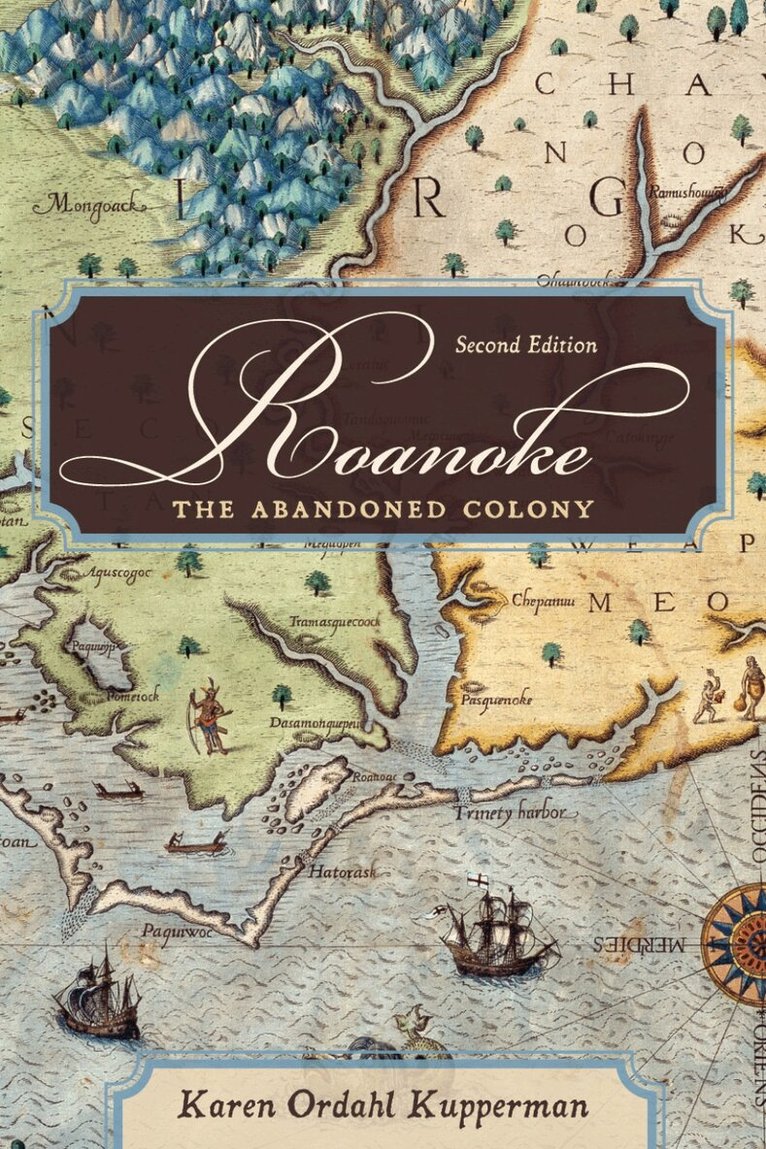
In telling the tragic and heroic story of Roanoke, the “lost colony,” award-winning historian Karen Ordahl Kupperman recovers the earliest days of English exploration and settlement in America—the often forgotten years before Jamestown and the landing of the Mayflower.Roanoke explores Britain’s attempt to establish a firm claim to North America in the hope that colonies would make England wealthy and powerful. Kupperman brings to life the men and women who struggled to carve out a settlement in an inhospitable environment on the Carolina coast and the complex Native American cultures they encountered. She reveals the mixture of goals and challenges that led to the colony’s eventual abandonment, and discusses the theories about what might have become of the first English settlers in the New World as they adapted to life as Indians.With a new preface and afterword written by the author, Roanoke: The Abandoned Colony brings the fascinating story of America’s earliest settlement up-to-date, bringing together new work from scholars in a variety of fields. The story of Roanoke remains endlessly fascinating. It is a tale marked by courage, miscalculation, exhilaration, intrigue, and mystery.
226 kr
Skickas inom 10-15 vardagar
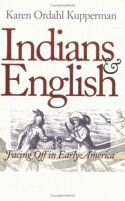
In this vividly written book, prize-winning author Karen Ordahl Kupperman refocuses our understanding of encounters between English venturers and Algonquians all along the East Coast of North America in the early years of contact and settlement. All parties in these dramas were uncertain—hopeful and fearful—about the opportunity and challenge presented by new realities. Indians and English both believed they could control the developing relationship. Each group was curious about the other, and interpreted through their own standards and traditions. At the same time both came from societies in the process of unsettling change and hoped to derive important lessons by studying a profoundly different culture.These meetings and early relationships are recorded in a wide variety of sources. Native people maintained oral traditions about the encounters, and these were written down by English recorders at the time of contact and since; many are maintained to this day. English venturers, desperate to make readers at home understand how difficult and potentially rewarding their enterprise was, wrote constantly of their own experiences and observations and transmitted native lore. Kupperman analyzes all these sources in order to understand the true nature of these early years, when English venturers were so fearful and dependent on native aid and the shape of the future was uncertain.Building on the research in her highly regarded book Settling with the Indians, Kupperman argues convincingly that we must see both Indians and English as active participants in this unfolding drama.
482 kr
Skickas inom 10-15 vardagar
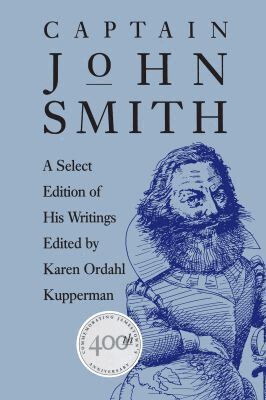
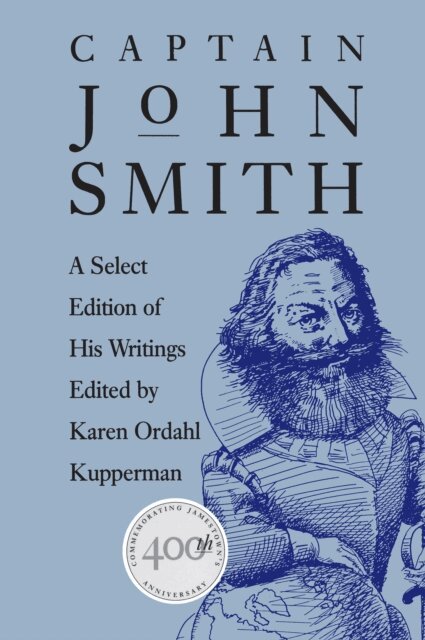
Captain John Smith was one of the most insightful and colorful writers to visit America in the colonial period. While his first venture was in Virginia, some of his most important work concerned New England and the colonial enterprise as a whole. The publication in 1986 of Philip Barbour's three-volume edition of Smith's works made available the complete Smith opus. In Karen Ordahl Kupperman's new edition her intelligent and imaginative selection and thematic arrangement of Smith's most important writings will make Smith accessible to scholars, students, and general readers alike. Kupperman's introductory material and notes clarify Smith's meaning and the context in which he wrote, while the selections are large enough to allow Captain Smith to speak for himself. As a reasonably priced distillation of the best of John Smith, Kupperman's edition will allow a wide audience to discover what a remarkable thinker and writer he was.
582 kr
Skickas inom 10-15 vardagar
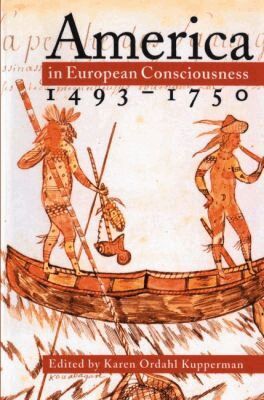
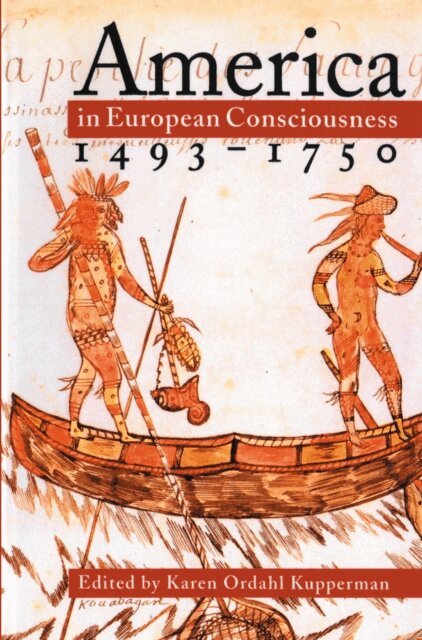
The five hundredth anniversary of Columbus's first transatlantic voyage has provoked an outpouring of scholarship on how European exploration and colonization affected America. This book of eleven essays from leading scholars in the fields of intellectual and cultural history reverses that trend by focusing on the ways in which contact with the Americas transformed European thought. The result of an international conference sponsored by the John Carter Brown Library, this collection addresses the impact of Spanish, French, and English experiences in the New World. The essays consider whether and how knowledge of America changed the mental world of European thinkers as reflected in their understanding of history, literature, linguistics, religion, and the sciences. In assessing the process by which Europeans sought to understand America, this volume responds to issues raised by Sir John Elliott nearly a generation ago, and the collection concludes with an essay in which Elliott reflects on the scholarship of the last twenty-five years on this subject. The contributors are David Armitage, Peter Burke, Luca Codignola, J. H. Elliott, Christian Feest, Roland Greene, John M. Headley, Karen Ordahl Kupperman, Henry Lowood, Sabine MacCormack, David Quint, and Richard C. Simmons.
5 326 kr
Skickas inom 7-10 vardagar
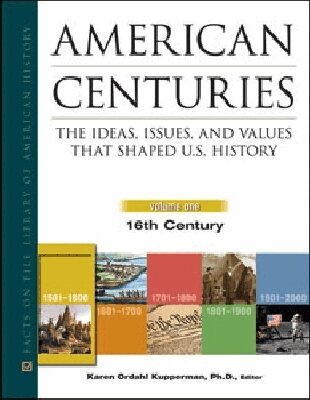
For the past 500 years, every century of American history has been marked by enormous changes and upheavals. The five-volume American Centuries set devotes one volume to each century, covering all of the developments and transformations in U.S. history. Each volume features 30 to 40 in-depth articles on broad, heavily studied topics, such as war, race relations, government, and the economy. This century-by-century approach allows students to follow the growth, spread, and evolution of every major issue and topic in American history—from civil rights and childhood to the environment and urban life—from the 16th through the 20th centuries. By offering substantive articles that analyze critical subjects and themes in the political, cultural, economic, and social history of the United States, American Centuries provides students and researchers with a handy, coherent, and simple-to-use reference for study and research purposes. This easy-to-comprehend, curriculum-based reference set offers a unique, exciting, and accessible approach to American history. Students can focus on a single century, or they can examine one topic in-depth across five centuries. A distinguished historian in the field has edited each volume, and all articles are signed. Each volume contains 30 to 40 chapters averaging 2,000 to 4,500 words each and includes an introduction surveying the specific century, along with illustrations, maps, a chronology of major events, and tables and charts. A cumulative index connects all the themes and subjects across American history.<\p>
169 kr
Skickas inom 7-10 vardagar
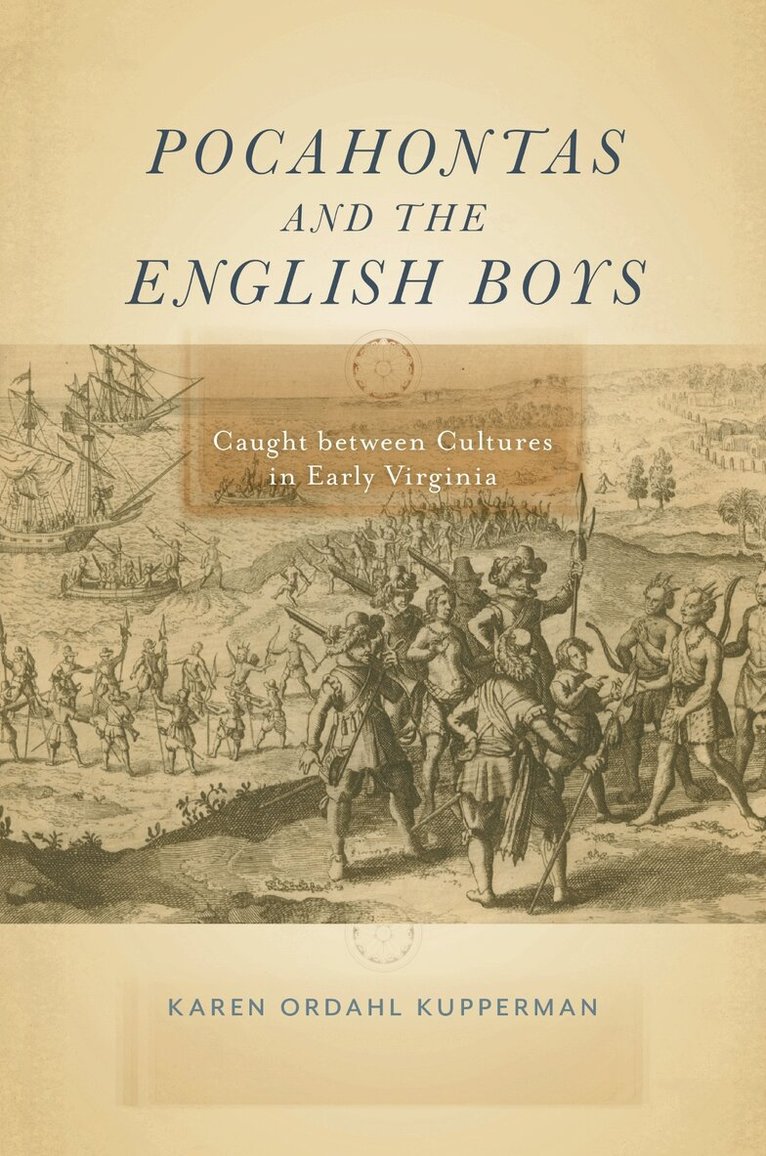
The captivating story of four young people—English and Powhatan—who lived their lives between cultures In Pocahontas and the English Boys, the esteemed historian Karen Ordahl Kupperman shifts the lens on the well-known narrative of Virginia's founding to reveal the previously untold and utterly compelling story of the youths who, often unwillingly, entered into cross-cultural relationships—and became essential for the colony's survival. Their story gives us unprecedented access to both sides of early Virginia. Here for the first time outside scholarly texts is an accurate portrayal of Pocahontas, who, from the age of ten, acted as emissary for her father, who ruled over the local tribes, alongside the never-before-told intertwined stories of Thomas Savage, Henry Spelman, and Robert Poole, young English boys who were forced to live with powerful Indian leaders to act as intermediaries. Pocahontas and the English Boys is a riveting seventeenth-century story of intrigue and danger, knowledge and power, and four youths who lived out their lives between cultures. As Pocahontas, Thomas, Henry, and Robert collaborated and conspired in carrying messages and trying to smooth out difficulties, they never knew when they might be caught in the firing line of developing hostilities. While their knowledge and role in controlling communication gave them status and a degree of power, their relationships with both sides meant that no one trusted them completely. Written by an expert in sixteenth- and seventeenth-century Atlantic history, Pocahontas and the English Boys unearths gems from the archives—Henry Spelman's memoir, travel accounts, letters, and official reports and records of meetings of the governor and council in Virginia—and draws on recent archaeology to share the stories of the young people who were key influencers of their day and who are now set to transform our understanding of early Virginia.
1 088 kr
Skickas inom 10-15 vardagar
The captivating story of four young people—English and Powhatan—who lived their lives between cultures In Pocahontas and the English Boys, the esteemed historian Karen Ordahl Kupperman shifts the lens on the well-known narrative of Virginia's founding to reveal the previously untold and utterly compelling story of the youths who, often unwillingly, entered into cross-cultural relationships—and became essential for the colony's survival. Their story gives us unprecedented access to both sides of early Virginia. Here for the first time outside scholarly texts is an accurate portrayal of Pocahontas, who, from the age of ten, acted as emissary for her father, who ruled over the local tribes, alongside the never-before-told intertwined stories of Thomas Savage, Henry Spelman, and Robert Poole, young English boys who were forced to live with powerful Indian leaders to act as intermediaries. Pocahontas and the English Boys is a riveting seventeenth-century story of intrigue and danger, knowledge and power, and four youths who lived out their lives between cultures. As Pocahontas, Thomas, Henry, and Robert collaborated and conspired in carrying messages and trying to smooth out difficulties, they never knew when they might be caught in the firing line of developing hostilities. While their knowledge and role in controlling communication gave them status and a degree of power, their relationships with both sides meant that no one trusted them completely. Written by an expert in sixteenth- and seventeenth-century Atlantic history, Pocahontas and the English Boys unearths gems from the archives—Henry Spelman's memoir, travel accounts, letters, and official reports and records of meetings of the governor and council in Virginia—and draws on recent archaeology to share the stories of the young people who were key influencers of their day and who are now set to transform our understanding of early Virginia.
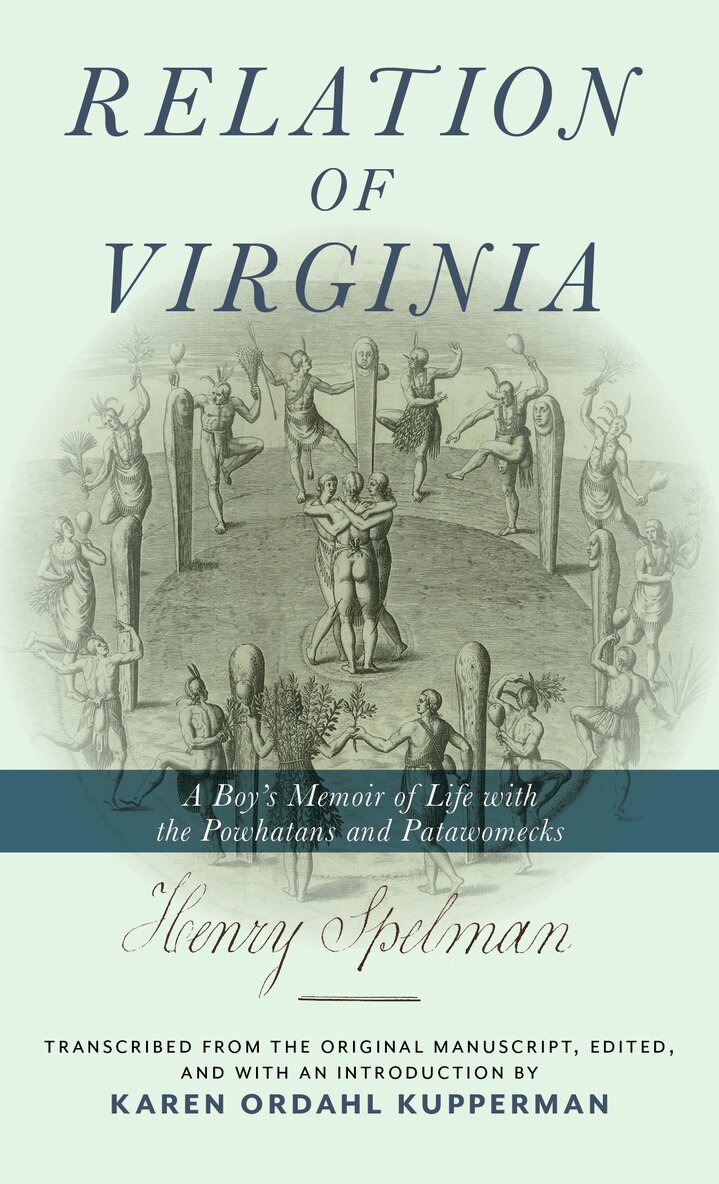
Relation of Virginia
A Boy's Memoir of Life with the Powhatans and the Patawomecks
Inbunden, Engelska, 2019
336 kr
Skickas inom 3-6 vardagar
A memoir of one of America's first adventurers, a young boy who acted as a link between the Jamestown colonists and the Patawomecks and Powhatans."Being in displeasure of my friends, and desirous to see other countries, after three months sail we come with prosperouswinds in sight of Virginia." So begins the fascinating tale of Henry Spelman, a 14 year-old boy sent to Virginia in 1609. One of Jamestown's early arrivals, Spelman soon became an integral player, and sometimes a pawn, in the power struggle between the Chesapeake Algonquians and the English settlers. Shortly after he arrived in the Chesapeake, Henry accompanied another English boy, Thomas Savage, to Powhatan's capital and after a few months went to live with the Patawomeck chief Iopassus on the Potomac. Spelman learned Chesapeake Algonquian languages and customs, acted as an interpreter, and knew a host of colonial America's most well-known figures, from Pocahontas to Powhatan to Captain John Smith. This remarkable manuscript tells Henry's story in his own words, and it is the only description of Chesapeake Algonquian culture written with an insider's knowledge. Spelman's account is lively and insightful, rich in cultural and historical detail. A valuable and unique primary document, this book illuminates the beginnings of English America and tells us much about how the Chesapeake Algonquians viewed the English invaders. It provides the first transcription from the original manuscript since 1872.
228 kr
Skickas
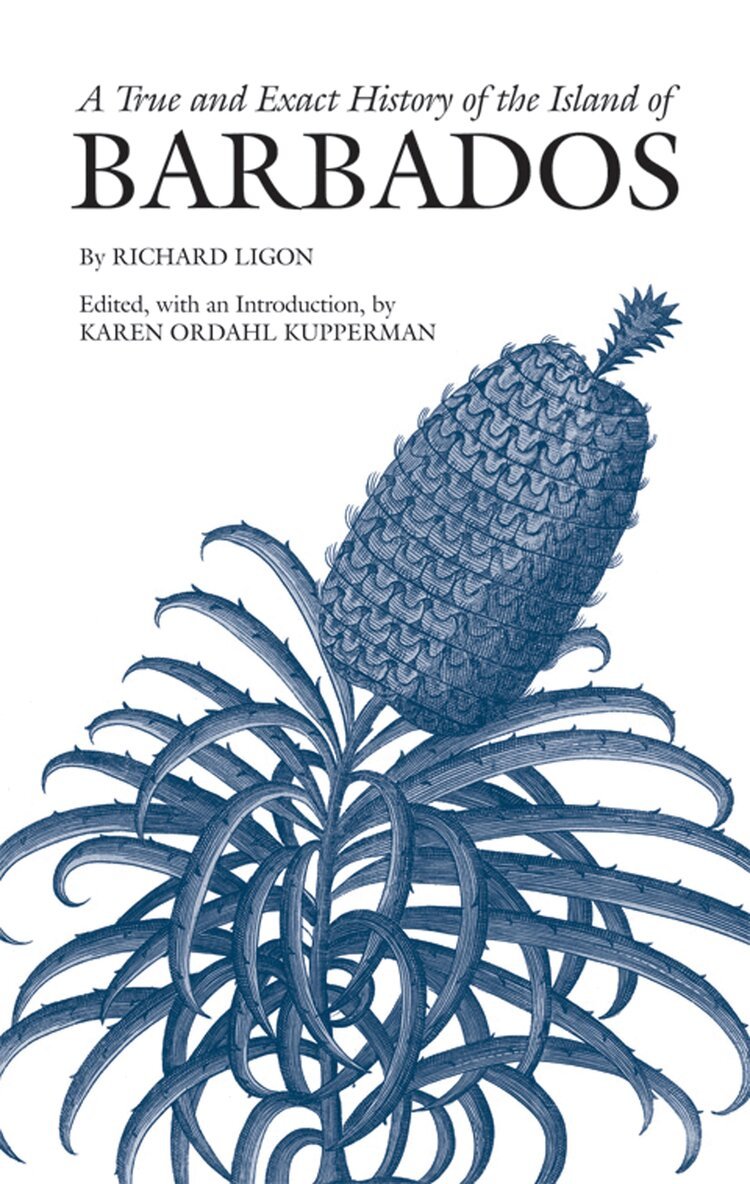
Ligon's True and Exact History of the Island of Barbados is the most significant book-length English text written about the Caribbean in the seventeenth century. [It] allows one to see the contested process behind the making of the Caribbean sugar/African slavery complex. Kupperman is one of the leading scholars of the early modern Atlantic world. . . . I cannot think of any scholar better prepared to write an Introduction that places Ligon, his text, and Barbados in an Atlantic historical context. The Introduction is quite thorough, readable, and accurate; the notes [are] exemplary! --Susan Parrish, University of Michigan
655 kr
Skickas inom 11-20 vardagar
Ligon's True and Exact History of the Island of Barbados is the most significant book-length English text written about the Caribbean in the seventeenth century. [It] allows one to see the contested process behind the making of the Caribbean sugar/African slavery complex. Kupperman is one of the leading scholars of the early modern Atlantic world. . . . I cannot think of any scholar better prepared to write an Introduction that places Ligon, his text, and Barbados in an Atlantic historical context. The Introduction is quite thorough, readable, and accurate; the notes [are] exemplary! --Susan Parrish, University of Michigan