Karen Strohm Kitchener – författare
Visar alla böcker från författaren Karen Strohm Kitchener. Handla med fri frakt och snabb leverans.
5 produkter
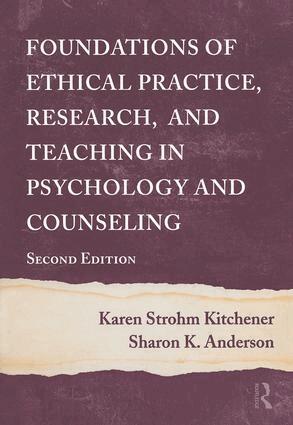
Foundations of Ethical Practice, Research, and Teaching in Psychology and Counseling
Av Karen Strohm Kitchener, Sharon K. Anderson
Inbunden, 2010
2601 kr
Lägg i varukorg
In Foundations of Ethical Practice, Research, and Teaching in Psychology and Counseling, Kitchener and Anderson lay a conceptual foundation for thinking well about ethical problems.Whereas the first edition focused mainly on ethical reasoning and decision making, this new edition draws more …
Foundations of Ethical Practice, Research, and Teaching in Psychology and Counseling
Av Sharon K. Anderson, Karen Strohm Kitchener
E-bok, 2011
1000 kr
Lägg i varukorg
In Foundations of Ethical Practice, Research, and Teaching in Psychology and Counseling , Kitchener and Anderson lay a conceptual foundation for thinking well about ethical problems. Whereas the first edition focused mainly on ethical reasoning and decision making, this new edition draws more …
Foundations of Ethical Practice, Research, and Teaching in Psychology and Counseling
Av Sharon K. Anderson, Karen Strohm Kitchener
E-bok, 2011
1000 kr
Lägg i varukorg
In Foundations of Ethical Practice, Research, and Teaching in Psychology and Counseling , Kitchener and Anderson lay a conceptual foundation for thinking well about ethical problems. Whereas the first edition focused mainly on ethical reasoning and decision making, this new edition draws more …
Foundations of Ethical Practice, Research, and Teaching in Psychology and Counseling
Häftad, 2015
812 kr
Lägg i varukorg
This book focuses on ethical reasoning and ethical behavior and shows that more is involved in behaving ethnically than applying ethical rules. It points out the ways in which psychologists and counselors as individuals and the professionals need to ponder their responsibility to society as a whole.
Developing Reflective Judgment
Av Patricia M. King, Karen Strohm Kitchener
Inbunden, 1994
588 kr
Lägg i varukorg
How do students learn to reason and think about complex issues?This book fills a critical gap in our understanding of along-neglected facet of the critical thinking process: reflectivejudgment. Drawing on extensive cross-sectional and longitudinalresearch, King and Kitchener detail the series of …