Kari Frederickson – författare
Visar alla böcker från författaren Kari Frederickson. Handla med fri frakt och snabb leverans.
8 produkter
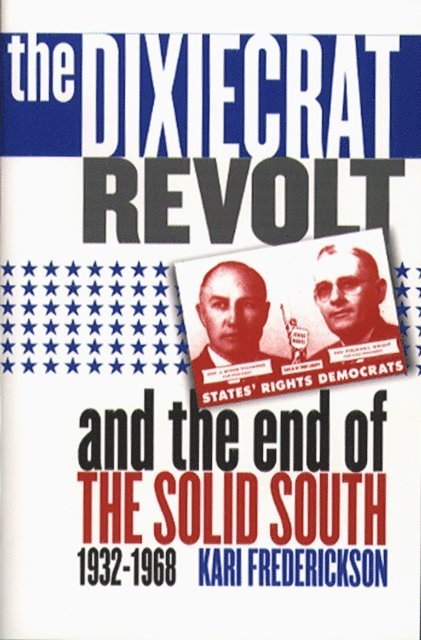
Dixiecrat Revolt and the End of the Solid South, 1932-1968
Häftad, 2001
457 kr
Lägg i varukorg
The movement that forged the way for the rise of the Republican Party in the South In 1948, a group of conservative white southerners formed the States' Rights Democratic Party, soon nicknamed the ""Dixiecrats,"" and chose Strom Thurmond as their presidential candidate. Thrown on the defensive by …
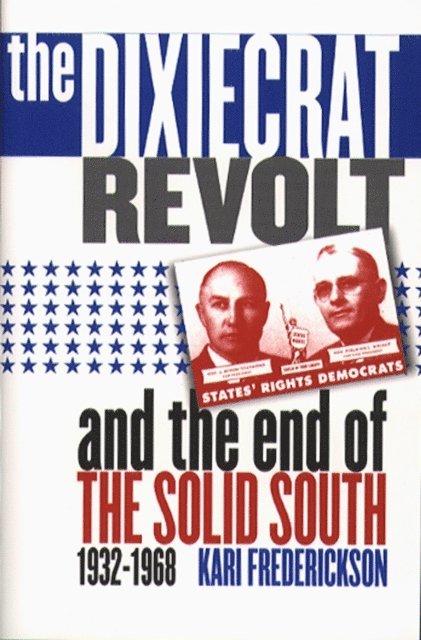
Dixiecrat Revolt and the End of the Solid South, 1932-1968
E-bok, 2003
464 kr
Lägg i varukorg
In 1948, a group of conservative white southerners formed the States'' Rights Democratic Party, soon nicknamed the "Dixiecrats," and chose Strom Thurmond as their presidential candidate. Thrown on the defensive by federal civil rights initiatives and unprecedented grassroots political activity by …
MAKING WAVES: FEMALE ACTIVISTS in TWENTIETH-CENTURY FLORIDA
Av University Press of Florida, Jack Emerson Davis m. fl.
Häftad, 2003
303 kr
Lägg i varukorg
"These essays lift up the lives of outstanding Florida women who helped shape the course of 20th-century Florida."--James B. Crooks, University of North Florida From Ruth Bryan Owen, Florida's first congresswoman, and Mary McLeod Bethune, founder of Bethune-Cookman College, to Betty Mae Tiger …
Cold War Dixie
Militarization and Modernization in the American South
Inbunden, 2013
1215 kr
Lägg i varukorg
Focusing on the impact of the Savannah River Plant (SRP) on the communities it created, rejuvenated, or displaced, this book explores the parallel militarization and modernization of the Cold War-era South. The SRP, a scientific and industrial complex near Aiken, South Carolina, grew out of a 1950 …
Cold War Dixie
Militarization and Modernization in the American South
Häftad, 2013
477 kr
Lägg i varukorg
Focusing on the impact of the Savannah River Plant (SRP) on the communities it created, rejuvenated, or displaced, this book explores the parallel militarization and modernization of the Cold War-era South. The SRP, a scientific and industrial complex near Aiken, South Carolina, grew out of a 1950 …
Cold War Dixie
Militarization and Modernization in the American South
E-bok, 2013
582 kr
Lägg i varukorg
Focusing on the impact of the Savannah River Plant (SRP) on the communities it created, rejuvenated, or displaced, this book explores the parallel militarization and modernization of the Cold War-era South. The SRP, a scientific and industrial complex near Aiken, South Carolina, grew out of a 1950 …
Cold War Dixie
Militarization and Modernization in the American South
E-bok, 2013
582 kr
Lägg i varukorg
Focusing on the impact of the Savannah River Plant (SRP) on the communities it created, rejuvenated, or displaced, this book explores the parallel militarization and modernization of the Cold War-era South. The SRP, a scientific and industrial complex near Aiken, South Carolina, grew out of a 1950 …
Dixiecrat Revolt and the End of the Solid South, 1932-1968
E-bok, 2003
464 kr
Lägg i varukorg
In 1948, a group of conservative white southerners formed the States'' Rights Democratic Party, soon nicknamed the "Dixiecrats," and chose Strom Thurmond as their presidential candidate. Thrown on the defensive by federal civil rights initiatives and unprecedented grassroots political activity by …