Karin Nickelsen – författare
Visar alla böcker från författaren Karin Nickelsen. Handla med fri frakt och snabb leverans.
5 produkter
Draughtsmen, Botanists and Nature:
The Construction of Eighteenth-Century Botanical Illustrations
E-bok, 2006
1459 kr
Lägg i varukorg
This book is based on a doctoral thesis submitted to the University of Bern in thesummerof2002. Researchonthethesiswasmadepossiblethroughagrant provided by the Swiss National Science Foundation (SNF) from 2000 to 2002 foraprojectonthehistoryandepistemologyofscienti?cillustrations(Project No. …
Theodore von Kármán
Flugzeuge für die Welt und eine Stiftung für Bern
Av Gerd Grasshoff, Alessandra Hool m. fl.
E-bok, 2013
532 kr
Lägg i varukorg
Theodore von Kármán, geboren 1881 in Budapest und gestorben 1963 in Aachen, gilt als der Wegbereiter der modernen Aerodynamik. Er hatte einen erheblichen Einfluss auf die westliche Rüstungspolitik der 40er und 50er Jahre. Das Buch ist eine erste Biografie über Theodore von Kármán. Sie stützt sich …
Die Entdeckung der Doppelhelix
Die grundlegenden Arbeiten von Watson, Crick und anderen
E-bok, 2017
269 kr
Lägg i varukorg
„We wish to suggest a structure for the salt of deoxyribose nucleic acid (D.N.A.). This structure has novel features which are of considerable biological interest“, so lauten die ersten Sätze des berühmten Artikels aus dem Jahr 1953, in dem Francis Crick und James Watson eine Doppelhelix-Struktur …
Kooperation und Konkurrenz in Wissenschaft und Forschungspolitik (ca. 1970–2000)
E-bok, 2025
905 kr
Lägg i varukorg
Ist scharfe Konkurrenz der Motor wissenschaftlichen Fortschritts und technologischer Innovation? Der Band zeigt auf, dass wissenschaftliche Akteure immer auch in kooperative Strukturen eingebunden sind. An Fallbeispielen aus dem geteilten Europa und den USA seit den 1970er Jahren zeigen die …
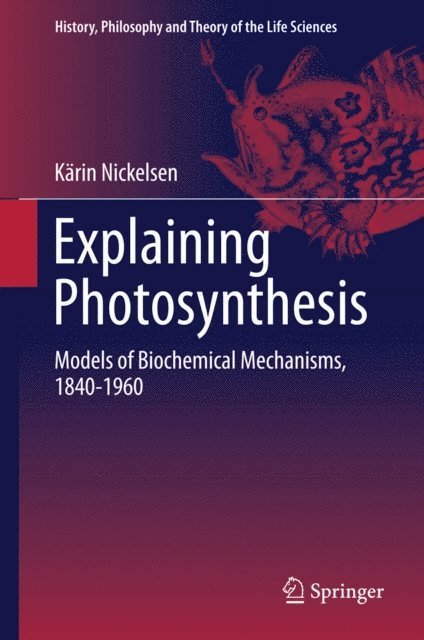
Explaining Photosynthesis
Models of Biochemical Mechanisms, 1840-1960
E-bok, 2015
1622 kr
Lägg i varukorg
Recounting the compelling story of a scientific discovery that took more than a century to complete, this trail-blazing monograph focuses on methodological issues and is the first to delve into this subject. This book charts how the biochemical and biophysical mechanisms of photosynthesis were …