Karina Jakubowicz – författare
2 359 kr
Skickas inom 10-15 vardagar
643 kr
Skickas inom 10-15 vardagar
131 kr
Läs direkt efter köp
131 kr
Läs direkt efter köp
746 kr
Läs direkt efter köp
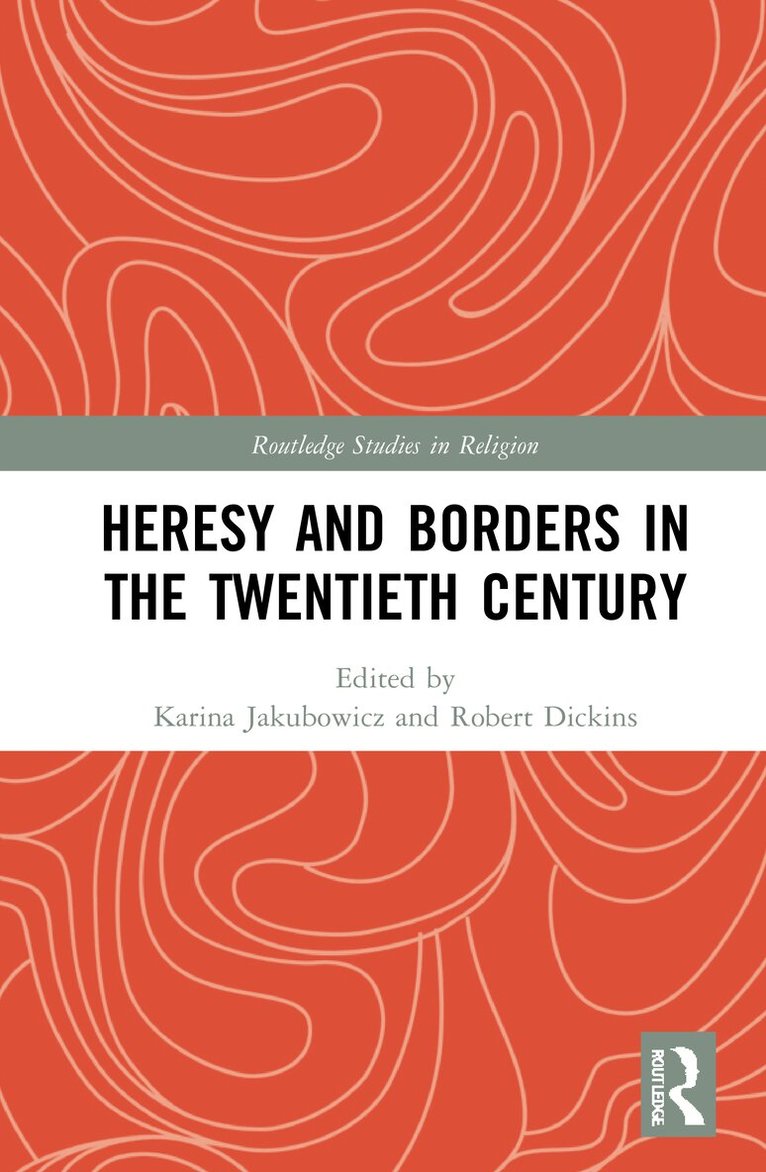
This book explores the shifting and negotiated boundaries of religion, spirituality, and secular thinking in Britain and North America during the twentieth century. It contributes to a growing scholarship that problematises secularization theory, arguing that religion and spirituality increasingly took diverse new forms and identities, rather than simply being replaced by a monolithic secularity.
The volume examines the way that thinkers, writers, and artists manipulated and reimagined orthodox belief systems in their work, using the notion of heresy to delineate the borders of what was considered socially and ethically acceptable. It includes topics such as psychospiritual approaches in medicine, countercultures and religious experience, and the function of blasphemy within supposedly secular politics. The book argues that heresy and heretical identities established fluid borderlands. These borderlands not only blur simple demarcations of the religious and secular in the twentieth century, but also infer new forms of heterodoxy through an exchange of ideas.
This collection of essays offers a nuanced take on a topic that pervades the study of religion. It will be of great use to scholars of Heresy Studies, Religious Studies and Comparative Religion, Social Anthropology, History, Literature, Philosophy, and Cultural Studies.

746 kr
Läs direkt efter köp
This book explores the shifting and negotiated boundaries of religion, spirituality, and secular thinking in Britain and North America during the twentieth century. It contributes to a growing scholarship that problematises secularization theory, arguing that religion and spirituality increasingly took diverse new forms and identities, rather than simply being replaced by a monolithic secularity.
The volume examines the way that thinkers, writers, and artists manipulated and reimagined orthodox belief systems in their work, using the notion of heresy to delineate the borders of what was considered socially and ethically acceptable. It includes topics such as psychospiritual approaches in medicine, countercultures and religious experience, and the function of blasphemy within supposedly secular politics. The book argues that heresy and heretical identities established fluid borderlands. These borderlands not only blur simple demarcations of the religious and secular in the twentieth century, but also infer new forms of heterodoxy through an exchange of ideas.
This collection of essays offers a nuanced take on a topic that pervades the study of religion. It will be of great use to scholars of Heresy Studies, Religious Studies and Comparative Religion, Social Anthropology, History, Literature, Philosophy, and Cultural Studies.
131 kr
Läs direkt efter köp
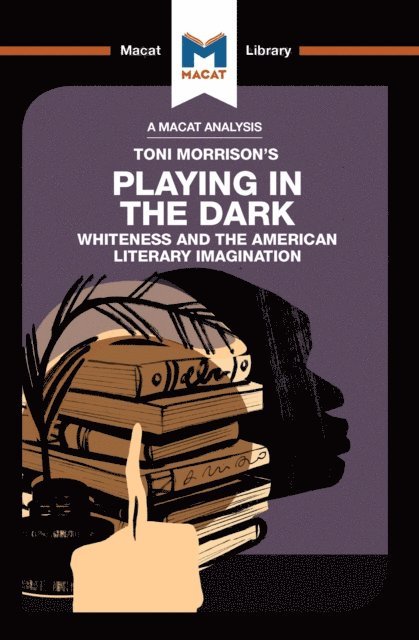
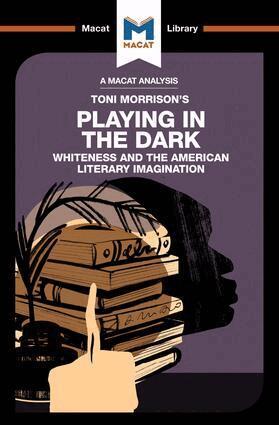
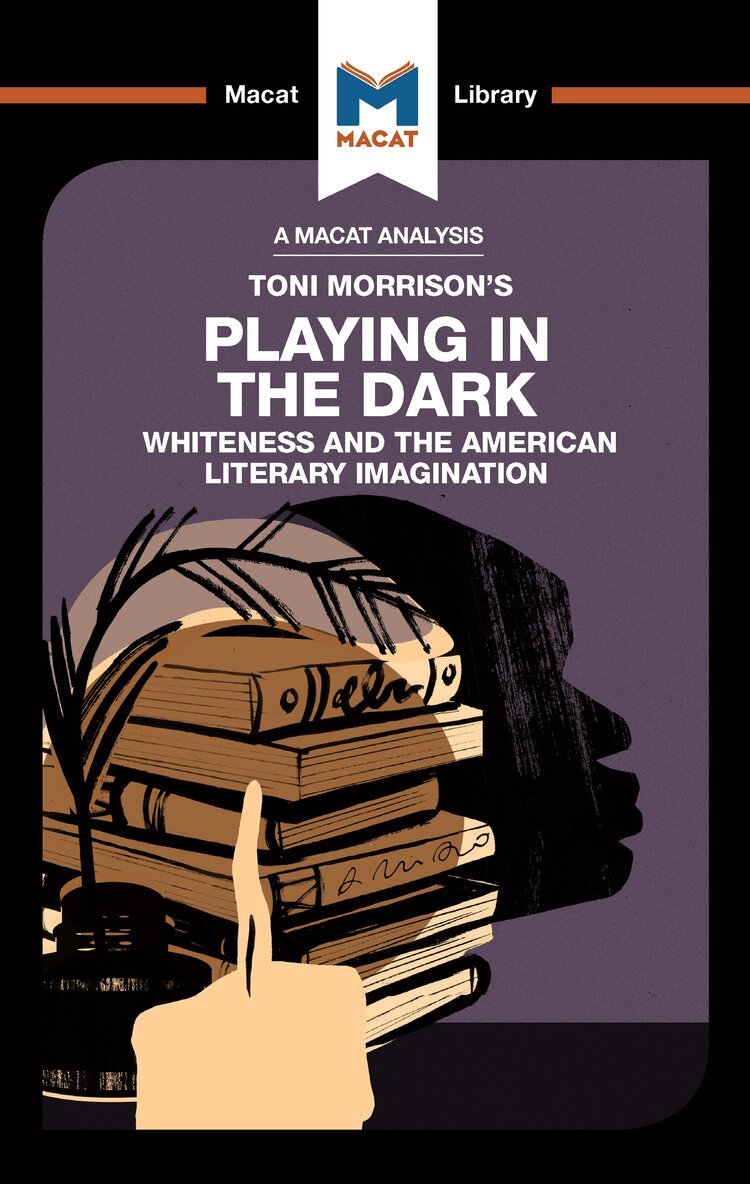
Toni Morrison’s Playing in the Dark: Whiteness and the Literary Imagination is a seminal piece of literary criticism, and a masterclass in the critical thinking skill of interpretation.
Interpretation plays a vital role in critical thinking: it focuses on interrogating accepted meanings and laying down clear definitions on which a strong argument can be built. Both history and literary history in the US have frequently revolved around understanding how Americans define themselves and each other, and Morrison’s work seeks to investigate, question, and redefine one of the central concepts in American history and American literary history: color.. Morrison turned to the classics of American literature to ask how authors had chosen to define the terms ‘black’ and ‘white.’ Instead of accepting traditional interpretations of these works, Morrison examined the way in which ‘whiteness’ defines itself through ‘blackness,’ and vice versa. Black bondage and the myths of black inferiority and savagery, she showed, allowed white America to indulge its own defining myths – viewing itself as free, civilized, and innocent.
A classic of subtle and incisive interpretation, Playing in the Dark shows just how crucial and how complex simple-looking definitions can be.
131 kr
Läs direkt efter köp
Toni Morrison’s Playing in the Dark: Whiteness and the Literary Imagination is a seminal piece of literary criticism, and a masterclass in the critical thinking skill of interpretation.
Interpretation plays a vital role in critical thinking: it focuses on interrogating accepted meanings and laying down clear definitions on which a strong argument can be built. Both history and literary history in the US have frequently revolved around understanding how Americans define themselves and each other, and Morrison’s work seeks to investigate, question, and redefine one of the central concepts in American history and American literary history: color.. Morrison turned to the classics of American literature to ask how authors had chosen to define the terms ‘black’ and ‘white.’ Instead of accepting traditional interpretations of these works, Morrison examined the way in which ‘whiteness’ defines itself through ‘blackness,’ and vice versa. Black bondage and the myths of black inferiority and savagery, she showed, allowed white America to indulge its own defining myths – viewing itself as free, civilized, and innocent.
A classic of subtle and incisive interpretation, Playing in the Dark shows just how crucial and how complex simple-looking definitions can be.
1 193 kr
Skickas
109 kr
Skickas
97 kr
Skickas
326 kr
Skickas inom 10-15 vardagar
292 kr
Skickas inom 10-15 vardagar