Karl Kitching – författare
2 258 kr
Skickas inom 10-15 vardagar
689 kr
Skickas inom 10-15 vardagar
788 kr
Läs direkt efter köp
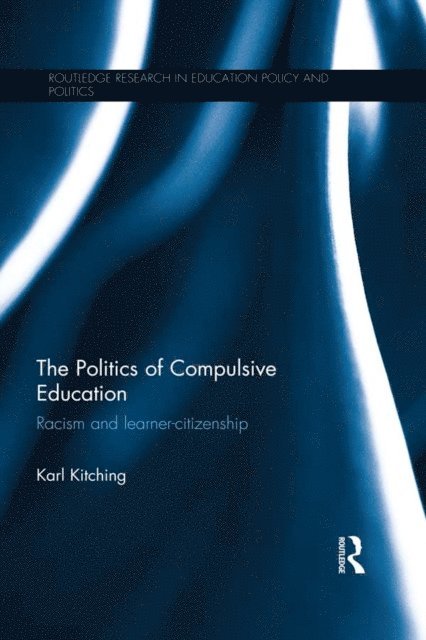
The marketised and securitised shaping of formal education sites in terms of risk prevention strategies have transformed what it means to be a learner and a citizen. In this book, Karl Kitching explores racialised dimensions to suggest how individuals and collectives are increasingly made responsible for their own welfare as ‘good’ or ‘bad’ students, at the expense of the protection of their rights as learner-citizens. Focusing on Ireland as a post-colonial Atlantic state, the book demonstrates how liberal governance, racisms, migration and mass education are interconnected and struggled over at local, national, European and global levels.
Using a variety of qualitative studies and analytic approaches, The Politics of Compulsive Education details the significance of mass education(s) to the ongoing racialisation of national sovereignty. It draws on in-depth historical, policy, media and school-based research, moving from the 19th century to the present day. Chapters explore diverse themes such as student deportation, austerity and the politics of community ‘integration’, the depoliticisation of third level education via international student and ‘quality’ teacher regimes, the racialised distribution of learner ‘ability’, and school-based bullying and harassment. Combined, these studies demonstrate the possibilities and constraints that exist for educational anti-racisms both in terms of social movements and everyday classroom situations.
The Politics of Compulsive Education asks key questions about anti-racist responsibility across multiple education sites and explores how racisms are both shaped, and can be interrupted, by the interaction of the global and the local, as seen in terms of migration, the distribution of capital, media, education policy discourse, and teacher and learner identifications. It will be of interest to researchers, academics and postgraduate students of sociology, education, cultural studies, political theory, philosophy and postcolonial studies.
817 kr
Läs direkt efter köp
The marketised and securitised shaping of formal education sites in terms of risk prevention strategies have transformed what it means to be a learner and a citizen. In this book, Karl Kitching explores racialised dimensions to suggest how individuals and collectives are increasingly made responsible for their own welfare as ‘good’ or ‘bad’ students, at the expense of the protection of their rights as learner-citizens. Focusing on Ireland as a post-colonial Atlantic state, the book demonstrates how liberal governance, racisms, migration and mass education are interconnected and struggled over at local, national, European and global levels.
Using a variety of qualitative studies and analytic approaches, The Politics of Compulsive Education details the significance of mass education(s) to the ongoing racialisation of national sovereignty. It draws on in-depth historical, policy, media and school-based research, moving from the 19th century to the present day. Chapters explore diverse themes such as student deportation, austerity and the politics of community ‘integration’, the depoliticisation of third level education via international student and ‘quality’ teacher regimes, the racialised distribution of learner ‘ability’, and school-based bullying and harassment. Combined, these studies demonstrate the possibilities and constraints that exist for educational anti-racisms both in terms of social movements and everyday classroom situations.
The Politics of Compulsive Education asks key questions about anti-racist responsibility across multiple education sites and explores how racisms are both shaped, and can be interrupted, by the interaction of the global and the local, as seen in terms of migration, the distribution of capital, media, education policy discourse, and teacher and learner identifications. It will be of interest to researchers, academics and postgraduate students of sociology, education, cultural studies, political theory, philosophy and postcolonial studies.
338 kr
Läs direkt efter köp
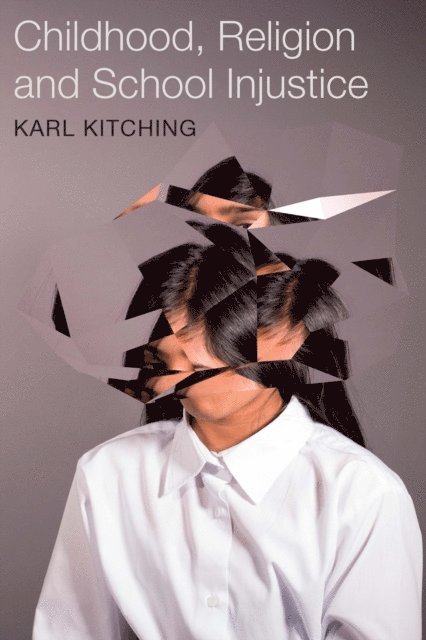
Debates about religion and education internationally often presume the neutrality of secular education governance as an irrefutable public good. However, understandings of secular freedom, rights and neutrality in schooling are continuously contested, and social movements have disrupted the notion that there is a uniform public to be educated. Simultaneously, unjust, neoliberal and majoritarian education policies constantly undermine collective notions of what is good and just. This book presents original empirical research on how religious and secular schools are positioned as competitors for parents’ attention, and shows how inequalities shape parents’ interest in, and access to, secular/religious schools. Kitching particularly explores how children in urban and rural settings negotiate the joys, pleasures, paradoxes and injustices of schooling and childhood. He outlines ways in which children’s social position, relationships and encounters with religious and consumer objects inform who they can become, and who and what they value. Drawing on the above research, Childhood, Religion and School Injustice demonstrates the need to engage with each child’s plurality, and to recognise multiple inequalities experienced by families across schools. Given that the mass privatisation and deregulation of schooling favours majority and advantaged social groups, Kitching argues for the becoming public of school systems and localities. In such a process, majoritarian, narrow self-interest is challenged, unchosen obligations to others are recognised, and collective imaginings of what a ‘good’ childhood is, are publicly engaged.