Karol Jan Borowiecki - Böcker
Visar alla böcker från författaren Karol Jan Borowiecki. Handla med fri frakt och snabb leverans.
4 produkter
4 produkter
485 kr
Kommande
How education, institutions, emotion, and opportunity shape creativity in classical musicWhy do we still listen to Mozart’s music but not Salieri’s? Would Nadia Boulanger be better known as a composer than a teacher if she were a man? Why did so many composers move to Vienna, Paris, and London, despite the hardships of city life? In What Makes a Great Composer?, economists Karol J. Borowiecki and Marc T. Law offer a novel perspective on why some composers and their works have endured while others have not. Drawing on data-driven methods and economic theory rather than the usual anecdotes and received wisdom regarding the sources of musical genius, Borowiecki and Law uncover previously unnoticed patterns of creativity. Spanning nearly a millennium of musical history—following composers from medieval courts and cathedrals to modern concert halls and conservatories—their account shows how the creative lives of composers were molded by opportunity, constraint, talent, and temperament.Borowiecki and Law consider not only celebrated masters but also forgotten voices, including female composers whose paths were blocked by structural barriers. They explore key determinants of success, including education, cities and migration, war and conflict, and economic incentives. Drawing on a wealth of data gathered over nearly twenty years, and using such metrics as expert rankings, the length of biographical entries, stylistic originality, influence on peers, and contemporary popularity, they uncover the forces that shaped composers’ creativity. By showing how composers lived, struggled, and sometimes transcended the worlds that formed them, Borowiecki and Law shed light not only on music history but also, more broadly, on the conditions that allow creativity to flourish.
1 953 kr
Skickas inom 10-15 vardagar
Cultural tourism can play an important role in social and territorial cohesion. Focusing on European peripheral regions, this book illuminates the importance of local communities in heritage management for sustainable development.This book provides insights into the use of innovative business models and tools, such as ecosystem services contracts and digital narrative platforms, to enhance the sustainability and economic development of peripheral and marginal destinations. Additionally, this book addresses the value of data collection and analysis in cultural tourism and provides insights into participatory models and approaches that contribute to sustainable tourism development.With contributions from a pan‑European range of expert scholars and practitioners, this book serves as an essential resource for researchers, professionals, and anyone with an interest in tourism, and the cultural and creative industries.The Open Access version of thi book, available at www.taylorfrancis.com, has been made available under a Creative Commons Attribution-Non Commercial- No Derivatives (CC-BY-NC-ND) 4.0 license.
552 kr
Skickas inom 10-15 vardagar
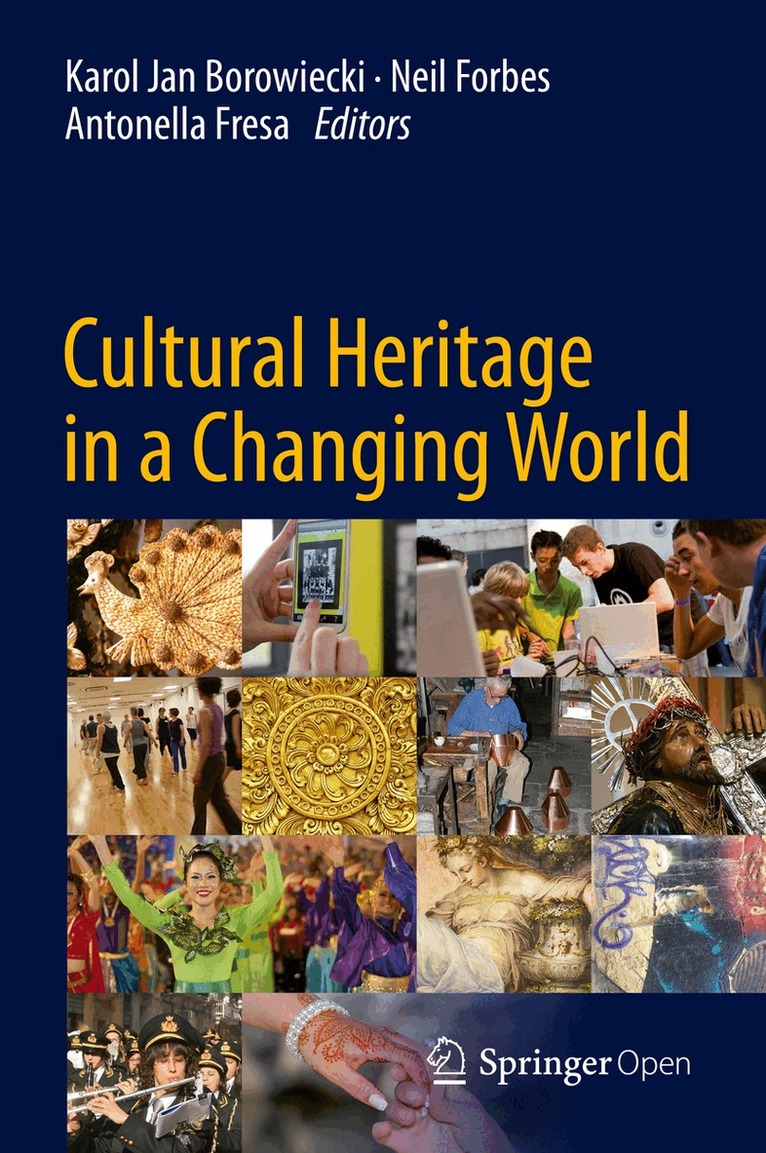
The central purpose of this collection of essays is to make a creative addition to the debates surrounding the cultural heritage domain.
Del 70 - Lund studies in economic history
Mournful and yet grand is the destiny of the artist
Häftad, Engelska, 2015
356 kr
Skickas inom 5-8 vardagar
This dissertation provides new insights on creativity and the lives of creative people, by availing of unique data-sets covering the lives, works and emotional states of famous music composers. The underlying research documents the long-run persistence of a society’s preference towards cultural goods and shows that the geography of composer births displays remarkable continuity over a period of seven centuries. It formalizes and documents the trade-off between agglomeration economies (beneficial peer effects) and diseconomies (peer crowding) experienced by music composers. Furthermore, it is explored how peer crowding impacts composers’ emotional well-being. The results point to a large reduction in composers’ longevity, if they are located in cities where the peer competition has been greater. Finally, the determinants of psychological well-being are studied and quantitative evidence is provided on the existence of a causal impact of negative emotions on outstanding creativity - an association hypothesized across several disciplines since Antiquity; however, not yet convincingly established.