Karrin Hanshew – författare
Visar alla böcker från författaren Karrin Hanshew. Handla med fri frakt och snabb leverans.
8 produkter
Germany Since 1945
Politics, Culture, and Society
Av Peter C. Caldwell, Karrin Hanshew
Häftad, 2025
4,0 utav 5 stjärnor. Totalt antal röster: (1)
389 kr
Lägg i varukorg
This text provides an unparalleled social, political and cultural history of Germany from the end of the Second World War to the contemporary moment. As well as carefully balancing the histories of East and West Germany, Peter C. Caldwell and Karrin Hanshew convincingly make the case for analysing …
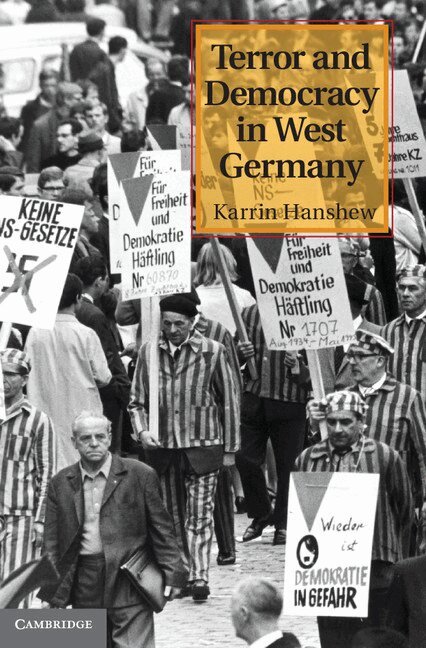
Terror and Democracy in West Germany
Inbunden, 2012
1593 kr
Lägg i varukorg
In 1970, the Red Army Faction declared war on West Germany. The militants failed to bring down the state, but this book argues that the decade-long debate they inspired helped shape a new era. After 1945, West Germans answered long-standing doubts about democracy's viability and fears of …
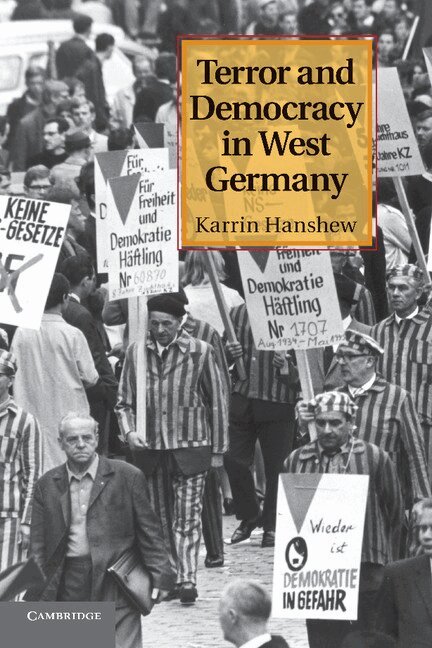
Terror and Democracy in West Germany
Häftad, 2014
738 kr
Lägg i varukorg
In 1970, the Red Army Faction declared war on West Germany. The militants failed to bring down the state, but this book argues that the decade-long debate they inspired helped shape a new era. After 1945, West Germans answered long-standing doubts about democracy's viability and fears of …
Germany Since 1945
Politics, Culture, and Society
Av Peter C. Caldwell, Karrin Hanshew
Inbunden, 2025
1317 kr
Lägg i varukorg
This text provides an unparalleled social, political and cultural history of Germany from the end of the Second World War to the contemporary moment. As well as carefully balancing the histories of East and West Germany, Peter C. Caldwell and Karrin Hanshew convincingly make the case for analysing …
Germany Since 1945
Politics, Culture, and Society
Av Peter C. Caldwell, Karrin Hanshew
E-bok, 2024
466 kr
Lägg i varukorg
This text provides an unparalleled social, political and cultural history of Germany from the end of the Second World War to the contemporary moment. As well as carefully balancing the histories of East and West Germany, Peter C. Caldwell and Karrin Hanshew convincingly make the case for analysing …
Germany Since 1945
Politics, Culture, and Society
Av Peter C. Caldwell, Karrin Hanshew
E-bok, 2024
451 kr
Lägg i varukorg
This text provides an unparalleled social, political and cultural history of Germany from the end of the Second World War to the contemporary moment. As well as carefully balancing the histories of East and West Germany, Peter C. Caldwell and Karrin Hanshew convincingly make the case for analysing …
Germany Since 1945
Politics, Culture, and Society
Av Peter C. Caldwell, Karrin Hanshew
E-bok, 2018
1364 kr
Lägg i varukorg
Peter C. Caldwell and Karrin Hanshew''s Germany Since 1945 traces the social, political and cultural history of Germany from the end of the Second World War right up to the present day. The book provides a narrative that not only explores the histories of East and West Germany in their …
Germany Since 1945
Politics, Culture, and Society
Av Peter C. Caldwell, Karrin Hanshew
E-bok, 2018
1335 kr
Lägg i varukorg
Peter C. Caldwell and Karrin Hanshew''s Germany Since 1945 traces the social, political and cultural history of Germany from the end of the Second World War right up to the present day. The book provides a narrative that not only explores the histories of East and West Germany in their …