Karsten Altenhain – författare
Visar alla böcker från författaren Karsten Altenhain. Handla med fri frakt och snabb leverans.
4 produkter
4 produkter
Inbunden, Tyska, 2024
1 197 kr
Skickas inom 3-6 vardagar
E-bok
PDF, Tyska, 2012747 kr
Läs direkt efter köp
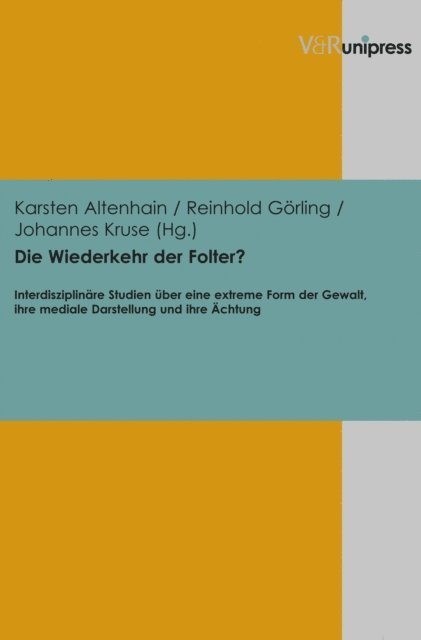
Since the signing of the international conventions prohibiting torture, this extreme form of violence seemed to remain a problem only in individual dictatorships. Discussions over the permissibility of "preventive" torture or torture to save people''s lives and methods practised in the "war on terror" question this assumption. Since the mid-1990s there has been an increase in the portrayal of torture on television, in films and computer games, and even in its use by positive heroes. At the same time medical and psychological evidence testifies to the serious psychological consequences of torture for the victims. Torture not only threatens individuals but also the fundamental social cohesion of human life.The contributions to this volume discuss various aspects of torture. They range from media law provisions to the visual representation of torture, how torture is dealt with in the context of legal residential status procedures, and how medicine and psychology relate to torture and historical and current legal discourse.
E-bok
PDF, Tyska, 2011571 kr
Läs direkt efter köp
The conditions under which torture might be allowed have been the subject of recent discussion particularly in the light of so-called "rescue torture". The fact that the abolition of torture was always seen as a milestone on the way to the rule of law and the constitutional state and a central element of the self-conception of western legal systems at least, seems to have been forgotten.The contributions to this volume analyse on the one hand the increasingly proclaimed abolition of torture in the 18th century, and on the other the various forms and functions of torture that nevertheless continued. The central focus lies on punishments for disobedience in the 18th and 19th centuries including the torture crimes perpetrated by police and military forces not only in the colonies, but also the accusation by the German Red Army Faction of the use of torture. How has the function of torture changed and how does this change relate to the changed view of humanity and the proclaimed proscription of torture? Was there a discourse after its official abolition on torture and physical or mental violence in the context of criminal proceedings? The aim of the volume is to demonstrate under what conditions and in what forms torture has always been able to reassert itself – even in the emergent constitutional state.
Del 91 - Tübinger Rechtswissenschaftliche Abhandlungen
Das Anschlußdelikt
Grund, Grenzen und Schutz des staatlichen Strafanspruchs und Verfallrechts nach einer individualistischen Strafrechtsauffassung
Inbunden, Tyska, 2001
2 061 kr
Tillfälligt slut
Die Anschlußdelikte des Strafgesetzbuchs - Begünstigung, Strafvereitelung, Hehlerei, Geldwäsche - stellen Handlungen nach einer Straftat unter Strafe, unterscheiden sich aber in Anwendungsbereich und Schutzrichtung. Die dadurch bedingten Ungereimtheiten wurden durch die Einführung des Tatbestands der Geldwäsche weiter verschärft.Karsten Altenhain bearbeitet diese Problematik ausgehend von der These, daß ein Zusammenhang zwischen der Ausgestaltung der Anschlußdelikte und den Grundauffassungen zu Verbrechen und Strafe besteht. Daraus ergeben sich Folgerungen für eine Neukonzeption der Anschlußdelikte. Den ersten Teil dieser These hinterfragt er im Rahmen einer historischen Untersuchung der Entwicklung der Anschlußdelikte bis hin zum Reichsstrafgesetzbuch. Anschließend erörtert Karsten Altenhain die heute vertretenen Ansichten zu den Anschlußdelikten, ihre Wurzeln in der naturalistisch-positivistischen Strafrechtsauffassung und deren Lehren von Verbrechen und Strafe. Er entwirft sodann auf der Grundlage der gewonnenen Ergebnisse eine strikt auf die Legitimation gegenüber den Individuen bezogene Strafrechtsauffassung und schlägt eine auf diese Auffassung gegründete einheitliche Neufassung des Anschlußdelikts vor. Abschließend untersucht er, ob und inwieweit die Geldwäsche Teil dieses Anschlußdelikts ist.